




Malzeme Sertlik Test Cihazı: Malzeme Test ve Muayenesi için Eksiksiz Kılavuz

Introduction to Material Hardness Tester
A malzeme sertlik test cihazı is an essential instrument used to evaluate a material’s resistance to indentation, penetration, scratching, or permanent deformation. Hardness measurement provides valuable information about material properties and is widely used in manufacturing, engineering, metallurgy, and quality assurance programs.
By measuring hardness, engineers and inspectors can verify whether materials meet design specifications and performance requirements. These testing systems are used on metals, alloys, coatings, heat-treated components, and many other industrial materials.
As product quality standards continue to increase, reliable hardness testing has become a critical part of modern production and inspection processes.
Why Material Hardness Testing Matters
Quality Assurance in Manufacturing
Manufacturers use hardness testing to ensure consistent production quality. Hardness values often indicate whether a material has been processed correctly and whether it can perform as expected under service conditions.
Key benefits include:
- Geliştirilmiş ürün tutarlılığı
- Azaltılmış üretim hataları
- Verification of heat treatment results
- Enhanced durability assessment
- Better customer satisfaction
Evaluating Material Performance
Hardness is closely related to wear resistance, strength, and mechanical performance. Testing helps engineers understand how materials will behave during actual use.
What Is a Material Hardness Tester?
Definition and Working Principle
A hardness tester measures how resistant a material is to deformation when subjected to a controlled force. Most systems operate by pressing a specific indenter into the material surface and measuring the resulting indentation.
Test süreci genellikle şunları içerir:
- Preparing the sample
- Applying a test load
- Girinti oluşturma
- Çentik boyutunu veya derinliğini ölçme
- Sertlik değerlerinin hesaplanması
Understanding Hardness Measurement
Different testing methods use different measurement approaches:
| Yöntem | Measurement Type |
|---|---|
| Rockwell | Girinti derinliği |
| Brinell | Girinti çapı |
| Vickers | Indentation diagonal |
| Knoop | Uzun diyagonal ölçüm |
| Leeb | Geri tepme hızı |
Each method offers advantages for specific materials and applications.
Common Hardness Scales
Frequently used hardness scales include:
- HRC (Rockwell C)
- HRB (Rockwell B)
- HBW (Brinell)
- HV (Vickers)
- HK (Knoop)
- HL (Leeb)
These scales help standardize testing across industries worldwide.
Types of Material Hardness Tester Systems
Rockwell Testing Instruments
Rockwell systems are widely used due to their speed and ease of operation. They provide direct hardness readings without requiring optical measurement.
Common applications include:
- Steel manufacturing
- Isıl işlem görmüş bileşenler
- Üretim kalite kontrolü
Brinell Testing Instruments
Brinell testing uses a tungsten carbide ball indenter and is ideal for:
- Dökme demir
- Dövme malzemeler
- Yapısal çelik
- Ağır endüstriyel bileşenler
The larger indentation helps provide an average hardness value over a broader area.
Vickers Testing Instruments
Vickers testing uses a diamond pyramid indenter and is known for high precision.
Avantajları şunlardır:
- Broad load range
- Excellent accuracy
- Thin material testing
- Metallographic analysis
Microhardness Testing Solutions
Microhardness systems are designed for:
- Yüzey kaplamaları
- İnce malzemeler
- Elektronik bileşenler
- Mikroyapı analizi
These systems use very small loads to evaluate localized material properties.
Portable Hardness Measurement Devices
Portable testers allow on-site inspections and are commonly used for:
- Pipelines
- Pressure vessels
- Türbin bileşenleri
- Large industrial structures
Key Components of a Material Hardness Tester
İndentörler ve Yükleme Sistemleri
Different testing methods use specialized indenters such as:
- Diamond cones
- Diamond pyramids
- Tungsten karbür bilyalar
Accurate load application is essential for obtaining reliable results.
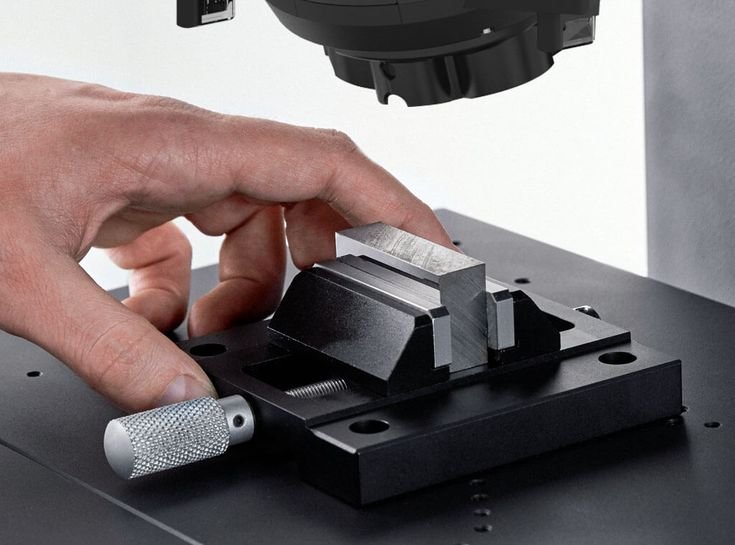
Optical Measurement Technology
Many modern systems incorporate:
These technologies improve accuracy and repeatability.
Dijital Ekranlar ve Yazılım
Advanced testing systems often feature:
- Dokunmatik ekran arayüzleri
- Otomatik hesaplamalar
- Statistical analysis tools
- Dijital raporlama yetenekleri
- Ağ bağlantısı
Calibration and Verification Tools
Certified reference blocks help verify instrument performance and maintain testing accuracy over time.
Yaygın Olarak Test Edilen Malzemeler
Çelik ve Paslanmaz Çelik
Hardness testing is frequently used to evaluate structural, engineering, and tool steels.
Alüminyum ve Demir Dışı Metaller
Lightweight materials used in transportation and aerospace industries often require hardness verification.
Cast Iron and Forged Materials
Heavy industrial components commonly undergo hardness inspection during manufacturing and maintenance.
Coatings and Heat-Treated Surfaces
Microhardness testing methods are often used to assess coating quality and heat treatment effectiveness.
Endüstriyel Uygulamalar
Otomotiv İmalatı
Applications include testing:
- Dişliler
- Rulmanlar
- Engine parts
- Transmission components
- Süspansiyon sistemleri
Havacılık ve Uzay Mühendisliği
Aircraft manufacturers rely on hardness testing to ensure material consistency and safety.
Energy and Oil Industries
Common uses include:
- Boru hattı denetimi
- Pressure vessel verification
- Drilling equipment evaluation
- Maintenance programs
Araştırma ve Metalurji Laboratuvarları
Researchers use hardness testing to investigate material properties, processing effects, and microstructural behavior.
Benefits of Modern Material Hardness Tester Technology
Modern testing systems provide numerous advantages:
- Yüksek ölçüm hassasiyeti
- Fast testing cycles
- Geliştirilmiş tekrarlanabilirlik
- Otomatik operasyon
- Digital documentation
- Enhanced quality assurance
Automation reduces operator influence and improves consistency across testing programs.
Yaygın Zorluklar ve Sınırlamalar
Although highly effective, hardness testing may present certain challenges:
- Yüzey hazırlığı gereksinimleri
- Malzeme kalınlığı sınırlamaları
- Çevresel etkiler
- Kalibrasyon ihtiyaçları
- Proper method selection
Understanding these factors helps ensure accurate and reliable results.
How to Choose the Right Testing Solution
Several factors should be considered when selecting testing equipment:
Malzeme Türü
Farklı malzemeler farklı test yöntemleri gerektirebilir.
Örneklem Büyüklüğü
Large components may require portable solutions.
Test Hacmi
High-production facilities often benefit from automated systems.
Doğruluk Gereksinimleri
Laboratory environments typically require greater precision.
Bütçe Değerlendirmeleri
Evaluate both initial purchase costs and long-term maintenance expenses.
Choosing the correct solution improves efficiency and maximizes return on investment.
Endüstri Standartları ve Uyumluluk
Hardness testing commonly follows internationally recognized standards such as:
- ASTM International Standards
- ISO Standartları
- EN Standartları
- JIS Standartları
Referans kaynakları:
Compliance ensures reliable and comparable testing results across global industries.
Sıkça Sorulan Sorular
1. What is a material hardness tester used for?
It measures a material’s resistance to deformation and helps evaluate quality, durability, and mechanical performance.
2. Sertlik test cihazları hangi sektörlerde kullanılır?
Automotive, aerospace, manufacturing, energy, metallurgy, and research industries commonly rely on hardness testing.
3. Hangi malzemeler test edilebilir?
Steel, aluminum, cast iron, stainless steel, coatings, alloys, and many other materials.
4. Which hardness testing method is most common?
Rockwell testing is one of the most widely used methods because it provides fast and direct results.
5. Kalibrasyon neden önemlidir?
Calibration ensures measurement accuracy and compliance with quality standards.
6. Can modern testers generate digital reports?
Evet. En gelişmiş sistemler veri depolama, analiz ve raporlama için yazılım içerir.
Sonuç
A malzeme sertlik test cihazı is a critical tool for evaluating material quality, verifying manufacturing processes, and ensuring product reliability. By accurately measuring resistance to deformation, these systems help manufacturers maintain quality standards and improve operational efficiency.
From Rockwell and Brinell methods to Vickers and microhardness applications, modern hardness testing technologies support a wide range of industrial and laboratory requirements. Investing in the right testing solution helps organizations achieve accurate measurements, better quality control, and long-term production success.