




Material Hardness Tester: Complete Guide to Material Testing and Inspection

Introduction to Material Hardness Tester
A material hardness tester is an essential instrument used to evaluate a material’s resistance to indentation, penetration, scratching, or permanent deformation. Hardness measurement provides valuable information about material properties and is widely used in manufacturing, engineering, metallurgy, and quality assurance programs.
By measuring hardness, engineers and inspectors can verify whether materials meet design specifications and performance requirements. These testing systems are used on metals, alloys, coatings, heat-treated components, and many other industrial materials.
As product quality standards continue to increase, reliable hardness testing has become a critical part of modern production and inspection processes.
Why Material Hardness Testing Matters
Quality Assurance in Manufacturing
Manufacturers use hardness testing to ensure consistent production quality. Hardness values often indicate whether a material has been processed correctly and whether it can perform as expected under service conditions.
Key benefits include:
- Improved product consistency
- Reduced manufacturing defects
- Verification of heat treatment results
- Enhanced durability assessment
- Better customer satisfaction
Evaluating Material Performance
Hardness is closely related to wear resistance, strength, and mechanical performance. Testing helps engineers understand how materials will behave during actual use.
What Is a Material Hardness Tester?
Definition and Working Principle
A hardness tester measures how resistant a material is to deformation when subjected to a controlled force. Most systems operate by pressing a specific indenter into the material surface and measuring the resulting indentation.
The testing process generally includes:
- Preparing the sample
- Applying a test load
- Cómo crear una sangría
- Measuring indentation size or depth
- Calculating hardness values
Understanding Hardness Measurement
Different testing methods use different measurement approaches:
| Method | Measurement Type |
|---|---|
| Rockwell | Profundidad de indentación |
| Brinell | Diámetro de indentación |
| Vickers | Indentation diagonal |
| Knoop | Long diagonal measurement |
| Leeb | Rebound velocity |
Each method offers advantages for specific materials and applications.
Common Hardness Scales
Frequently used hardness scales include:
- HRC (Rockwell C)
- HRB (Rockwell B)
- HBW (Brinell)
- HV (Vickers)
- HK (Knoop)
- HL (Leeb)
These scales help standardize testing across industries worldwide.
Types of Material Hardness Tester Systems
Rockwell Testing Instruments
Rockwell systems are widely used due to their speed and ease of operation. They provide direct hardness readings without requiring optical measurement.
Las aplicaciones más comunes son:
- Steel manufacturing
- Heat-treated components
- Control de calidad de la producción
Brinell Testing Instruments
El ensayo Brinell utiliza un indentador de bola de carburo de tungsteno y es ideal para:
- Hierro fundido
- Forged materials
- Acero estructural
- Heavy industrial components
The larger indentation helps provide an average hardness value over a broader area.
Vickers Testing Instruments
Vickers testing uses a diamond pyramid indenter and is known for high precision.
Las ventajas incluyen:
- Amplia gama de cargas
- Excellent accuracy
- Pruebas de materiales finos
- Análisis metalográfico
Soluciones de ensayo de microdureza
Los sistemas de microdureza están diseñados para:
- Recubrimientos superficiales
- Materiales finos
- Componentes electrónicos
- Análisis de microestructuras
These systems use very small loads to evaluate localized material properties.
Portable Hardness Measurement Devices
Portable testers allow on-site inspections and are commonly used for:
- Tuberías
- Recipientes a presión
- Turbine components
- Large industrial structures
Key Components of a Material Hardness Tester
Indenters and Loading Systems
Different testing methods use specialized indenters such as:
- Diamond cones
- Diamond pyramids
- Bolas de carburo de tungsteno
Accurate load application is essential for obtaining reliable results.
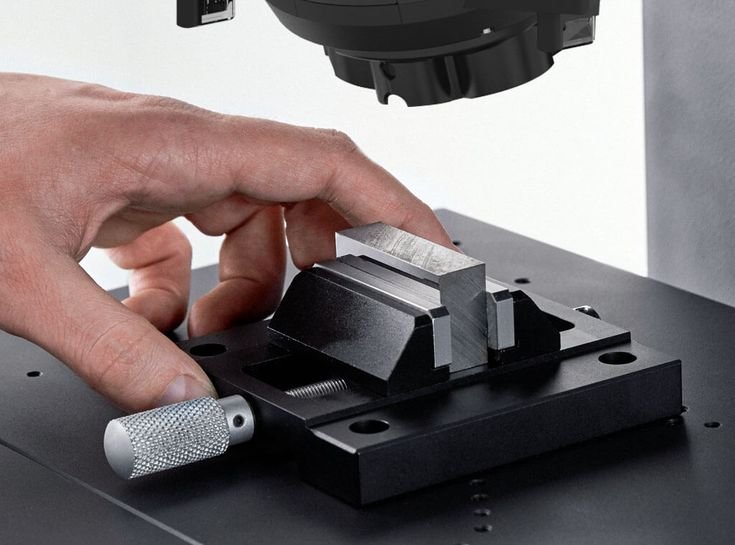
Tecnología de medición óptica
Many modern systems incorporate:
These technologies improve accuracy and repeatability.
Pantallas digitales y software
Advanced testing systems often feature:
- Interfaces táctiles
- Cálculos automatizados
- Herramientas de análisis estadístico
- Digital reporting capabilities
- Conectividad de red
Calibration and Verification Tools
Certified reference blocks help verify instrument performance and maintain testing accuracy over time.
Materiales probados habitualmente
Acero y acero inoxidable
Hardness testing is frequently used to evaluate structural, engineering, and tool steels.
Aluminio y metales no férreos
Lightweight materials used in transportation and aerospace industries often require hardness verification.
Cast Iron and Forged Materials
Heavy industrial components commonly undergo hardness inspection during manufacturing and maintenance.
Coatings and Heat-Treated Surfaces
Microhardness testing methods are often used to assess coating quality and heat treatment effectiveness.
Aplicaciones industriales
Fabricación de automóviles
Entre sus aplicaciones se incluyen las pruebas de:
- Engranajes
- Rodamientos
- Piezas del motor
- Componentes de la transmisión
- Sistemas de suspensión
Ingeniería aeroespacial
Aircraft manufacturers rely on hardness testing to ensure material consistency and safety.
Energy and Oil Industries
Common uses include:
- Inspección de tuberías
- Pressure vessel verification
- Drilling equipment evaluation
- Maintenance programs
Laboratorios de investigación y metalurgia
Researchers use hardness testing to investigate material properties, processing effects, and microstructural behavior.
Benefits of Modern Material Hardness Tester Technology
Modern testing systems provide numerous advantages:
- Gran precisión de medición
- Fast testing cycles
- Repetibilidad mejorada
- Automated operation
- Documentación digital
- Enhanced quality assurance
Automation reduces operator influence and improves consistency across testing programs.
Common Challenges and Limitations
Although highly effective, hardness testing may present certain challenges:
- Surface preparation requirements
- Material thickness limitations
- Environmental influences
- Calibration needs
- Proper method selection
Understanding these factors helps ensure accurate and reliable results.
How to Choose the Right Testing Solution
Several factors should be considered when selecting testing equipment:
Tipo de material
Different materials may require different testing methods.
Tamaño de la muestra
Large components may require portable solutions.
Testing Volume
High-production facilities often benefit from automated systems.
Requisitos de precisión
Laboratory environments typically require greater precision.
Consideraciones presupuestarias
Evaluate both initial purchase costs and long-term maintenance expenses.
Choosing the correct solution improves efficiency and maximizes return on investment.
Normas y cumplimiento de la industria
Hardness testing commonly follows internationally recognized standards such as:
- ASTM International Standards
- Normas ISO
- Normas EN
- Normas JIS
Reference resources:
Compliance ensures reliable and comparable testing results across global industries.
Preguntas frecuentes
1. What is a material hardness tester used for?
It measures a material’s resistance to deformation and helps evaluate quality, durability, and mechanical performance.
2. Which industries use hardness testing equipment?
Automotive, aerospace, manufacturing, energy, metallurgy, and research industries commonly rely on hardness testing.
3. ¿Qué materiales pueden someterse a prueba?
Steel, aluminum, cast iron, stainless steel, coatings, alloys, and many other materials.
4. Which hardness testing method is most common?
Rockwell testing is one of the most widely used methods because it provides fast and direct results.
5. ¿Por qué es importante la calibración?
Calibration ensures measurement accuracy and compliance with quality standards.
6. Can modern testers generate digital reports?
Yes. Most advanced systems include software for data storage, analysis, and reporting.
Conclusión
A material hardness tester is a critical tool for evaluating material quality, verifying manufacturing processes, and ensuring product reliability. By accurately measuring resistance to deformation, these systems help manufacturers maintain quality standards and improve operational efficiency.
From Rockwell and Brinell methods to Vickers and microhardness applications, modern hardness testing technologies support a wide range of industrial and laboratory requirements. Investing in the right testing solution helps organizations achieve accurate measurements, better quality control, and long-term production success.