



Knoop Hardness Test: Principles, Applications and Testing Methods

Introduction to the Knoop Hardness Test
Stránka Knoop hardness test is a specialized microhardness testing method used to evaluate the hardness of brittle materials, thin coatings, small components, and microscopic structures. Because it uses very light test loads and produces a shallow indentation, the Knoop method is particularly useful when conventional hardness tests would damage the specimen or fail to provide accurate results.
Industries such as aerospace, electronics, metallurgy, medical device manufacturing, and materials research rely on the Knoop hardness test to assess localized hardness characteristics. It is especially valuable for analyzing thin surface layers, ceramic materials, glass, and heat-treated components.
As materials become more advanced and miniaturized, the Knoop hardness test continues to play a critical role in quality control and materials engineering.
What Is the Knoop Hardness Test?
Vymedzenie pojmu a účel
Stránka Knoop hardness test is a microindentation hardness testing method that measures a material’s resistance to deformation using a specially shaped diamond indenter under low test loads.
The test is commonly used to:
- Measure thin coatings
- Evaluate brittle materials
- Analýza mikroštruktúr
- Test ceramic components
- Inspect heat-treated surfaces
- Support research and development
Importance in Microhardness Testing
Unlike conventional hardness tests, the Knoop method creates an elongated indentation with minimal penetration depth. This allows accurate hardness measurements in areas where standard hardness tests may not be suitable.
History and Development of the Knoop Hardness Test
The Knoop hardness test was developed in 1939 by Frederick Knoop and colleagues at the U.S. National Bureau of Standards.
The method was designed to provide precise hardness measurements for brittle materials and thin sections that were difficult to evaluate using traditional hardness testing techniques.
Today, the Knoop hardness test is widely recognized as a standard microhardness testing method.
How the Knoop Hardness Test Works
Testing Principle
The test involves pressing a diamond indenter into the specimen surface under a carefully controlled load.
After removing the load, the indentation is measured and used to calculate the hardness value.
Knoop Diamond Indenter Design
The Knoop indenter has a unique elongated diamond pyramid shape that creates an asymmetric indentation.
Key characteristics include:
- Long-to-short diagonal ratio of approximately 7:1
- Very shallow penetration depth
- Excellent suitability for thin materials
This design minimizes specimen damage while providing highly accurate measurements.
Measuring the Indentation
Unlike the Vickers method, which measures two diagonals, the Knoop hardness test primarily uses the length of the long diagonal for hardness calculations.
Measurements are typically performed using:
- Optické mikroskopy
- Digital imaging systems
- Automated analysis software
Understanding Knoop Hardness Values (HK)
How HK Values Are Calculated
Results are expressed as HK (Knoop Hardness).
The hardness value is calculated using:
- Applied test load
- Length of the indentation’s long diagonal
Modern hardness testers automatically perform these calculations.
Factors Affecting Accuracy
Several factors influence measurement reliability:
- Surface preparation quality
- Optical calibration
- Test load selection
- Material homogeneity
- Vibrácie prostredia
Proper testing procedures help ensure repeatable results.
Knoop Hardness Test Procedure
Príprava vzorky
Accurate testing requires careful preparation.
The specimen surface should be:
- Flat
- Clean
- Smooth
- Properly polished
Surface imperfections can significantly affect measurement accuracy.
Applying the Test Load
The selected load is applied through the Knoop diamond indenter for a specified dwell time.
Typical loads range from:
- 10 gf
- 25 gf
- 50 gf
- 100 gf
- 500 gf
- 1000 gf
Measuring the Long Diagonal
After testing, the long diagonal of the indentation is measured under magnification.
Determining Hardness Values
Modern digital systems automatically calculate and display HK values while storing test data for reporting purposes.
Equipment Used in Knoop Hardness Testing
Knoop Hardness Testers
Common equipment includes:
- Manual microhardness testers
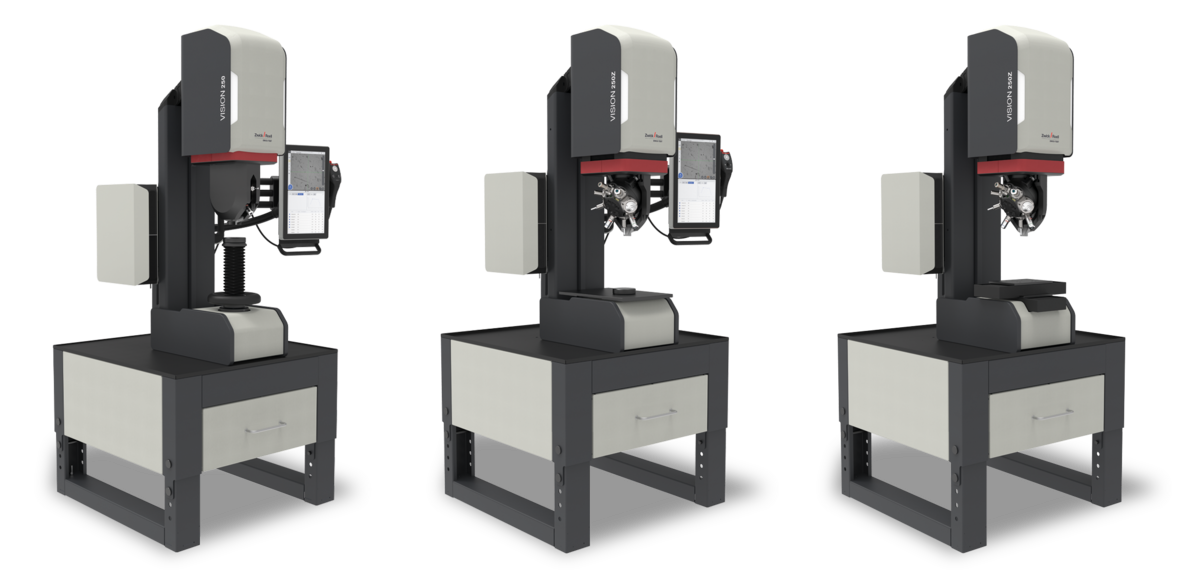
- Digital Knoop testers
- Automated hardness testing systems
Optical Microscopes
High-quality optical systems are essential for measuring small indentations accurately.
Systémy digitálneho zobrazovania
Modern equipment often features:
- Kamery s vysokým rozlíšením
- Automated edge detection
- Image analysis software
Automated Hardness Testing Solutions
Advanced systems provide:
- Automatické zaostrovanie
- Motorizované stolíky
- Automated measurements
- Statistical reporting tools
These features improve efficiency and consistency.
Advantages of the Knoop Hardness Test
The Knoop method offers several significant advantages:
- Excellent for thin coatings
- Minimálne poškodenie vzorky
- Suitable for brittle materials
- Vysoká presnosť merania
- Ideal for microstructural analysis
- Reduced risk of cracking in fragile materials
- Vynikajúca opakovateľnosť
These benefits make it one of the preferred methods for microhardness testing.
Limitations of the Knoop Hardness Test
Despite its advantages, some limitations exist:
- Requires careful surface preparation
- Pomalšie ako testovanie podľa Rockwella
- Vyžaduje optické meranie
- More sensitive to operator technique
- Specialized equipment may be required
However, these limitations are generally outweighed by the method’s precision.
Bežné aplikácie
Thin Coatings and Surface Layers
The shallow indentation depth makes Knoop testing ideal for:
- PVD povlaky
- Povlaky nanášané metódou CVD
- Surface-treated materials
- Thin protective layers
Ceramics and Glass
The method is widely used to evaluate brittle materials that may crack under other testing methods.
Semiconductor Materials
Microelectronic manufacturers use Knoop testing to evaluate hardness in delicate components.
Hutnícky výskum
Researchers use the test to study:
Heat-Affected Zones and Weld Analysis
The Knoop method enables detailed hardness profiling across welded regions and heat-treated surfaces.
Knoop vs Vickers Hardness Test
| Funkcia | Knoop | Vickers |
|---|---|---|
| Tvar hrotov | Podlhovastý diamant | Diamond Pyramid |
| Tenké nátery | Vynikajúce | Very Good |
| Penetration Depth | Very Shallow | Deeper |
| Brittle Materials | Vynikajúce | Dobré |
| Microstructure Analysis | Vynikajúce | Vynikajúce |
Knoop testing is often preferred when minimal penetration depth is required.
Knoop vs Rockwell Hardness Test
| Funkcia | Knoop | Rockwell |
|---|---|---|
| Rozsah zaťaženia | Very Low | Moderate to High |
| Tenké materiály | Vynikajúce | Obmedzené |
| Rýchlosť testovania | Moderate | Fast |
| Precision | Very High | Vysoká |
| Optické meranie | Required | Not Required |
Rockwell testing is generally better suited for production environments, while Knoop testing excels in laboratory analysis.
Priemyselné normy a dodržiavanie predpisov
The Knoop hardness test is governed by internationally recognized standards, including:
- ASTM E384
- ISO 4545
For official standards information:
Compliance ensures reliable and globally accepted hardness measurements.
Často kladené otázky
1. What is the Knoop hardness test used for?
It is used to measure the hardness of thin coatings, brittle materials, microstructures, and delicate components.
2. What does HK mean?
HK stands for Knoop Hardness.
3. Why is the Knoop indenter different from the Vickers indenter?
Its elongated shape produces a shallower indentation, making it better suited for thin materials and coatings.
4. Can the Knoop hardness test evaluate ceramics?
Yes. It is widely used for ceramics, glass, and other brittle materials.
5. Is the Knoop hardness test destructive?
The indentation is extremely small and generally considered minimally destructive.
6. Which industries use Knoop hardness testing?
Electronics, aerospace, metallurgy, ceramics, medical devices, and research laboratories.
Záver
Stránka Knoop hardness test is one of the most effective methods for evaluating thin materials, brittle components, coatings, and microstructural features. Its shallow indentation depth, high precision, and suitability for delicate specimens make it a valuable tool in advanced materials testing and quality control.
By understanding the principles, procedures, applications, and advantages of the Knoop hardness test, manufacturers and researchers can achieve accurate hardness measurements while minimizing specimen damage and ensuring reliable material evaluation.