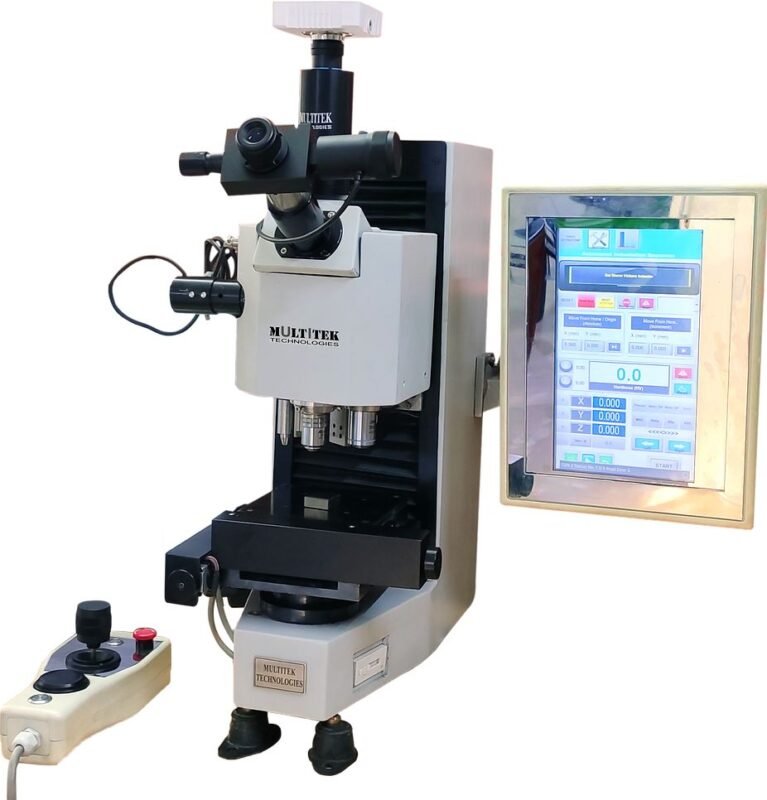
Digital Rockwell Hardness Tester: Features, Benefits and Buying Guide


Introduction to Digital Rockwell Hardness Testers
A digital Rockwell hardness tester is a modern hardness testing instrument that combines the proven Rockwell testing method with advanced digital technologies. Compared with traditional manual testers, digital systems offer higher accuracy, automated operation, real-time data processing, and simplified reporting, making them an excellent choice for manufacturers and laboratories.
Digital Rockwell hardness testers are widely used for quality control, incoming material inspection, heat treatment verification, and research applications. Their ability to provide fast, direct hardness readings without optical measurement makes them one of the most efficient hardness testing solutions available.
As manufacturing moves toward Industry 4.0 and smart quality management, digital Rockwell hardness testers have become essential equipment for improving productivity and ensuring traceable test results.
What Is a Digital Rockwell Hardness Tester?
Definition and Purpose
A digital Rockwell hardness tester is an electronic hardness testing machine that measures the depth of indentation produced by a standardized indenter under specified minor and major loads, then automatically calculates and displays the Rockwell hardness value.
Its primary purposes include:
- Material quality inspection
- Heat treatment verification
- Production quality control
- Research and development
- Incoming material testing
- Compliance with ASTM and ISO standards
How Digital Rockwell Hardness Testers Work
The testing process typically includes:
- Applying a minor load to establish the reference position.
- Applying the specified major load.
- Removing the major load while maintaining the minor load.
- Measuring indentation depth electronically.
- Displaying the hardness value automatically on the digital interface.
Electronic sensors eliminate manual reading errors and improve measurement consistency.
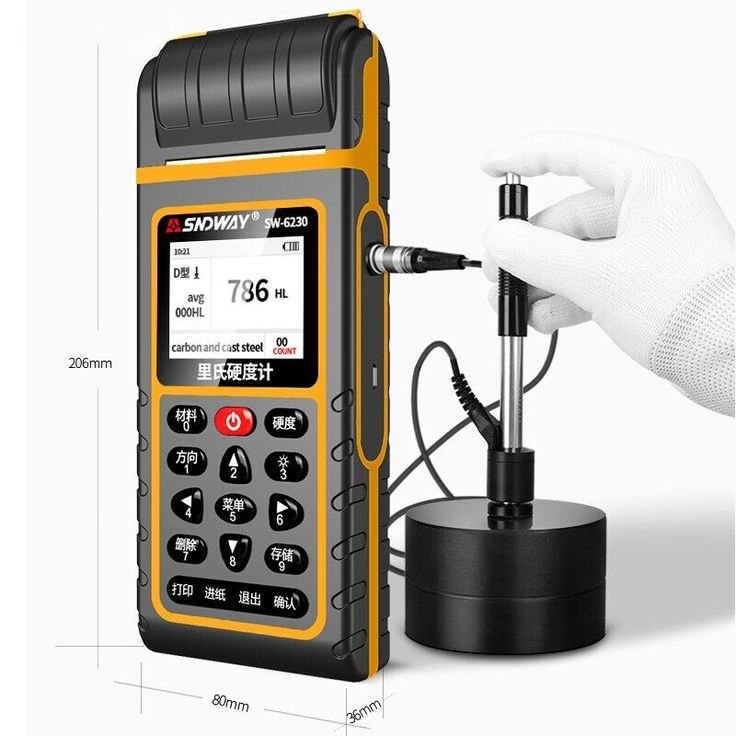
Advantages of Digital Rockwell Hardness Testers
Improved Accuracy and Repeatability
Digital sensors and closed-loop control systems deliver highly repeatable hardness measurements with minimal operator influence.
Faster Testing and Higher Productivity
Automatic testing sequences reduce inspection time, making digital testers ideal for production environments.
User-Friendly Operation
Modern systems feature intuitive touchscreen interfaces, guided menus, and automatic scale selection, reducing training requirements.
Automated Data Management
Many digital models support:
- Automatic result storage
- Statistical analysis
- Batch testing
- Data export
- Quality reports
These capabilities improve traceability and simplify quality management.
Key Features of Modern Digital Rockwell Hardness Testers
Touchscreen Interface
Large color displays provide easy access to testing parameters, results, and system settings.
Automatic Load Application
Motorized loading systems ensure consistent force application and reduce operator variability.
Multiple Rockwell Scales
Many digital testers support:
- HRA
- HRB
- HRC
- Superficial Rockwell scales
- Optional hardness conversions
Digital Display and Result Storage
Features often include:
- Instant hardness display
- Internal memory
- Statistical calculations
- Test history
USB, Ethernet, and Software Connectivity
Modern testers commonly offer:
- USB export
- Ethernet communication
- Printer support
- PC software integration
- Laboratory Information Management System (LIMS) compatibility
Types of Digital Rockwell Hardness Testers
Benchtop Digital Models
Benchtop systems are suitable for:
- Quality laboratories
- Production inspection
- Material certification
- Educational institutions
Automatic Digital Systems
Automatic models provide:
- Motorized sample positioning
- Automatic loading and unloading
- Batch testing
- Automated reporting
These systems are ideal for high-volume manufacturing.
Superficial Digital Rockwell Testers
Superficial models use lower test forces and are designed for:
- Thin sheets
- Surface-hardened parts
- Precision components
- Coated materials
Applications of Digital Rockwell Hardness Testers
Heat Treatment Inspection
Digital Rockwell hardness testers verify hardness after:
- Quenching
- Tempering
- Carburizing
- Nitriding
- Induction hardening
Automotive Manufacturing
Common applications include testing:
- Gears
- Bearings
- Shafts
- Transmission components
- Engine parts
Aerospace Components
Manufacturers inspect structural alloys and safety-critical components to ensure compliance with strict hardness requirements.
Metal Fabrication
Fabricators use digital testers to verify raw materials and finished products before shipment.
Quality Control Laboratories
Laboratories rely on digital Rockwell hardness testers for routine testing, certification, and research.
How to Choose the Right Digital Rockwell Hardness Tester
Material and Hardness Range
Choose a model that supports the Rockwell scales required for your materials and applications.
Testing Capacity
Consider specimen size, maximum height, throat depth, and production volume when selecting equipment.
Automation Requirements
Automatic features such as motorized loading, programmable test cycles, and barcode integration can significantly improve productivity.
Software and Reporting Features
Look for systems with:
- Statistical process control (SPC)
- Report generation
- Data backup
- Cloud or network connectivity
- Multi-language software

Calibration and Maintenance
Calibration Blocks
Use certified Rockwell hardness test blocks to verify instrument accuracy and maintain traceability.
Routine Verification
Regular performance checks help ensure consistent and reliable measurements.
Preventive Maintenance
Recommended maintenance includes:
- Cleaning the indenter
- Inspecting the load mechanism
- Verifying calibration
- Updating software
- Checking mechanical alignment
Routine maintenance helps extend equipment life and minimize downtime.
Advantages and Limitations
Advantages
Digital Rockwell hardness testers provide:
- High measurement accuracy
- Excellent repeatability
- Fast testing cycles
- Automatic calculations
- Digital record keeping
- Easy operation
- Reduced operator error
Limitations
Potential limitations include:
- Higher initial investment than manual models
- Less suitable for ultra-thin coatings
- Requires routine calibration
- Proper specimen preparation remains essential
Despite these considerations, digital systems offer substantial productivity and quality improvements.
Industry Standards and Compliance
Common standards for digital Rockwell hardness tester operation include:
- ASTM E18 – Standard Test Methods for Rockwell Hardness of Metallic Materials
- ISO 6508 – Metallic Materials—Rockwell Hardness Test
- ASTM E140 – Hardness Conversion Tables
- ISO/IEC 17025 (for accredited testing laboratories)
Official references:
Compliance with these standards helps ensure reliable, traceable, and internationally recognized hardness measurements.
Frequently Asked Questions
1. What is a digital Rockwell hardness tester?
A digital Rockwell hardness tester is an electronic instrument that automatically measures indentation depth and displays the Rockwell hardness value.
2. What are the benefits of a digital tester compared with a manual model?
Digital models offer greater accuracy, faster testing, automatic calculations, data storage, and easier operation.
3. Which industries use digital Rockwell hardness testers?
Automotive, aerospace, metal processing, heat treatment, manufacturing, research laboratories, and quality control facilities.
4. Can digital Rockwell hardness testers export test data?
Yes. Most modern systems support USB, Ethernet, printer output, and software integration for reporting and traceability.
5. Which Rockwell scales are supported?
Many digital testers support HRA, HRB, HRC, superficial Rockwell scales, and hardness conversion functions.
6. How often should a digital Rockwell hardness tester be calibrated?
Routine verification using certified hardness test blocks is recommended, with full calibration performed according to applicable standards and manufacturer guidelines.
Conclusion
A digital Rockwell hardness tester combines the reliability of the Rockwell testing method with advanced electronic controls, automated measurements, and digital data management. Whether used in manufacturing, heat treatment, laboratories, or research facilities, these instruments improve testing efficiency, reduce operator error, and provide highly accurate hardness measurements.
By selecting the appropriate digital Rockwell hardness tester with the right level of automation, connectivity, and testing capacity, organizations can strengthen quality control processes, meet international standards, and support long-term manufacturing excellence.