




Universal Hardness Tester: Complete Guide to Multi-Method Hardness Testing

Introduction to Universal Hardness Testing
In modern manufacturing and materials research, different applications often require different hardness testing methods. Instead of purchasing multiple machines, many organizations choose a universal hardness tester that can perform several hardness tests within a single system. This approach improves efficiency, reduces equipment costs, and provides greater testing flexibility.
Hardness testing is one of the most widely used methods for evaluating material properties. By measuring a material’s resistance to indentation, engineers can assess strength, wear resistance, heat treatment quality, and manufacturing consistency. A universal system simplifies this process by supporting multiple hardness scales and testing standards on one platform.
As quality requirements become increasingly demanding, versatile testing equipment has become a valuable asset for laboratories, production facilities, and research institutions.
Why Multi-Method Hardness Testing Matters
Increased Testing Flexibility
Different materials require different hardness testing methods. A single testing technique may not be suitable for every application.
For example:
- Rockwell testing is ideal for production environments.
- Brinell testing is effective for large castings and forgings.
- Vickers testing provides high precision for laboratory analysis.
- Knoop testing is useful for thin coatings and delicate materials.
A universal system allows operators to switch between methods without changing machines.
Improved Laboratory Efficiency
Combining multiple testing capabilities into one instrument can help organizations:
- Reduce equipment investment
- Save laboratory space
- Simplify operator training
- Improve workflow efficiency
- Enhance testing flexibility
These benefits make multi-method systems attractive for both industrial and research applications.
What Is a Universal Hardness Tester?
Definition and Working Principle
A universal hardness tester is an advanced testing instrument designed to perform multiple hardness testing methods using a single platform. It combines different load ranges, indenters, and measurement technologies to support a broad variety of materials and applications.
Most systems operate by:
- Selecting a testing method
- Applying a controlled load
- Creating an indentation
- Measuring indentation characteristics
- Calculating hardness values automatically
Modern systems often automate much of this process to improve accuracy and productivity.
Supported Hardness Testing Methods
Many universal systems support:
- Rockwell testing
- Superficial Rockwell testing
- Brinell testing
- Vickers testing
- Micro Vickers testing
- Knoop testing
The exact capabilities vary by model and manufacturer.
Common Hardness Scales
Supported hardness scales typically include:
- HRC
- HRB
- HRA
- HBW
- HV
- HK
Many systems also provide automatic hardness conversion functions.
Types of Hardness Tests Performed
Rockwell Testing
Rockwell testing measures indentation depth and provides direct hardness readings.
Benefits include:
- Fast testing
- High productivity
- Easy operation
- Excellent repeatability
This method is widely used for steel and heat-treated components.
Brinell Testing
Brinell testing uses a tungsten carbide ball indenter and is suitable for:
- Cast iron
- Structural steel
- Forgings
- Large industrial parts
The larger indentation provides a representative hardness value over a wider area.
Vickers Testing
Vickers testing uses a diamond pyramid indenter and offers:
- High accuracy
- Broad load range
- Thin material testing
- Metallurgical analysis
It is one of the most versatile hardness testing methods available.
Knoop and Microhardness Testing
These methods are commonly used for:
- Thin coatings
- Electronic materials
- Surface treatments
- Small components
Microhardness testing provides highly localized hardness measurements.
Key Components of a Universal Hardness Tester
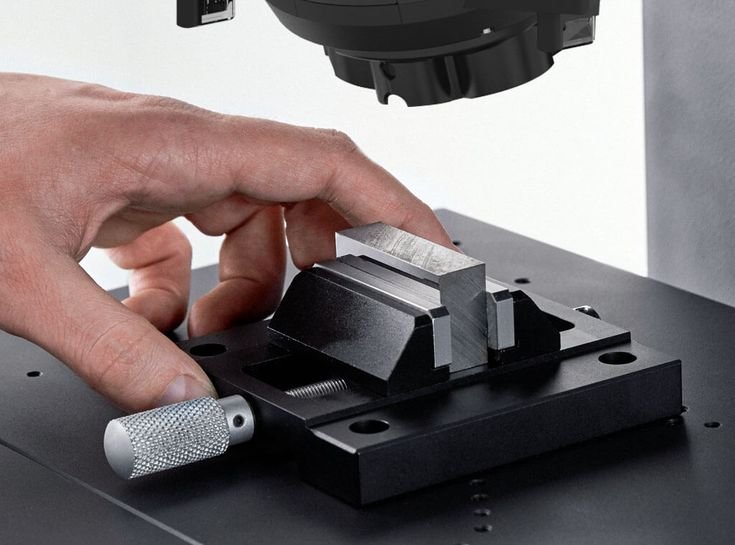
Multi-Load Application Systems
Universal systems support multiple test forces to accommodate different testing methods and material types.
Advanced Indenters
Common indenters include:
- Diamond cones
- Diamond pyramids
- Knoop indenters
- Tungsten carbide balls
Automatic indenter selection is available on many advanced models.
Optical Measurement Technology
Modern systems often incorporate:
These technologies improve measurement accuracy and efficiency.
Digital Control and Software
Advanced software provides:
- Automated calculations
- Hardness conversions
- Statistical analysis
- Report generation
- Data storage
Many systems also support network connectivity and remote access.
Materials Commonly Evaluated
Steel and Stainless Steel
Hardness testing helps verify heat treatment quality and mechanical performance.
Aluminum and Copper Alloys
Lightweight and non-ferrous materials frequently require hardness verification.
Cast Iron and Forgings
Heavy industrial components benefit from multi-method testing capabilities.
Coatings and Thin Materials
Microhardness methods are ideal for evaluating surface layers and thin sections.
Industrial Applications
Manufacturing Quality Control
Manufacturers use universal testing systems to verify material consistency and production quality.
Aerospace and Automotive Industries
Applications include testing:
- Gears
- Bearings
- Engine parts
- Structural components
- Aerospace alloys
Research and Development Laboratories
Researchers rely on flexible testing systems for material development and process optimization.
Metallurgical Analysis
Hardness measurements often support microstructural investigations and failure analyses.
Benefits of Using a Universal Hardness Tester
Organizations can gain several advantages by using a universal testing system:
- Multiple testing methods in one machine
- Reduced equipment costs
- Improved laboratory efficiency
- Greater testing flexibility
- Higher productivity
- Enhanced data management
- Better return on investment
These benefits make universal systems highly attractive for laboratories and quality control departments.
How to Select the Right System
When evaluating equipment options, consider the following factors.
Testing Requirements
Identify which hardness methods will be used most frequently.
Material Types
Different materials may require different load ranges and testing capabilities.
Automation Features
Advanced systems may include:
- Automatic focusing
- Motorized stages
- Automated measurement
- Automatic report generation
Software Functionality
Evaluate:
- Hardness conversion features
- Data storage capacity
- Reporting tools
- Connectivity options
Budget Considerations
Consider both initial purchase costs and long-term operating expenses.
Maintenance and Calibration Requirements
To ensure reliable results:
- Use certified reference blocks regularly
- Follow scheduled calibration procedures
- Maintain optical systems
- Keep testing surfaces clean
- Document maintenance activities
Proper care extends equipment life and maintains measurement accuracy.

Industry Standards and Compliance
Universal hardness testing systems typically comply with internationally recognized standards, including:
- ASTM E18
- ASTM E10
- ASTM E384
- ISO 6506
- ISO 6507
- ISO 6508
For official standards information, visit:
Compliance ensures reliable and globally accepted testing results.
Frequently Asked Questions
1. What is a universal hardness tester?
It is a testing system capable of performing multiple hardness testing methods, such as Rockwell, Brinell, and Vickers, using a single machine.
2. What are the advantages of a universal system?
It provides flexibility, reduces equipment costs, saves space, and supports multiple testing standards.
3. Which industries use universal hardness testers?
Manufacturing, aerospace, automotive, metallurgy, research laboratories, and educational institutions.
4. Can one machine perform both macro and micro hardness testing?
Many advanced systems support both standard and microhardness applications.
5. Are hardness conversions available automatically?
Most modern systems include automatic hardness scale conversion functions.
6. Why is calibration important?
Calibration ensures measurement accuracy and compliance with international standards.
Conclusion
A universal hardness tester provides an efficient and cost-effective solution for organizations that require multiple hardness testing methods. By combining Rockwell, Brinell, Vickers, and microhardness capabilities into a single platform, these systems improve laboratory efficiency, simplify testing procedures, and enhance quality control.
Whether used in manufacturing, research, metallurgy, or product development, universal testing systems offer the flexibility and precision needed to meet modern material evaluation requirements. Investing in a versatile testing solution can help improve productivity, reduce equipment costs, and support long-term operational success.