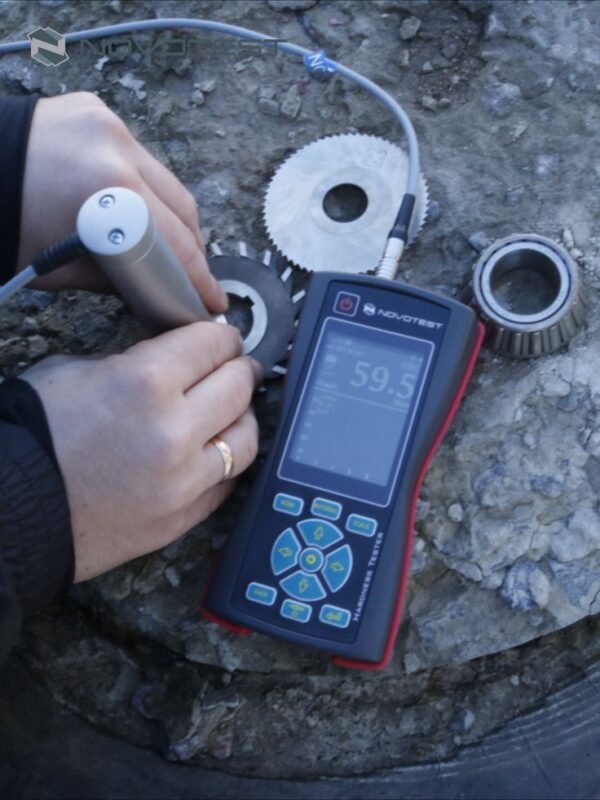
Cast Iron Hardness Tester: The Ultimate Guide to Accurate Hardness Testing for Cast Iron Components


Introduction to Cast Iron Hardness Testers
A cast iron hardness tester is a specialized instrument used to measure the hardness of gray iron, ductile iron, white iron, malleable iron, and alloy cast iron components. Hardness testing is one of the most important quality control procedures in foundries and manufacturing plants because it verifies material properties, confirms heat treatment results, and ensures product consistency.
Cast iron is widely used in engine blocks, machine bases, pipes, brake discs, pumps, valves, gears, rolls, and heavy industrial equipment due to its excellent wear resistance, vibration damping, and castability. Because different grades of cast iron exhibit varying microstructures and hardness levels, selecting the appropriate hardness testing method is essential for obtaining reliable results.
Modern cast iron hardness testers combine precision loading systems, digital electronics, optical measurement technology, and intelligent software to provide accurate, repeatable, and standards-compliant hardness measurements in laboratories, production lines, and field inspections.
What Is a Cast Iron Hardness Tester?
Tanım ve Amaç
A cast iron hardness tester is a testing instrument designed to evaluate the resistance of cast iron to indentation or penetration using standardized hardness testing methods. The measured hardness helps manufacturers verify mechanical properties, monitor production quality, and ensure compliance with engineering specifications.
Typical applications include:
- Gelen malzeme kontrolü
- Foundry quality control
- Heat treatment verification
- Manufacturing process monitoring
- Product certification
- Arıza analizi
- Wear resistance evaluation
- Final inspection
Why Hardness Testing Is Important for Cast Iron
Sertlik testi, üreticilerin aşağıdakileri doğrulamasına yardımcı olur:
- Malzeme tutarlılığı
- Graphite structure quality
- Isıl işlem etkinliği
- Aşınma direnci
- Mechanical performance
- Product durability
Regular hardness testing also helps identify casting defects and process variations before components are placed into service.
Hardness Testing Methods for Cast Iron
Brinell Sertlik Testi
Brinell testing is the preferred method for most cast iron applications because its large carbide ball indenter averages the effects of graphite flakes or nodules, providing reliable and representative hardness values.
Best for:
- Gray cast iron
- Ductile iron
- Malleable iron
- Large castings
- Engine blocks
Rockwell Sertlik Testi
Rockwell testing offers fast production testing with minimal operator intervention.
Best for:
- Machined cast iron parts
- Üretim kalite kontrolü
- Medium-sized components
Vickers Sertlik Testi
Vickers testing provides high precision and is widely used for metallurgical investigations and smaller cast iron components.
Best for:
- Precision castings
- Alloy cast iron
- Laboratory analysis
- Araştırma uygulamaları
Portable Leeb Hardness Testing
Portable Leeb hardness testers enable rapid on-site inspection of large or installed cast iron components without dismantling equipment.
Typical applications include:
- Machine frames
- Wind turbine housings
- Large pumps
- Industrial rolls
- Heavy castings
Mikrosertlik Testi
Microhardness testing evaluates localized hardness using low test forces.
Uygulamalar şunları içerir:
- Heat-affected zones
- Yüzey işlemleri
- Thin sections
- Metallographic studies
- Mikroyapı analizi

Types of Cast Iron Hardness Testers
Bench Hardness Testers
Bench-mounted systems provide high accuracy and repeatability for laboratory and production quality control.
Portable Cast Iron Hardness Testers
Portable instruments are ideal for inspecting large castings and installed equipment in the field.
Dijital Sertlik Test Cihazları
Modern digital testers feature:
- Dokunmatik ekran arayüzleri
- Otomatik sertlik hesaplamaları
- Multi-scale conversion
- Digital report generation
Otomatik Sertlik Test Sistemleri
Fully automated machines include:
- Servo kontrollü yükleme
- Otomatik girinti ölçümü
- Optical autofocus
- Statistical process control
- Automatic reporting
Main Components of a Cast Iron Hardness Tester
Indenter and Loading System
Depending on the testing method, the tester may use:
- Carbide ball (Brinell)
- Diamond cone (Rockwell)
- Diamond pyramid (Vickers)
Automatic loading mechanisms ensure stable and repeatable force application.
Optik Ölçüm Sistemi
Advanced systems include:
- High-resolution microscope
- CCD or CMOS camera
- LED illumination
- Automatic edge detection
These features improve measurement accuracy while reducing operator influence.
Electronic Control Unit
The controller manages:
- Test force application
- Hardness calculations
- Hardness scale conversion
- Veri depolama
- Instrument diagnostics
Yazılım ve Veri Yönetimi
Modern software supports:
- Otomatik sertlik hesaplamaları
- İstatistiksel analiz
- SPC raporlaması
- PDF ve Excel'e aktarma
- LIMS entegrasyonu
Key Features of Modern Cast Iron Hardness Testers
High Accuracy and Repeatability
Precision loading systems and advanced optical measurement ensure consistent hardness results across different cast iron grades.
Multiple Hardness Scale Conversion
Many systems automatically convert results between:
- HBW
- HRC
- HRB
- HV
- HL
Automatic Measurement and Analysis
AI-assisted image analysis automatically measures indentation dimensions, improving productivity and minimizing operator error.
Digital Reporting and Connectivity
Modern instruments often include:
- USB
- Ethernet
- Wi-Fi
- Barcode integration
- QR code support
- Cloud synchronization
Endüstriyel Uygulamalar
Foundries and Casting Plants
Hardness testing verifies casting quality before machining and shipment.
Otomotiv Endüstrisi
Kontrol edin:
- Engine blocks
- Brake discs
- Flywheels
- Cylinder heads
- Differential housings
Heavy Machinery Manufacturing
Aşağıdakilerin sertliğini ölçün:
- Machine beds
- Press frames
- Industrial rolls
- Gear housings
Mining and Construction Equipment
Uygulamalar şunları içerir:
- Crusher components
- Pump housings
- Excavator parts
- Wear-resistant castings
Energy and Infrastructure
Kontrol edin:
- Wind turbine hubs
- Valve bodies
- Pipeline fittings
- Large industrial pumps
How to Choose the Best Cast Iron Hardness Tester
Cast Iron Grade and Component Size
Consider whether testing involves gray iron, ductile iron, white iron, alloy iron, or malleable iron, as well as the size and geometry of the component.
Testing Method Selection
Brinell is generally preferred for most cast iron products, while Rockwell, Vickers, or Leeb may be more appropriate for specific applications.
Accuracy and Automation
Look for features such as:
- Servo kontrollü yükleme
- Otomatik girinti ölçümü
- Optical autofocus
- Digital reporting
- İstatistiksel analiz

Software and Standards Compliance
Select equipment supporting:
- ASTM and ISO standards
- Hardness conversion
- Verilerin izlenebilirliği
- Quality management integration
Kalibrasyon ve Bakım
Rutin bakım aşağıdakileri içermelidir:
- Sertifikalı sertlik referans blokları kullanılarak yapılan doğrulama
- Cleaning indenters and optical components
- Annual calibration
- Yazılım güncellemeleri
- Önleyici bakım denetimleri
Proper maintenance helps ensure accurate and repeatable hardness measurements.
Avantajlar ve Sınırlamalar
Avantajlar
A cast iron hardness tester offers:
- Yüksek ölçüm hassasiyeti
- Mükemmel tekrarlanabilirlik
- Multiple testing methods
- Otomatik operasyon
- Digital reporting
- Standards compliance
- Improved foundry quality control
Sınırlamalar
Olası sınırlamalar şunlardır:
- The graphite structure can influence localized hardness measurements.
- Surface preparation may be required.
- Portable testing methods may not match laboratory precision.
- Different cast iron grades may require different hardness testing methods.
Uluslararası Standartlar
Common standards for cast iron hardness tester Uygulama alanları şunlardır:
- ASTM E10 – Standard Test Method for Brinell Hardness of Metallic Materials
- ASTM E18 – Standard Test Methods for Rockwell Hardness of Metallic Materials
- ASTM E92 – Standard Test Methods for Vickers Hardness and Knoop Hardness of Metallic Materials
- ASTM E384 – Malzemelerin Mikroindentasyon Sertliği için Standart Test Yöntemi
- ISO 6506 – Brinell Hardness Test
- ISO 6507 – Vickers Hardness Test
- ISO 6508 – Rockwell Hardness Test
Official references:
Sıkça Sorulan Sorular
1. What is a cast iron hardness tester used for?
A cast iron hardness tester measures the hardness of cast iron components for quality control, heat treatment verification, foundry inspection, and manufacturing process monitoring.
2. Which hardness testing method is best for cast iron?
Brinell hardness testing is generally considered the preferred method because its larger indentation provides representative results for cast iron’s heterogeneous microstructure. Rockwell, Vickers, and Leeb methods are also used depending on the application.
3. Can a cast iron hardness tester measure different hardness scales?
Yes. Many modern digital testers automatically calculate or convert results into HBW, HRC, HRB, HV, and HL, depending on the testing method.
4. Which industries commonly use cast iron hardness testers?
Foundries, automotive manufacturers, heavy machinery producers, mining equipment manufacturers, energy companies, and quality inspection laboratories all rely on cast iron hardness testing.
5. How often should a cast iron hardness tester be calibrated?
Calibration should be verified regularly using certified hardness reference blocks and performed according to manufacturer recommendations and applicable ASTM or ISO standards.
6. How do I choose the right cast iron hardness tester?
Consider the cast iron grade, component size, required testing standard, measurement accuracy, automation level, software capabilities, and whether testing will be performed in a laboratory or on-site.
Sonuç
A cast iron hardness tester is an essential instrument for evaluating the quality, durability, and mechanical performance of cast iron components throughout manufacturing and inspection. Whether using Brinell, Rockwell, Vickers, Microhardness, or portable Leeb testing, selecting the right hardness tester ensures accurate, repeatable, and standards-compliant measurements.
When choosing a cast iron hardness tester, evaluate the type of cast iron, component geometry, testing standards, automation requirements, and software functionality. Investing in a reliable hardness testing system improves quality assurance, optimizes production processes, minimizes inspection errors, and helps manufacturers consistently produce high-performance cast iron products.