




Prístroj na meranie tvrdosti hliníka: Kompletný sprievodca presným meraním tvrdosti hliníka


Introduction to Aluminum Hardness Testers
. aluminum hardness tester is a specialized instrument used to measure the hardness of aluminum and aluminum alloys. Hardness testing is essential for verifying material quality, monitoring heat treatment, ensuring product consistency, and confirming compliance with engineering specifications.
Because aluminum is softer than many other engineering metals, selecting the appropriate hardness testing method is particularly important. Different aluminum products—including castings, forgings, extrusions, sheets, plates, and machined components—may require different testing techniques depending on their thickness, surface finish, and application.
Modern aluminum hardness testers combine precision loading systems, digital measurement technology, optical imaging, and intelligent software to deliver accurate and repeatable hardness results in laboratories, production lines, and field inspections.
What Is an Aluminum Hardness Tester?
Vymedzenie pojmu a účel
. aluminum hardness tester is a testing instrument that measures the resistance of aluminum to indentation using standardized hardness testing methods such as Brinell, Rockwell, Vickers, or portable Leeb testing. The measured hardness helps manufacturers evaluate mechanical properties and verify production quality.
Typické aplikácie zahŕňajú:
- Kontrola prichádzajúceho materiálu
- Overenie tepelného spracovania
- Aluminum extrusion quality control
- Monitorovanie výrobného procesu
- Certifikácia výrobkov
- Analýza porúch
- Výskum a vývoj
- Final quality inspection
Why Hardness Testing Is Important for Aluminum
Skúšky tvrdosti pomáhajú výrobcom overiť:
- Alloy consistency
- Účinnosť tepelného spracovania
- Mechanické vlastnosti
- Odolnosť proti opotrebeniu
- Životnosť výrobku
- Manufacturing quality
It is also widely used to distinguish between different aluminum alloy tempers, such as T4, T5, and T6.
Aluminum Hardness Testing Methods
Brinell Hardness Testing for Aluminum
Brinell testing is one of the most common methods for aluminum because its larger indentation provides reliable results on relatively soft materials.
Najlepšie pre:
- Cast aluminum
- Aluminum plates
- Kované výrobky
- Štrukturálne komponenty
Rockwell Hardness Testing for Aluminum
Rockwell testing provides fast and efficient measurements using scales such as HRB or HRF, making it suitable for production environments.
Najlepšie pre:
- Aluminum bars
- Extruded products
- Kontrola výroby
Vickers Hardness Testing for Aluminum
Vickers testing offers excellent accuracy over a wide range of aluminum alloys and is frequently used in laboratories.
Najlepšie pre:
- Thin aluminum sheets
- Presné súčiastky
- Aerospace parts
- Výskumné aplikácie
Micro Vickers Hardness Testing
Micro Vickers testing evaluates localized hardness using low test forces.
Typické aplikácie zahŕňajú:
- Tenké povlaky
- Zóny ovplyvnené teplotou
- Welds
- Povrchové úpravy
- Metalografická analýza
Prenosné meranie tvrdosti podľa Leeba
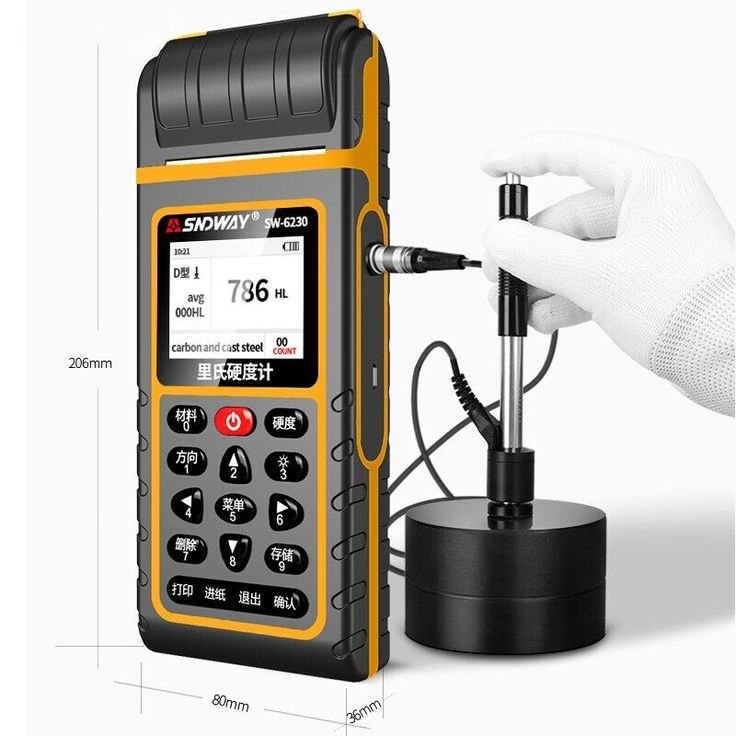
Portable Leeb testers are useful for large aluminum components that cannot easily be moved to a laboratory.
Typické aplikácie zahŕňajú:
- Aluminum molds
- Veľké odliatky
- Štrukturálne komponenty
- Ťažké stroje

Webster Hardness Testing for Aluminum Profiles
Webster hardness testers are specially designed for rapid testing of aluminum extrusions, profiles, and fabricated products.
Široké uplatnenie majú v:
- Window and door manufacturing
- Aluminum profile production
- Construction materials inspection
Types of Aluminum Hardness Testers
Prístroje na meranie tvrdosti na pracovnom stole
Laboratory systems provide high accuracy and repeatability for routine inspection and research.
Portable Aluminum Hardness Testers
Portable models allow convenient field inspection of large or installed aluminum components.
Digitálne testery tvrdosti
Vlastnosti digitálnych systémov:
- Touchscreen operation
- Automatické výpočty tvrdosti
- Prepočet stupnice tvrdosti
- Vytváranie digitálnych správ
Systémy na automatické meranie tvrdosti
Medzi plne automatizované stroje patria:
- Servo-riadené zaťaženie
- Automatické meranie odtlačkov
- Zobrazovanie s automatickým zaostrovaním
- Štatistická analýza
- Vytváranie správ
Main Components of an Aluminum Hardness Tester
Vtlačovač a systém zaťaženia
V závislosti od metódy testovania môže tester použiť:
- Karbidová guľa (Brinell)
- Diamantový kužeľ (Rockwell)
- Diamantová pyramída (Vickers)
Automatic loading systems ensure stable force application and consistent measurements.
Optický merací systém
Modern optical systems include:
- Mikroskop s vysokým rozlíšením
- CCD alebo CMOS kamera
- LED osvetlenie
- Automatická detekcia okrajov
These technologies improve measurement precision and reduce operator influence.
Digital Controller
Ovládač riadi:
- Pôsobenie skúšobnej sily
- Výpočty tvrdosti
- Konverzia mierky
- Diagnostika prístrojov
- Ukladanie údajov
Správa softvéru a údajov
Advanced software supports:
- Automatický výpočet tvrdosti
- Štatistická analýza
- Správy vo formátoch PDF a Excel
- Analýza SPC
- Integrácia systému LIMS
Key Features of Modern Aluminum Hardness Testers
Vysoká presnosť a opakovateľnosť
Precision loading systems and digital image processing ensure reliable hardness measurements.
Prepočet medzi viacerými stupnicami tvrdosti
Many instruments convert results between:
- HBW
- HRB
- HRF
- HV
- HL
Automatic Image Analysis
AI-assisted image processing reduces operator error and improves measurement consistency.
Smart Reporting and Connectivity
Modern machines support:
- USB
- Ethernet
- Wi-Fi
- Integrácia čiarových kódov
- Podpora QR kódov
- Synchronizácia v cloude
Priemyselné aplikácie
Aluminum Extrusion Industry
Verify hardness after extrusion and aging treatments to ensure product quality.
Výroba automobilov
Skontrolujte:
- Wheels
- Suspension parts
- Štrukturálne komponenty
- Engine housings
Komponenty pre letecký a kozmický priemysel
Evaluate hardness of:
- Aircraft structures
- Precision-machined parts
- High-strength aluminum alloys
Construction and Building Materials
Test:
- Window profiles
- Curtain walls
- Structural aluminum products
Electronics and Precision Manufacturing
Zmerajte tvrdosť:
- Heat sinks
- Electronic housings
- Precision aluminum parts
How to Choose the Best Aluminum Hardness Tester
Material Type and Product Form
Consider whether you are testing:
- Castings
- Extrusions
- Plates
- Sheets
- Tubes
- Presné súčiastky
Výber skúšobnej metódy
Choose the hardness method according to material thickness, surface finish, and applicable testing standards.
Presnosť a automatizácia
Hľadajte funkcie, ako napríklad:
- Servo-riadené zaťaženie
- Automatické meranie odtlačkov
- Optické automatické zaostrovanie
- Digitálne podávanie správ
Softvér a súlad s normami
Select systems supporting:
- Prepočet stupnice tvrdosti
- Štatistická analýza
- Zhoda s normami ASTM a ISO
- Vysledovateľnosť údajov
Kalibrácia a údržba
Bežná údržba by mala zahŕňať:
- Overovanie pomocou certifikovaných referenčných blokov na meranie tvrdosti
- Čistenie indentorov a optických komponentov
- Ročná kalibrácia
- Aktualizácie softvéru
- Preventívne kontrolné prehliadky
Proper maintenance ensures long-term measurement reliability.
Výhody a obmedzenia
Výhody
An aluminum hardness tester offers:
- Vysoká presnosť merania
- Vynikajúca opakovateľnosť
- Rôzne metódy testovania
- Automatizovaná prevádzka
- Digitálne podávanie správ
- Dodržiavanie noriem
- Improved production quality
Obmedzenia
Medzi možné obmedzenia patria:
- Softer aluminum requires careful test force selection.
- Surface preparation is often important.
- Different aluminum alloys may require different hardness scales.
- Portable methods may not provide laboratory-level precision.
Medzinárodné normy
Spoločné normy pre aluminum hardness tester Medzi oblasti použitia patria:
- ASTM E10 – Skúška tvrdosti podľa Brinella
- ASTM E18 – Skúška tvrdosti podľa Rockwella
- ASTM E92 – Skúška tvrdosti podľa Vickersa
- ASTM E384 – Skúška tvrdosti mikroindentáciou
- ISO 6506 – Skúška tvrdosti podľa Brinella
- ISO 6507 – Skúška tvrdosti podľa Vickersa
- ISO 6508 – Skúška tvrdosti podľa Rockwella
Oficiálne zdroje:
Často kladené otázky
1. What is an aluminum hardness tester used for?
An aluminum hardness tester measures the hardness of aluminum and aluminum alloys for quality control, heat treatment verification, material certification, and manufacturing process monitoring.
2. Which hardness testing method is best for aluminum?
Brinell and Vickers are commonly used for aluminum, while Rockwell is popular for production testing. Webster testers are also widely used for aluminum extrusions, and portable Leeb testers are suitable for large aluminum components.
3. Can one aluminum hardness tester measure multiple hardness scales?
Yes. Many modern digital testers automatically calculate or convert results into HBW, HRB, HRF, HV, and other hardness scales, depending on the testing method.
4. Which industries commonly use aluminum hardness testers?
They are widely used in aluminum extrusion, automotive, aerospace, construction, electronics, precision manufacturing, and quality inspection laboratories.
5. How often should an aluminum hardness tester be calibrated?
Kalibráciu je potrebné pravidelne overovať pomocou certifikovaných referenčných blokov na meranie tvrdosti a vykonávať ju v súlade s odporúčaniami výrobcu a príslušnými normami ASTM alebo ISO.
6. How do I choose the right aluminum hardness tester?
Consider the aluminum alloy, product form, testing standard, required accuracy, automation level, and whether testing will be performed in a laboratory or on-site.
Záver
. aluminum hardness tester is an essential tool for verifying the quality and mechanical properties of aluminum materials throughout manufacturing and inspection. Whether using Brinell, Rockwell, Vickers, Micro Vickers, Leeb, or Webster testing methods, the right tester ensures accurate, repeatable, and standards-compliant hardness measurements.
When selecting an aluminum hardness tester, evaluate your alloy type, product geometry, testing standards, automation requirements, and software capabilities. A high-quality hardness testing system improves quality assurance, supports process optimization, reduces inspection errors, and helps manufacturers consistently produce reliable aluminum products.

