




Aluminum Hardness Tester: The Complete Guide to Accurate Aluminum Hardness Testing


Introduction to Aluminum Hardness Testers
En aluminum hardness tester is a specialized instrument used to measure the hardness of aluminum and aluminum alloys. Hardness testing is essential for verifying material quality, monitoring heat treatment, ensuring product consistency, and confirming compliance with engineering specifications.
Because aluminum is softer than many other engineering metals, selecting the appropriate hardness testing method is particularly important. Different aluminum products—including castings, forgings, extrusions, sheets, plates, and machined components—may require different testing techniques depending on their thickness, surface finish, and application.
Modern aluminum hardness testers combine precision loading systems, digital measurement technology, optical imaging, and intelligent software to deliver accurate and repeatable hardness results in laboratories, production lines, and field inspections.
What Is an Aluminum Hardness Tester?
Definición y finalidad
En aluminum hardness tester is a testing instrument that measures the resistance of aluminum to indentation using standardized hardness testing methods such as Brinell, Rockwell, Vickers, or portable Leeb testing. The measured hardness helps manufacturers evaluate mechanical properties and verify production quality.
Entre las aplicaciones más habituales se incluyen:
- Inspección de la mercancía recibida
- Verificación del tratamiento térmico
- Aluminum extrusion quality control
- Manufacturing process monitoring
- Product certification
- Análisis de fallos
- Investigación y desarrollo
- Final quality inspection
Why Hardness Testing Is Important for Aluminum
Hardness testing helps manufacturers verify:
- Alloy consistency
- Eficacia del tratamiento térmico
- Mechanical performance
- Resistencia al desgaste
- Durabilidad del producto
- Manufacturing quality
It is also widely used to distinguish between different aluminum alloy tempers, such as T4, T5, and T6.
Aluminum Hardness Testing Methods
Brinell Hardness Testing for Aluminum
Brinell testing is one of the most common methods for aluminum because its larger indentation provides reliable results on relatively soft materials.
Best for:
- Cast aluminum
- Aluminum plates
- Piezas forjadas
- Structural components
Rockwell Hardness Testing for Aluminum
Rockwell testing provides fast and efficient measurements using scales such as HRB or HRF, making it suitable for production environments.
Best for:
- Aluminum bars
- Extruded products
- Production inspection
Vickers Hardness Testing for Aluminum
Vickers testing offers excellent accuracy over a wide range of aluminum alloys and is frequently used in laboratories.
Best for:
- Thin aluminum sheets
- Componentes de precisión
- Aerospace parts
- Aplicaciones de investigación
Micro Vickers Hardness Testing
Micro Vickers testing evaluates localized hardness using low test forces.
Entre las aplicaciones más habituales se incluyen:
- Revestimientos finos
- Heat-affected zones
- Welds
- Tratamientos superficiales
- Análisis metalográfico
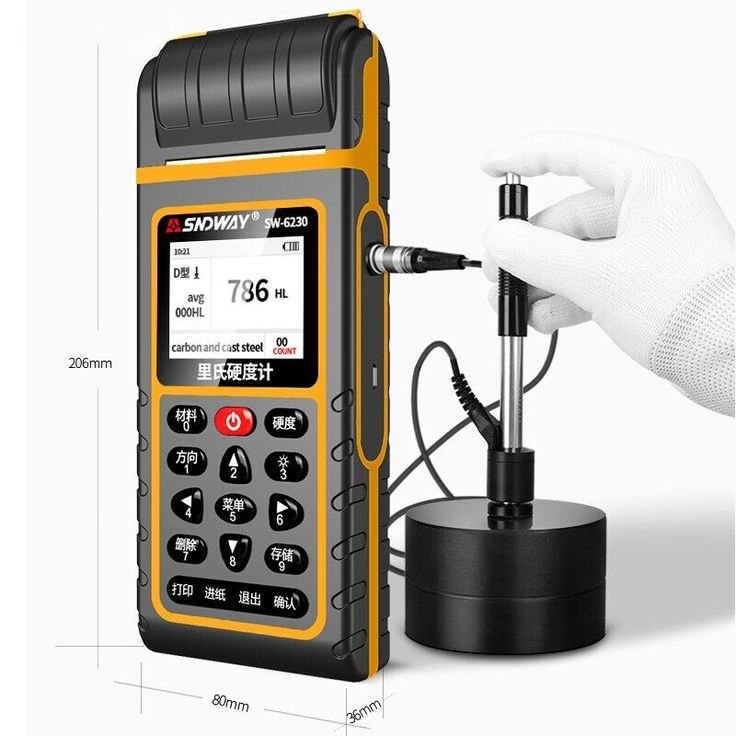
Portable Leeb Hardness Testing
Portable Leeb testers are useful for large aluminum components that cannot easily be moved to a laboratory.
Entre las aplicaciones más habituales se incluyen:
- Aluminum molds
- Large castings
- Structural components
- Heavy machinery

Webster Hardness Testing for Aluminum Profiles
Webster hardness testers are specially designed for rapid testing of aluminum extrusions, profiles, and fabricated products.
Se utilizan ampliamente en:
- Window and door manufacturing
- Aluminum profile production
- Construction materials inspection
Types of Aluminum Hardness Testers
Bench Hardness Testers
Laboratory systems provide high accuracy and repeatability for routine inspection and research.
Portable Aluminum Hardness Testers
Portable models allow convenient field inspection of large or installed aluminum components.
Digital Hardness Testers
Digital systems feature:
- Manejo mediante pantalla táctil
- Cálculos automáticos de dureza
- Hardness scale conversion
- Digital report generation
Sistemas automáticos de ensayo de dureza
Fully automated machines include:
- Carga controlada por servomotor
- Automatic indentation measurement
- Auto-focus imaging
- Análisis estadístico
- Generación de informes
Main Components of an Aluminum Hardness Tester
Indenter and Loading System
Depending on the testing method, the tester may use:
- Carbide ball (Brinell)
- Diamond cone (Rockwell)
- Diamond pyramid (Vickers)
Automatic loading systems ensure stable force application and consistent measurements.
Sistema de medición óptica
Modern optical systems include:
- High-resolution microscope
- CCD or CMOS camera
- LED illumination
- Automatic edge detection
Estas tecnologías mejoran la precisión de las mediciones y reducen la influencia del operador.
Digital Controller
The controller manages:
- Test force application
- Hardness calculations
- Scale conversion
- Instrument diagnostics
- Almacenamiento de datos
Software and Data Management
El software avanzado es compatible con:
- Cálculo automático de la dureza
- Análisis estadístico
- PDF and Excel reports
- Análisis SPC
- Integración con el LIMS
Key Features of Modern Aluminum Hardness Testers
High Accuracy and Repeatability
Precision loading systems and digital image processing ensure reliable hardness measurements.
Multiple Hardness Scale Conversion
Many instruments convert results between:
- HBW
- HRB
- HRF
- HV
- HL
Automatic Image Analysis
AI-assisted image processing reduces operator error and improves measurement consistency.
Smart Reporting and Connectivity
Modern machines support:
- USB
- Ethernet
- Wi-Fi
- Barcode integration
- QR code support
- Cloud synchronization
Aplicaciones industriales
Aluminum Extrusion Industry
Verify hardness after extrusion and aging treatments to ensure product quality.
Fabricación de automóviles
Comprobar:
- Wheels
- Suspension parts
- Structural components
- Engine housings
Componentes aeroespaciales
Evaluate hardness of:
- Aircraft structures
- Precision-machined parts
- High-strength aluminum alloys
Construction and Building Materials
Test:
- Window profiles
- Curtain walls
- Structural aluminum products
Electronics and Precision Manufacturing
Mide la dureza de:
- Heat sinks
- Electronic housings
- Precision aluminum parts
How to Choose the Best Aluminum Hardness Tester
Material Type and Product Form
Consider whether you are testing:
- Castings
- Extrusions
- Plates
- Sheets
- Tubes
- Componentes de precisión
Testing Method Selection
Choose the hardness method according to material thickness, surface finish, and applicable testing standards.
Accuracy and Automation
Look for features such as:
- Carga controlada por servomotor
- Automatic indentation measurement
- Optical autofocus
- Informes digitales
Software and Standards Compliance
Select systems supporting:
- Hardness scale conversion
- Análisis estadístico
- ASTM and ISO compliance
- Data traceability
Calibración y mantenimiento
El mantenimiento periódico debería incluir:
- Verificación mediante bloques de referencia de dureza certificados
- Cleaning indenters and optical components
- Annual calibration
- Actualizaciones de software
- Inspecciones de mantenimiento preventivo
Proper maintenance ensures long-term measurement reliability.
Ventajas y limitaciones
Ventajas
An aluminum hardness tester offers:
- Gran precisión de medición
- Excelente repetibilidad
- Multiple testing methods
- Automated operation
- Informes digitales
- Standards compliance
- Improved production quality
Limitaciones
Entre las posibles limitaciones se incluyen:
- Softer aluminum requires careful test force selection.
- Surface preparation is often important.
- Different aluminum alloys may require different hardness scales.
- Portable methods may not provide laboratory-level precision.
Normas internacionales
Normas comunes para aluminum hardness tester Entre sus aplicaciones se incluyen:
- ASTM E10 – Brinell Hardness Testing
- ASTM E18 – Rockwell Hardness Testing
- ASTM E92 – Vickers Hardness Testing
- ASTM E384 – Microindentation Hardness Testing
- ISO 6506 – Brinell Hardness Test
- ISO 6507 – Vickers Hardness Test
- ISO 6508 – Rockwell Hardness Test
Fuentes oficiales:
Preguntas frecuentes
1. What is an aluminum hardness tester used for?
An aluminum hardness tester measures the hardness of aluminum and aluminum alloys for quality control, heat treatment verification, material certification, and manufacturing process monitoring.
2. Which hardness testing method is best for aluminum?
Brinell and Vickers are commonly used for aluminum, while Rockwell is popular for production testing. Webster testers are also widely used for aluminum extrusions, and portable Leeb testers are suitable for large aluminum components.
3. Can one aluminum hardness tester measure multiple hardness scales?
Yes. Many modern digital testers automatically calculate or convert results into HBW, HRB, HRF, HV, and other hardness scales, depending on the testing method.
4. Which industries commonly use aluminum hardness testers?
They are widely used in aluminum extrusion, automotive, aerospace, construction, electronics, precision manufacturing, and quality inspection laboratories.
5. How often should an aluminum hardness tester be calibrated?
Calibration should be verified regularly using certified hardness reference blocks and performed according to manufacturer recommendations and applicable ASTM or ISO standards.
6. How do I choose the right aluminum hardness tester?
Consider the aluminum alloy, product form, testing standard, required accuracy, automation level, and whether testing will be performed in a laboratory or on-site.
Conclusión
En aluminum hardness tester is an essential tool for verifying the quality and mechanical properties of aluminum materials throughout manufacturing and inspection. Whether using Brinell, Rockwell, Vickers, Micro Vickers, Leeb, or Webster testing methods, the right tester ensures accurate, repeatable, and standards-compliant hardness measurements.
When selecting an aluminum hardness tester, evaluate your alloy type, product geometry, testing standards, automation requirements, and software capabilities. A high-quality hardness testing system improves quality assurance, supports process optimization, reduces inspection errors, and helps manufacturers consistently produce reliable aluminum products.

