




Portable Hardness Tester Complete Guide 36 Essential Insights for Accurate On-Site Testing


Outline for the Article on Portable Hardness Tester
| Topic Area | Detailed Coverage with LSI Keywords |
|---|---|
| Introduction to Portable Hardness Tester | mobile hardness testing |
| What Is a Portable Hardness Tester | handheld hardness tester |
| Why Portability Matters | on-site inspection |
| Working Principle | rebound method |
| Leeb Portable Hardness Tester | dynamic hardness testing |
| Ultrasonic Portable Hardness Tester | UCI method |
| Comparison of Portable Methods | rebound vs ultrasonic |
| Advantages of Portable Hardness Tester | flexibility |
| Limitations | surface preparation |
| Applications in Oil & Gas | pipeline inspection |
| Applications in Power Plants | turbine testing |
| Applications in Automotive | large components |
| Applications in Aerospace | structural testing |
| Applications in Construction | steel structures |
| Portable Hardness Tester for Weld Inspection | HAZ testing |
| Supported Hardness Scales | HRC, HB, HV |
| Data Storage and Export | USB, Bluetooth |
| Calibration | reference test blocks |
| Accuracy Considerations | material type |
| Environmental Durability | industrial design |
| Choosing the Right Portable Hardness Tester | buyer guide |
| Johoyd Portable Hardness Tester Solutions | trusted supplier |
| Future Trends | smart portable testers |
| FAQs | common questions |
| Conclusion | summary |
Introduction
A Portable Hardness Tester is an essential tool for industries that require fast and accurate hardness measurement directly at the job site. Unlike traditional bench-top hardness testing machines, portable testers are compact, lightweight, and designed for field applications. They eliminate the need to cut samples or transport heavy components to laboratories.
From oil pipelines and power plant turbines to construction beams and automotive components, portable hardness testers provide reliable results wherever testing is required. This detailed guide explores how portable hardness testers work, their types, applications, advantages, limitations, and how to choose the right system.
What Is a Portable Hardness Tester
A Portable Hardness Tester is a handheld or mobile device designed to measure the hardness of materials directly on large, heavy, or installed components.
It allows testing without dismantling equipment.
Mobility increases efficiency.
Why Portability Matters
In many industries, materials cannot be moved easily due to size or installation constraints.
Portable testing offers:
- On-site inspection
- Reduced downtime
- Lower transportation costs
- Immediate results
Field measurement saves time.
Working Principle
Most portable hardness testers operate using dynamic or ultrasonic methods.
They apply controlled impact or vibration and measure material response.
The measured response is converted into standard hardness values.
Leeb Portable Hardness Tester (Rebound Method)
The most common portable hardness tester is based on the Leeb hardness test.
It works by:
- Striking the surface with an impact body.
- Measuring rebound velocity.
- Calculating hardness value (HL).
The device converts HL values into other scales like HRC, HB, and HV.
Ideal for large metal parts.

Ultrasonic Portable Hardness Tester (UCI Method)
Ultrasonic Contact Impedance (UCI) testers use a vibrating rod with a diamond indenter.
The frequency shift corresponds to material hardness.
Advantages:
- Suitable for thin materials
- Minimal surface damage
- High precision
Common in precision industries.
Comparison of Portable Methods
| Feature | Leeb (Rebound) | UCI (Ultrasonic) |
|---|---|---|
| Best for | Large heavy parts | Thin or small parts |
| Surface requirement | Smooth and solid | Polished preferred |
| Measurement type | Dynamic | Static contact |
| Portability | Very high | High |
Choosing the right method depends on application.
Advantages of Portable Hardness Tester
- Lightweight and compact
- Fast measurement
- No need to cut samples
- Multiple hardness scale conversion
- Digital data storage
Portable testers improve productivity.
Limitations
- Surface must be clean and smooth
- Small or lightweight parts may require support
- Less accurate than laboratory microhardness testing
- Conversion values may vary by material
Understanding limitations ensures proper use.
Applications in Oil & Gas
Portable hardness testers inspect:
- Pipelines
- Pressure vessels
- Storage tanks
They verify compliance with safety standards.
Applications in Power Plants
Used for turbine shafts, boilers, and welded joints.
Ensures structural integrity under high stress.
Applications in Automotive
Portable testers evaluate:
- Large engine blocks
- Chassis components
- Gears and axles
Testing improves reliability.
Applications in Aerospace
Aerospace industries use portable testers for structural components and maintenance inspections.
Hardness verification supports safety compliance.
Applications in Construction
Steel beams and heavy structures require on-site hardness verification.
Portable testing confirms material quality.
Portable Hardness Tester for Weld Inspection
Weld heat-affected zones (HAZ) must be tested to prevent cracking.
Portable testers are ideal for weld seam evaluation.
Supported Hardness Scales
Modern portable hardness testers support:
- HL (Leeb scale)
- HRC (Rockwell C)
- HRB (Rockwell B)
- HB (Brinell)
- HV (Vickers)
Automatic scale conversion simplifies operation.
Data Storage and Export
Advanced models include:
- Internal memory storage
- USB connectivity
- Bluetooth transfer
- Statistical reporting
Digital export enhances traceability.
Calibration
Regular calibration with certified reference test blocks ensures accuracy.
Verification should follow international standards.
Accuracy Considerations
Accuracy depends on:
- Proper surface preparation
- Correct impact device selection
- Adequate specimen mass
- Regular calibration
Proper usage improves reliability.
Environmental Durability
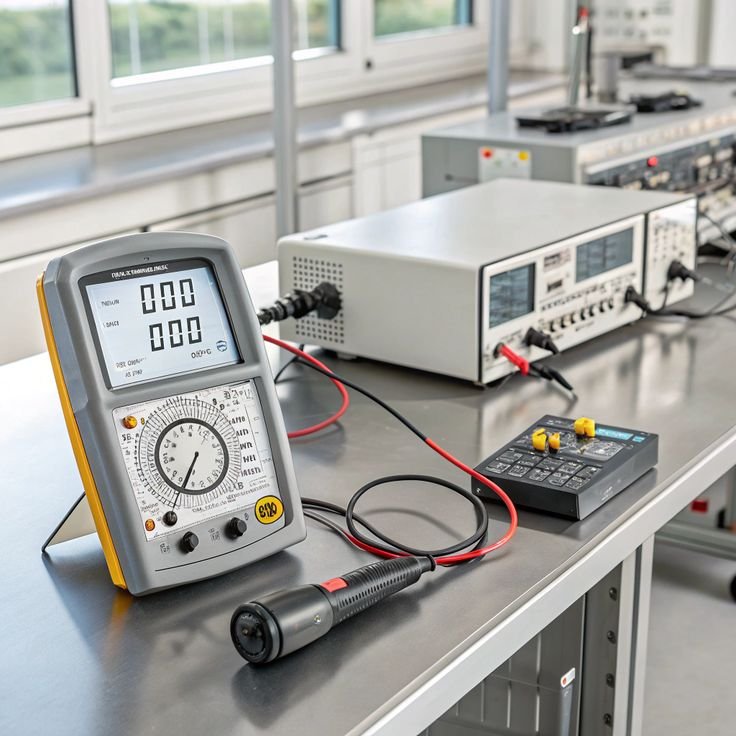
Industrial portable hardness testers are built with:
- Shock-resistant housings
- Dust protection
- Wide temperature tolerance
Designed for harsh environments.
Choosing the Right Portable Hardness Tester
Consider:
- Material type
- Component size
- Required hardness scale
- Data export needs
- Industry compliance
- Budget
Clear requirements guide selection.
Johoyd Portable Hardness Tester Solutions
Reliable Portable Hardness Tester equipment requires precision engineering and international compliance. Johoyd, through https://hardnesstests.com, provides advanced Leeb and ultrasonic portable hardness testers designed for industrial inspection, weld testing, and on-site quality control. Johoyd systems support multiple hardness scales, digital storage, and ASTM/ISO standards compliance for dependable field measurement.
Future Trends
Emerging innovations include:
- Wireless cloud data synchronization
- AI-based hardness analysis
- Improved miniaturization
- Enhanced battery life
Portable testing continues to evolve.
Frequently Asked Questions
What is the most common portable hardness tester?
The Leeb rebound hardness tester is widely used.
Can portable testers measure different hardness scales?
Yes, most models convert HL to HRC, HB, and HV.
Is portable hardness testing accurate?
Yes, when properly calibrated and applied correctly.
Can it test welded joints?
Yes, portable testers are ideal for weld hardness inspection.
Does surface finish affect results?
Yes, smoother surfaces improve accuracy.
Is laboratory testing more precise?
Laboratory microhardness testing offers higher precision for small samples.
Conclusion
A Portable Hardness Tester is a powerful and flexible tool for on-site hardness measurement across multiple industries. By enabling fast, reliable, and non-destructive testing, portable systems reduce downtime and improve operational efficiency.
With professional portable hardness testing solutions from Johoyd at hardnesstests.com, industries can achieve accurate, standards-compliant field measurements and strengthen quality control processes. Investing in the right portable hardness tester ensures safety, reliability, and long-term performance.