Handheld hardheidsmeter: Complete gids voor draagbare metaalhardheidsmetingen


Introduction to Handheld Hardness Testing
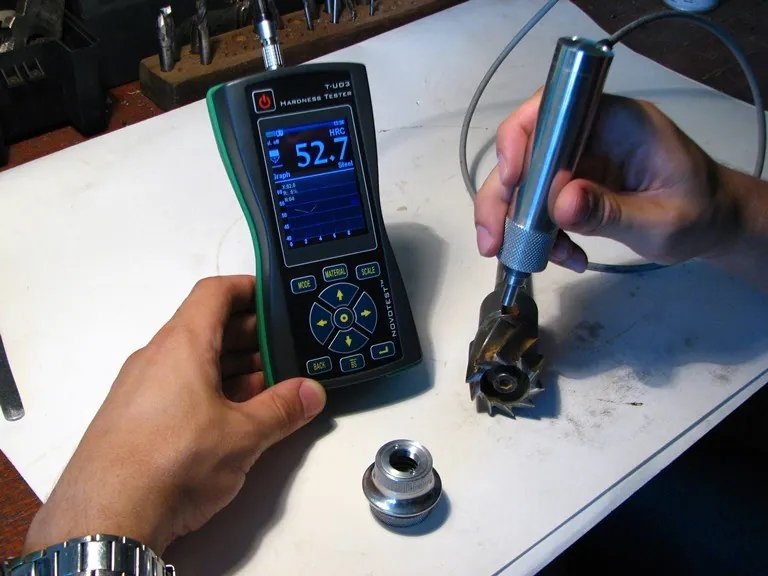
A draagbare hardheidsmeter is a portable instrument designed to measure the hardness of metals and engineering materials directly at the inspection site. Unlike traditional laboratory equipment, handheld devices allow inspectors and technicians to perform hardness evaluations on large, installed, or difficult-to-move components without disrupting operations.
Hardness testing is one of the most widely used methods for assessing material properties. It helps determine a material’s resistance to deformation and provides valuable information about strength, wear resistance, heat treatment quality, and overall mechanical performance.
With advances in digital technology, modern handheld hardness testers offer high accuracy, fast measurement speeds, automated data processing, and multi-scale conversion capabilities, making them indispensable tools for quality assurance and maintenance programs.
What Is a Handheld Hardness Tester?
Definitie en doel
A draagbare hardheidsmeter is a compact testing device that enables users to evaluate material hardness quickly and non-destructively. These instruments are specifically designed for field inspections, production environments, maintenance activities, and quality control applications.
Common uses include:
- Material verification
- Weld inspections
- Heat treatment confirmation
- Incoming material testing
- Equipment maintenance
- Manufacturing quality assurance
How Handheld Hardness Testing Works
Depending on the technology used, the testing process may involve impact or ultrasonic measurement methods.
Typische teststappen zijn onder andere:
- Positioning the probe on the test surface
- Applying the test force or impact
- Measuring the material response
- Calculating the hardness value
- Displaying the result instantly
Many systems automatically store test results for documentation and analysis.
Common Hardness Scales Supported
Most modern handheld devices support several hardness scales, including:
- HRC (Rockwell C)
- HRB (Rockwell B)
- HBW (Brinell)
- HV (Vickers)
- HS (Shore)
- HL (Leeb)
Automatic scale conversion allows users to work efficiently across different specifications and standards.
Why Handheld Hardness Testing Is Important
On-Site Inspection Capabilities
Large industrial components are often difficult to transport to a laboratory. Handheld testing allows measurements to be performed directly on:
- Pijpleidingen
- Drukvaten
- Turbines
- Constructiestaal
- Heavy machinery
This flexibility improves inspection efficiency and reduces logistical challenges.
Faster Quality Control Processes
Immediate test results allow production and maintenance teams to make informed decisions without waiting for laboratory analysis.
Reduced Downtime and Costs
Field testing minimizes equipment shutdowns, transportation expenses, and sample preparation requirements.

Types of Handheld Hardness Tester Technologies
Leeb Rebound Hardness Testers
Leeb testing is one of the most common portable hardness testing methods.
De voordelen zijn onder andere:
- Rapid measurements
- Eenvoudige bediening
- Wide hardness range
- Suitable for large metal components
The method evaluates hardness by measuring the rebound velocity of an impact body after striking the test surface.
Ultrasonic Contact Impedance (UCI) Testers
UCI technology uses ultrasonic vibrations combined with a diamond indenter.
Voordelen zijn onder andere:
- Hoge precisie
- Small indentation size
- Minimal surface damage
- Geschikt voor dunne materialen
UCI testing is often preferred for finished components and precision applications.
Integrated Multi-Method Testers
Some advanced handheld devices combine multiple technologies, allowing users to select the most suitable method for specific materials and testing conditions.
Key Features of Modern Handheld Hardness Tester Systems
Compact and Lightweight Design
Portability is a major advantage. Modern devices are designed for easy transportation and comfortable operation in field environments.
Digital Displays and User-Friendly Interfaces
Most systems include:
- Large LCD screens
- Intuitive menus
- Multi-language support
- Easy navigation
These features simplify operation and reduce training requirements.
Data Storage and Reporting Functions
Advanced devices often provide:
- Internal memory
- Statistische analyse
- Batch testing records
- Rapport genereren
These capabilities improve traceability and documentation.
Wireless Connectivity and Software Integration
Modern handheld hardness testers may support:
- Bluetooth communication
- USB connectivity
- Mobile applications
- Cloud-based data management
These features streamline quality control workflows.
Algemeen geteste materialen
Carbon and Alloy Steel
Hardness testing helps verify heat treatment effectiveness and material quality.
Roestvrij staal
Handheld devices are widely used for quality assurance in manufacturing and fabrication.
Gietijzer
Large cast components frequently require field hardness inspections.
Aluminium en non-ferrometalen
Lightweight alloys used in aerospace and transportation industries often undergo hardness evaluation.
Industriële toepassingen
Oil and Gas Inspection
Toepassingen zijn onder andere:
- Inspecties pijpleidingen
- Pressure vessel testing
- Refinery maintenance
- Offshore platform inspections
Manufacturing Quality Control
Production facilities use handheld testers for incoming inspections and process verification.
Aerospace and Transportation
Hardness testing helps ensure the integrity of critical structural and mechanical components.
Maintenance and Field Service
Maintenance teams use handheld devices to monitor equipment condition and verify repairs.
Benefits of Using a Handheld Hardness Tester
Modern handheld systems offer numerous advantages:
- True portability
- Fast testing speeds
- Non-destructive measurements
- Multiple hardness scales
- Reduced inspection costs
- Improved productivity
- Immediate results
These benefits make handheld hardness testing an effective solution for field inspections and quality control.
How to Choose the Right Handheld Hardness Tester
Testing Technology
Choose the appropriate method based on application requirements:
- Leeb for large metal components
- UCI for thin materials and precision testing
- Multi-method systems for maximum flexibility
Material Compatibility
Ensure the device is suitable for the materials being tested.
Nauwkeurigheidseisen
Different industries may require different levels of measurement precision.
Data Management Features
Consider:
- Memory capacity
- Connectivity options
- Reporting functions
- Software compatibility
Budget and Long-Term Value
Evaluate:
- Equipment cost
- Calibration requirements
- Maintenance expenses
- Operator training needs
Calibration and Maintenance Best Practices
To maintain accurate measurements:
- Verify performance using certified hardness blocks
- Keep probes clean and protected
- Follow manufacturer calibration schedules
- Store equipment properly
- Maintain detailed calibration records
Routine maintenance helps ensure long-term reliability.

Industriestandaarden en naleving
Handheld hardness testing equipment commonly complies with standards such as:
- ASTM A956
- ASTM E140
- ASTM E110
- ISO 16859
- ISO 6506
- ISO 6507
- ISO 6508
For additional information:
Compliance with recognized standards ensures consistent and globally accepted testing results.
Veelgestelde vragen
1. Waarvoor wordt een draagbare hardheidsmeter gebruikt?
It is used to measure material hardness directly at the inspection site without requiring laboratory equipment.
2. What is the difference between a handheld and portable hardness tester?
The terms are often used interchangeably, although handheld devices typically emphasize compact, one-hand operation.
3. Which industries use handheld hardness testers?
Manufacturing, oil and gas, aerospace, transportation, maintenance, and power generation industries.
4. Can handheld testers measure multiple hardness scales?
Yes. Most modern devices support several hardness scales and automatic conversions.
5. Are handheld hardness testers accurate?
High-quality instruments provide reliable and repeatable results when properly calibrated and used according to standards.
6. Waarom is kalibratie belangrijk?
Calibration ensures measurement accuracy and compliance with industry requirements.
Conclusie
A draagbare hardheidsmeter provides a practical and efficient solution for on-site material evaluation. With fast testing speeds, portability, and advanced digital capabilities, these instruments enable inspectors and engineers to verify material properties without the need for laboratory equipment.
Whether used in manufacturing, maintenance, oil and gas, aerospace, or quality control applications, handheld hardness testing technology delivers the flexibility, accuracy, and productivity required for modern industrial operations. Selecting the right device and maintaining proper calibration practices will help ensure reliable performance and long-term value.