Handheld-hardheidsmeter: waardevolle inzichten om de nauwkeurigheid, draagbaarheid en het testen ter plaatse te verbeteren


Inleiding tot draagbare hardheidsmeters
What is a Handheld Hardness Tester?
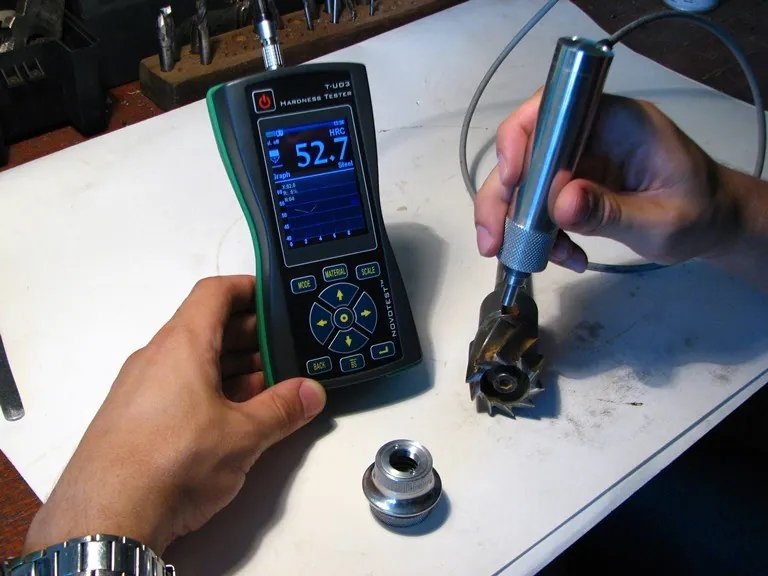
A handheld hardness tester is a compact and portable device used to measure the hardness of materials directly in the field. Unlike stationary testing machines, this device allows users to perform quick and reliable hardness measurements without moving the test object.
A handheld hardness tester is widely used in industries such as manufacturing, construction, oil and gas, and aerospace. It is especially useful for testing large components, installed equipment, or hard-to-reach areas.
Why Portability Matters in Modern Testing
In many industrial environments, transporting heavy or fixed components to a laboratory is impractical. A handheld hardness tester provides:
- On-site testing convenience
- Reduced downtime
- Immediate results for decision-making
This makes it an essential tool for quality control and maintenance operations.
Werkingsprincipe van een draagbare hardheidsmeter
Rebound (Leeb) Method
The rebound method is one of the most common techniques used in a handheld hardness tester. It measures hardness by impacting the material surface with a probe and analyzing the rebound velocity. A harder material results in a higher rebound.
Ultrasonic Contact Impedance (UCI) Method
The UCI method uses ultrasonic vibrations to measure hardness. A vibrating probe is pressed against the material, and the change in frequency is used to determine hardness values.
Data Conversion and Measurement
The readings from a handheld hardness tester can be converted into standard hardness scales such as:
- Rockwell (HRC)
- Brinell (HB)
- Vickers (HV)
This flexibility allows users to interpret results across different industry standards.
Soorten draagbare hardheidsmeters
Leeb Handheld Hardness Tester
This type uses the rebound method and is ideal for large and heavy materials. It is widely used due to its simplicity and portability.
Ultrasonic Handheld Hardness Tester
Suitable for thin materials and precision components, this tester provides high accuracy.
Portable Rockwell Hardness Tester
This type directly measures Rockwell hardness and is commonly used in industrial applications.
Comparison of Testing Methods
| Methode | Nauwkeurigheid | Optimale toepassing | Draagbaarheid |
|---|---|---|---|
| Leeb | Matig | Grote onderdelen | Hoog |
| UCI | Hoog | Thin/Small Parts | Hoog |
| Rockwell | Zeer hoog | General Testing | Matig |
Key Components of Handheld Hardness Tester
Slagapparaat of sonde
The probe interacts directly with the material surface to perform measurements.
Digital Display Unit
Displays results and allows users to adjust settings.
Internal Memory and Data Logging
Stores measurement data for later analysis and reporting.
Connectivity and Software
Modern handheld hardness tester devices include USB, Bluetooth, and cloud integration for data management.
Voordelen van een draagbare hardheidsmeter
Grote draagbaarheid
Its lightweight design allows easy transportation and use in various environments.
Fast and Reliable Results
A handheld hardness tester provides instant readings, improving workflow efficiency.
Kostenefficiëntie
By eliminating the need for laboratory testing, it reduces operational costs.
Toepassingen van draagbare hardheidsmeters
Verwerkende industrie
Wordt gebruikt voor kwaliteitscontrole en procesverificatie.
Olie- en gasindustrie
Ensures pipeline and equipment integrity.
Ruimtevaart en auto-industrie
Used for testing critical components where precision is vital.
Onderhoud en inspectie
Helps identify wear, fatigue, and material degradation.
Materials Tested Using Handheld Hardness Tester
Metalen en legeringen
Commonly used for steel, aluminum, and other metals.
Welded Structures
Ensures weld strength and quality.
Warmtebehandelde onderdelen
Verifies proper hardness after heat treatment processes.
Kalibratie en standaarden
International Standards (ASTM, ISO)
Handheld hardness tester devices must comply with global standards to ensure accuracy.
Lees hier meer: https://www.iso.org
Calibration Techniques
Regular calibration using reference blocks ensures reliable results.
De meetnauwkeurigheid waarborgen
Proper calibration and correct usage techniques are essential.
How to Use a Handheld Hardness Tester
Step-by-Step Operation
- Prepare the test surface
- Select the appropriate method
- Position the probe correctly
- Voer de test uit
- Record the results
Beste praktijken voor nauwkeurig testen
- Ensure a clean and smooth surface
- Zorg voor een juiste kalibratie
- Maintain consistent probe angle
Common User Mistakes
- Incorrect positioning
- Kalibratie overslaan
- Testing on uneven surfaces
Factors to Consider When Choosing a Handheld Hardness Tester
Measurement Range
Ensure the device covers the required hardness range.
Accuracy and Resolution
High accuracy is essential for critical applications.
Battery Life and Durability
Long battery life ensures uninterrupted operation.
Onderhoud en probleemoplossing
Regelmatig onderhoud
Regular cleaning and calibration are necessary.
Common Issues and Fixes
Inconsistent readings can often be resolved through recalibration.
Extending Equipment Life
Proper storage and handling increase lifespan.
Handheld Hardness Tester vs Bench Hardness Tester

Portability vs Precision
Handheld devices offer flexibility, while bench testers provide higher precision.
Cost and Usage Comparison
Handheld testers are more cost-effective for field applications.
Choosing the Right Option
Use handheld testers for on-site work and bench testers for laboratory testing.
Toekomstige trends in de technologie van draagbare hardheidsmeters
Smart and Digital Integration
Future handheld hardness tester devices will include smart features for automated analysis.
AI-Based Analysis
Artificial intelligence will enhance data interpretation.
Wireless Connectivity and Cloud Storage
Cloudgebaseerde systemen maken het mogelijk om gegevens in realtime te delen en te analyseren.
Veelgestelde vragen (FAQ's)
1. Waarvoor wordt een draagbare hardheidsmeter gebruikt?
It is used to measure material hardness directly on-site.
2. How does a handheld hardness tester work?
It uses rebound or ultrasonic methods to determine hardness.
3. What are the types of handheld hardness tester?
Leeb, UCI, and portable Rockwell testers are the main types.
4. Which industries use handheld hardness tester devices?
Manufacturing, oil and gas, aerospace, and automotive industries.
5. How accurate is a handheld hardness tester?
Accuracy depends on the method, with UCI providing higher precision.
6. Hoe vaak moet er worden gekalibreerd?
Regular calibration is recommended based on usage frequency.
Conclusie
A handheld hardness tester is a vital tool for modern material testing. Its portability, efficiency, and ability to deliver accurate on-site results make it indispensable across various industries.
As technology continues to evolve, handheld hardness tester devices will become smarter, more precise, and better integrated into digital systems. Selecting the right device and maintaining it properly ensures reliable performance and long-term value.