Vickers-hardheidsmeter: 15 waardevolle inzichten voor nauwkeurige materiaaltests

A Vickers-hardheidsmeter is a highly precise instrument used to measure the hardness of materials, especially metals and thin coatings. Known for its versatility and accuracy, it is widely used in laboratories, manufacturing industries, and research facilities.
This testing method is based on the Vickers Hardness Test, which uses a diamond-shaped indenter to create a small, measurable indentation on the material surface.
Inleiding tot Vickers hardheidsmeter
The Vickers hardness tester is one of the most versatile hardness testing tools.
Wat is een Vickers hardheidsmeter?
A Vickers hardness tester is a device used to determine material hardness by pressing a diamond pyramid indenter into the surface under a controlled load and measuring the indentation.
De belangrijkste kenmerken zijn onder meer:
- High precision measurement
- Geschikt voor een breed scala aan materialen
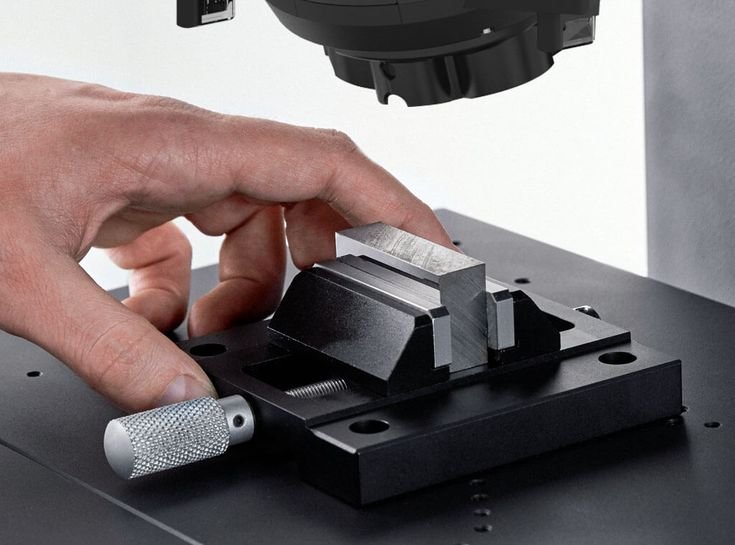
- Ability to test very small or thin samples
Het belang van materiaaltesten
This tester is essential for:
- Quality control in manufacturing
- Research and material development
- Surface and coating analysis
- Microstructure evaluation
Working Principle of Vickers Hardness Tester ⚙️
Inpersproces
A diamond pyramid indenter with a square base and an angle of 136° between opposite faces is pressed into the material under a specific load.
After removing the load, the indentation remains on the surface.
Hardness Calculation Method
The diagonal lengths of the indentation are measured, and the hardness value is calculated as HV (Vickers Hardness Number).
Belangrijkste onderdelen van Vickers hardheidsmeter
Diamond Pyramid Indenter
A high-precision diamond tool that creates the indentation.
Systeem voor belastingstoepassing
Applies controlled force using mechanical, hydraulic, or electronic systems.
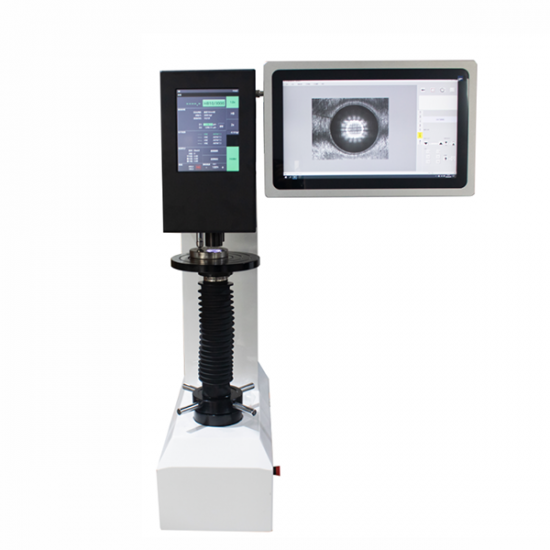
Optisch meetsysteem
Measures indentation diagonals using microscopes or digital imaging systems.
Soorten Vickers-hardheidsmeters
Micro Vickers Testers
Used for very small loads and thin materials such as coatings.
Macro Vickers Testers
Used for larger loads and bulk material testing.
Automatic Vickers Testers
Fully automated systems with digital measurement and data analysis.
Materials Suitable for Vickers Testing 🏗️
Metalen en legeringen
Steel, aluminum, copper, and advanced alloys.
Thin Materials and Coatings
Ideal for coatings, surface layers, and microstructures.
Advantages of Vickers Hardness Tester 🌟
High Precision Measurement
Provides highly accurate hardness values.
Wide Load Range
Suitable for both micro and macro testing.
Suitable for Small Samples
Can test very small or thin materials.
Applications of Vickers Hardness Tester 🏭
Metallurgische laboratoria
Used for detailed material analysis.
Quality Control in Manufacturing
Ensures product consistency and reliability.
Coating and Surface Testing
Measures hardness of thin coatings and treated surfaces.
Vergelijking met andere hardheidsmeetmethoden
Vickers vs Brinell
The Brinell Hardness Test uses a ball indenter, while Vickers uses a diamond pyramid for greater precision.
Vickers vs Rockwell
The Rockwell Hardness Test measures depth, while Vickers measures indentation size.
How to Choose a Vickers Hardness Tester 🔍
Load Range
Select based on material type and thickness.
Magnification and Accuracy
Ensure high-quality optical systems for precise measurement.
Automatiseringsfuncties
Consider digital and automatic testers for efficiency.
Onderhoud en kalibratie 🛠️
Regelmatig onderhoud
- Clean the indenter and specimen surface
- Inspect optical components
- Check alignment
Kalibratie
Use certified test blocks to ensure accuracy.

Future Trends in Vickers Hardness Testing 🚀
Digitale beeldvormingssystemen
Advanced cameras improve measurement accuracy.
Automation and AI Integration
Enhances efficiency and reduces human error.
Portable Micro Testing Devices
Enable field testing of small components.
Integration with Smart Manufacturing
Supports Industry 4.0 and data-driven production.
Veelgestelde vragen
What is a Vickers hardness tester?
It is a device used to measure material hardness using a diamond indenter.
Welke materialen kunnen worden getest?
Metals, alloys, coatings, and thin materials.
Wat is de meeteenheid?
HV (Vickers Hardness Number).
Why is Vickers testing preferred?
For its high precision and versatility.
Is it suitable for small samples?
Yes, it is ideal for small and thin materials.
Does it require calibration?
Ja, regelmatige kalibratie garandeert nauwkeurigheid.
Conclusie
A Vickers-hardheidsmeter is a powerful and versatile tool for precise material hardness measurement. Based on the Vickers Hardness Test, it provides accurate results across a wide range of materials and applications.
With continuous advancements in automation, digital imaging, and smart manufacturing integration, Vickers hardness testers remain essential for modern material testing and quality assurance. 🔍