




Hardness Testing Equipment Supplier for Industrial and Laboratory Material Analysis

Introduction to Hardness Testing Equipment Suppliers
A professional hardness testing equipment supplier provides essential solutions for companies and laboratories that need accurate material evaluation. Hardness testing is a critical part of quality control because it helps determine whether materials and components meet required mechanical performance standards.
Hardness testing equipment is widely used for:
- Steel inspection
- Heat-treated component verification
- Metal production control
- Coating evaluation
- Failure analysis
- Metallographic research
- Product development
Different industries require different testing methods. A manufacturing plant may need a fast Rockwell tester for routine inspection, while a research laboratory may require a high-precision Vickers or microhardness system.
A reliable supplier should understand these differences and provide equipment based on the customer’s actual requirements rather than simply offering a standard product.
A complete hardness testing solution may include:
- Hardness testers
- Diamond indenters
- Ball indenters
- Anvils and fixtures
- Hardness reference blocks
- Calibration tools
- Testing software
- Spare parts
- Technical services
Choosing the right supplier can directly affect measurement reliability, testing efficiency, and long-term equipment performance.
What Does a Hardness Testing Equipment Supplier Offer?
Hardness Testing Machines
A professional supplier may provide different types of hardness-testing systems, including:
- Rockwell hardness testers
- Brinell hardness testers
- Vickers hardness testers
- Knoop hardness testers
- Microhardness testers
- Universal hardness testers
- Portable hardness testers
- Automatic hardness testing systems
Each testing method has different advantages.
For example:
| Testing Method | Common Applications |
|---|---|
| Rockwell | Fast production inspection |
| Brinell | Castings, forgings, large components |
| Vickers | Laboratory and precision testing |
| Microhardness | Thin layers and small areas |
| Portable | Large or fixed components |
A knowledgeable supplier helps customers select the correct method according to material, size, hardness range, and testing standards.
Hardness Test Accessories
Accessories are important parts of a complete hardness testing system.
Common accessories include:
- Diamond indenters
- Tungsten carbide ball indenters
- Vickers diamond indenters
- Knoop indenters
- Flat anvils
- V-shaped anvils
- Custom fixtures
- Specimen holders
The correct accessories improve testing stability and help achieve consistent results.
Calibration and Verification Products
Hardness testing equipment requires regular verification to maintain measurement confidence.
Suppliers may provide:
- Hardness reference blocks
- Calibration kits
- Verification tools
- Indenter inspection equipment
- Calibration documentation
For quality-control laboratories, proper verification procedures are essential for maintaining reliable test results.
Technical Support Services
A professional supplier should provide support throughout the equipment lifecycle.
Services may include:
- Equipment selection
- Installation guidance
- Operator training
- Troubleshooting
- Maintenance advice
- Software assistance
- Spare-parts support
Strong technical support can reduce downtime and improve productivity.
Types of Hardness Testing Equipment
Rockwell Hardness Testing Equipment
Rockwell hardness testing measures indentation depth under specific loading conditions.
It is widely used in industrial environments because it offers:
- Fast testing speed
- Easy operation
- Repeatable results
- Multiple hardness scales
Common applications include:
- Steel parts
- Heat-treated components
- Automotive components
- Tools
- Machine parts
ASTM E18 is a commonly referenced standard for Rockwell hardness testing of metallic materials.

Brinell Hardness Testing Equipment
Brinell hardness testing uses a spherical indenter to create a larger indentation.
It is often selected for:
- Cast iron
- Large castings
- Forgings
- Aluminum alloys
- Copper alloys
The larger indentation can provide useful information when testing materials with uneven structures.
Vickers Hardness Testing Equipment
Vickers hardness testers use a diamond pyramid indenter.
They are widely used in:
- Metallurgical laboratories
- Research facilities
- Heat-treatment inspection
- Quality-control departments
Modern systems may include:
- Digital cameras
- Automatic measurement
- Image-analysis software
- Motorized stages
Microhardness Testing Equipment
Microhardness systems use low test forces to evaluate very small areas.
They are suitable for:
- Thin coatings
- Surface-hardened layers
- Small precision parts
- Metallographic samples
- Material structure analysis
These systems require high optical accuracy and stable mechanical positioning.
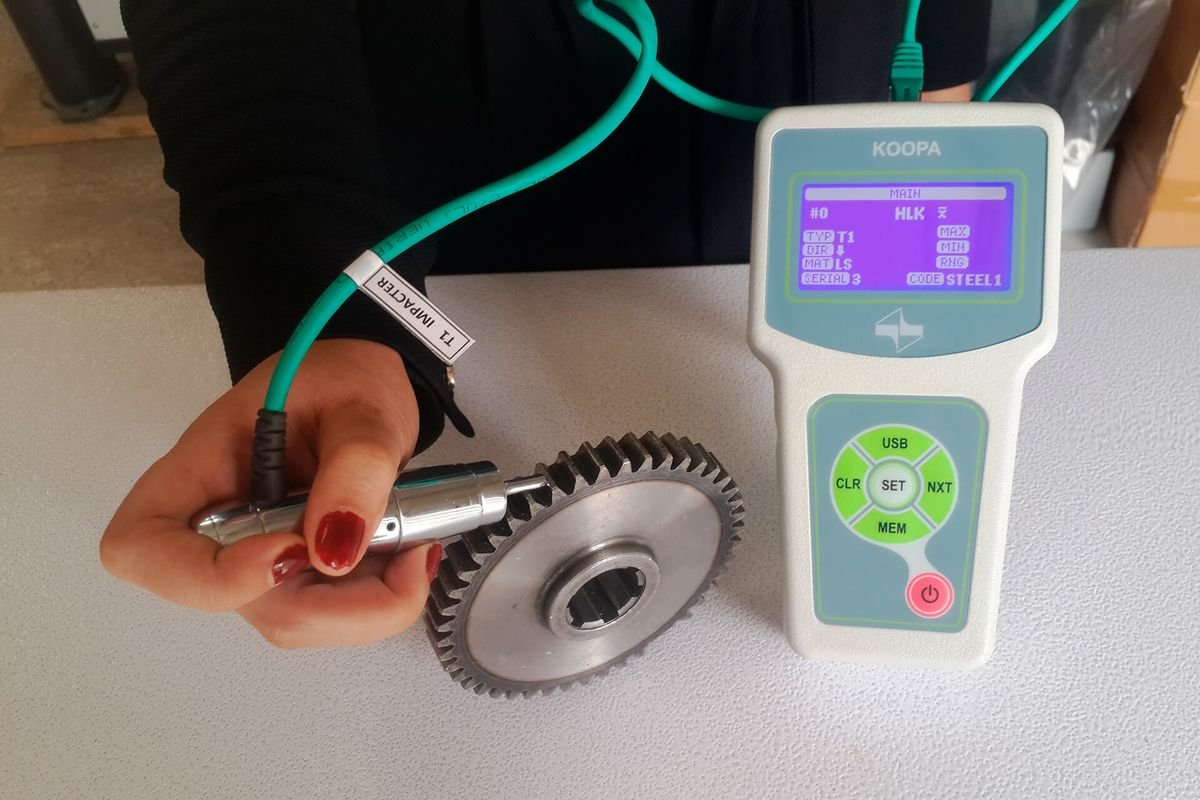
Portable Hardness Testing Equipment
Portable hardness testing equipment allows measurements to be performed directly at the inspection location.
Typical applications include:
- Pipelines
- Large machinery
- Heavy forgings
- Weld areas
- Field maintenance
Portable systems are useful when transporting the specimen to a laboratory is difficult or impossible.
Applications of Hardness Testing Equipment
Metal Manufacturing
Metal manufacturers use hardness testing to evaluate:
- Raw materials
- Finished products
- Production consistency
- Mechanical properties
Testing helps identify whether materials meet customer specifications.
Heat Treatment Inspection
Heat treatment processes can significantly change material hardness.
Hardness testing helps verify processes such as:
- Quenching
- Tempering
- Carburizing
- Nitriding
- Surface hardening
Accurate measurement helps ensure that treated components achieve the required performance.
Automotive and Aerospace Components
Critical components often require hardness inspection.
Examples include:
- Gears
- Shafts
- Bearings
- Engine components
- Aircraft parts
Reliable testing helps improve safety and product durability.
Laboratory Research
Research laboratories use hardness testing equipment for:
- Material comparison
- Metallographic studies
- Coating analysis
- Failure investigation
- New material development
High-precision systems are often preferred for research applications.
How to Select a Hardness Testing Equipment Supplier
Product Quality and Accuracy
The supplier should provide clear information about:
- Measurement accuracy
- Repeatability
- Test-force control
- Indenter specifications
- Optical resolution
- Software functions
Reliable measurement depends on both equipment quality and proper operation.
Testing Standards and Compliance
Before purchasing, confirm that the equipment supports the required standards.
Common standards include:
- ASTM hardness testing standards
- ISO hardness testing standards
- Industry-specific requirements
The supplier should understand which standards apply to your application.
Equipment Configuration
Consider whether the equipment includes the required accessories.
Check:
- Indenters
- Anvils
- Fixtures
- Software
- Measurement systems
- Calibration materials
A complete configuration prevents additional costs later.
Calibration and Service Support
A good supplier should support long-term equipment performance.
Ask about:
- Calibration services
- Reference blocks
- Maintenance guidance
- Technical support
- Repair services
Spare Parts Availability
Hardness testers may require replacement components during their service life.
Common spare parts include:
- Indenters
- Optical components
- Sensors
- Mechanical parts
- Electronic components
- Fixtures
Reliable spare-parts supply helps reduce equipment downtime.
Advantages of Working with an Experienced Supplier
An experienced hardness testing equipment supplier can provide several benefits:
Better Equipment Selection
They can recommend suitable systems based on:
- Material type
- Test method
- Sample size
- Testing frequency
- Accuracy requirements
Complete Testing Solutions
A professional supplier can provide:
- Machines
- Accessories
- Calibration products
- Software
- Training
- Maintenance support
Long-Term Technical Support
Good suppliers continue supporting customers after delivery through:
- Troubleshooting
- Spare parts
- Equipment upgrades
- Application assistance
Hardness Testing Equipment for Different Materials
Different materials may require different testing approaches.
| Material | Common Testing Methods |
|---|---|
| Steel | Rockwell, Vickers, Brinell |
| Cast iron | Brinell, Rockwell |
| Aluminum alloys | Brinell, Vickers |
| Coatings | Microhardness, Vickers |
| Ceramics | Vickers, Knoop |
| Plastics and polymers | Specialized hardness methods |
The supplier should help select the appropriate method based on material characteristics.
Frequently Asked Questions
1. What does a hardness testing equipment supplier provide?
A supplier provides hardness testing machines, accessories, calibration products, spare parts, software, and technical support for industrial and laboratory applications.
2. How do I choose the right hardness testing equipment?
Consider the material, hardness range, specimen size, testing method, required accuracy, testing volume, and applicable standards.
3. Which hardness tester is best for steel?
The best choice depends on the steel type and application. Rockwell, Brinell, Vickers, and portable testers can all be suitable for different steel testing requirements.
4. Why are hardness reference blocks important?
Reference blocks help verify hardness tester performance and support reliable measurement results.
5. Can suppliers provide customized hardness testing solutions?
Many suppliers can provide customized fixtures, automation options, software solutions, and special configurations depending on customer requirements.
6. Do hardness testing equipment suppliers provide training?
Many professional suppliers provide operator training, installation guidance, and technical support.
7. What industries use hardness testing equipment?
Hardness testing equipment is used in automotive, aerospace, metal manufacturing, heat treatment, foundries, laboratories, and research industries.
8. How often should hardness testers be calibrated?
Calibration frequency depends on the testing method, usage level, quality requirements, and applicable standards.
Conclusion
Selecting the right hardness testing equipment supplier is an important decision for companies that depend on accurate material measurement. A reliable supplier should provide not only high-quality testing machines but also accessories, calibration support, technical guidance, spare parts, and long-term service.
Before purchasing, evaluate the supplier’s product range, technical expertise, testing standards, customization ability, and after-sales support.
Whether you need Rockwell testing for production inspection, Brinell testing for large components, Vickers testing for laboratories, microhardness testing for coatings, or portable testing for field applications, the right supplier can help create an efficient and dependable hardness testing solution.

