




Buy Hardness Tester: 9 Essential Tips for Choosing the Right Machine


If you’re planning to buy hardness tester equipment, the number of available models can make the decision surprisingly difficult. Rockwell, Brinell, Vickers, microhardness, and portable testers all measure material hardness, but they work differently and are designed for different applications.
The cheapest machine isn’t necessarily the best choice. Likewise, the most expensive system may include features you don’t need.
A better approach is to start with your testing requirements and then select equipment that provides the appropriate hardness scale, test force, accuracy, specimen capacity, measurement method, and data functions.
Whether you’re purchasing equipment for a factory, quality-control department, metallurgical laboratory, or field inspection team, the following guide can help you make a more informed decision.
What to Consider Before You Buy a Hardness Tester
Material Typ
The first question is simple: What material will you test?
Hardness testers can be used with many materials, including:
- Carbon steel
- Rostfreier Stahl
- Alloy steel
- Gusseisen
- Aluminium-Legierungen
- Copper alloys
- Heat-treated metals
- Surface-hardened components
- Beschichtungen
- Keramiken
- Plastics and polymers
Different materials may be better suited to different hardness methods.
For example, Brinell testing is commonly used for certain castings and forgings, while Rockwell is widely used for routine testing of metal components.
Required Hardness Scale
Next, determine which hardness scale your application requires.
Zu den gängigen Skalen zählen:
- HRC
- HRB
- HBW
- HV
- HK
- HL
If your customer specification requires HRC, buying a machine designed only for Vickers testing may create an unnecessary conversion step.
Always check the actual testing standard and specification before making a purchase.
Specimen Size and Geometry
Specimen geometry is another major consideration.
Think about:
- Thickness
- Gewicht
- Width
- Diameter
- Krümmung
- Surface condition
A small laboratory sample can usually be positioned easily on a benchtop tester. A large shaft or installed component may require portable equipment.
Testing Location
Will testing take place in a laboratory or directly on the production floor?
For laboratory testing, a benchtop Rockwell, Brinell, or Vickers machine may be appropriate.
For large components, a portable Leeb or UCI system may be more practical.
Which Type of Hardness Tester Should You Buy?
Rockwell-Härteprüfer
Rockwell testers are a popular choice for production environments.
They measure indentation depth under specified loading conditions and can provide relatively fast measurements.
They’re commonly used for:
- Steel components
- Wärmebehandelte Teile
- Tools
- Lager
- Komponenten für die Automobilindustrie
If you need fast routine testing, Rockwell is often one of the first methods worth considering.
Brinell-Härteprüfer
Brinell testing uses a spherical indenter and produces a relatively large indentation.
Es wird häufig verwendet für:
- Gusseisen
- Large castings
- Schmiedeteile
- Aluminium-Legierungen
- Copper alloys
The larger indentation can be useful for materials with relatively heterogeneous structures.
Vickers-Härteprüfer
Vickers-Prüfgeräte verwenden einen pyramidenförmigen Eindringkörper.
They’re commonly used in:
- Metallurgical laboratories
- Quality-control departments
- Research facilities
- Heat-treatment inspection
Vickers systems can cover a wide range of applications, particularly when optical measurement is required.
Mikrohärteprüfer
Microhardness equipment is designed for small test forces and very small indentation sizes.
It’s particularly useful for:
- Beschichtungen
- Thin hardened layers
- Small components
- Metallographic samples
- Surface-treatment research
Because the indentations are tiny, these systems generally require more sophisticated optical and positioning systems.
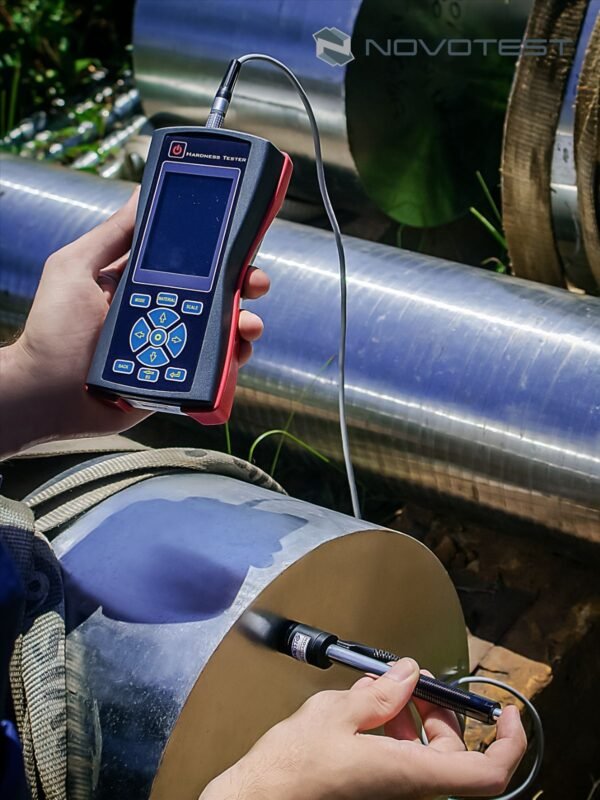
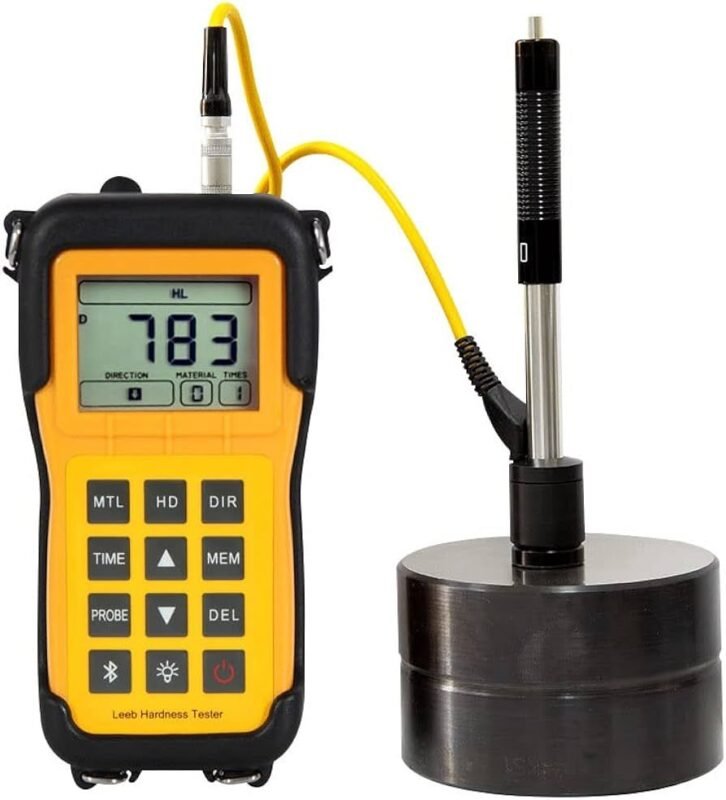
Tragbares Härteprüfgerät
Portable testers are designed for on-site measurement.
They’re useful when the test object is:
- Very large
- Heavy
- Installed
- Difficult to transport
Leeb rebound and UCI are common technologies in portable hardness testing.
Hardness Tester Comparison Table
| Type | Main Advantage | Typical Application |
|---|---|---|
| Rockwell | Schnelles Testen | Production metal inspection |
| Brinell | Larger indentation | Castings and forgings |
| Vickers | Precision measurement | Laboratory testing |
| Mikrohärte | Very small indentations | Coatings and thin layers |
| Portable | Field testing | Large or fixed components |
The “best” tester depends on your application rather than the technology itself.
Manual, Digital, or Automatic Hardness Tester
Once you’ve selected the testing method, consider the level of automation.
Handbuch
Manual testers are generally simpler to operate and can be economical for occasional testing.
They’re suitable for:
- Small laboratories
- Basic quality control
- Low-volume testing
Digital
Digital systems can provide:
- Electronic displays
- Automatic calculations
- Datenspeicherung
- Multiple hardness scales
- Digital test control
They’re useful when measurement records and easier operation are important.
Automatisch
Automatic machines may include:
- Motorized test forces
- Automatic indentation measurement
- Motorized stages
- Automatic scale selection
- Test-result storage
- Statistische Analyse
For high-volume production or laboratory testing, automation can save operator time.
Important Specifications to Check
Test Force
Check whether the machine supports the forces required by your testing standard.
This is especially important for Vickers and microhardness applications.
Genauigkeit und Reproduzierbarkeit
Accuracy indicates how close the measurement is to the accepted reference value.
Repeatability indicates how consistently the machine produces results under the same conditions.
Both matter.
Indenter Type
The indenter must match the selected testing method.
Beispiele hierfür sind:
- Diamond cone indenters
- Wolframkarbid-Kugeln
- Vickers diamond indenters
- Knoop diamond indenters
The quality and condition of the indenter can affect measurement reliability.
Messsystem
For optical hardness testing, review:
- Microscope quality
- Camera resolution
- Illumination
- Image-analysis software
Automatic measurement can be particularly useful when many indentations need to be evaluated.
Data and Software Functions
Modern hardness testers may offer:
- Datenspeicherung
- USB-Konnektivität
- Test reports
- Statistical calculations
- Image storage
- Software integration
If your quality system requires traceable test records, these functions can be valuable.
Accessories You May Need
When you buy hardness tester equipment, don’t forget the accessories.
Depending on the testing method, you may need:
- Diamond indenters
- Ball indenters
- Hardness reference blocks
- Flat anvils
- V-shaped anvils
- Specimen fixtures
- Calibration kits
- Software
- Protective covers
For portable testers, additional probes and support rings may be required for different component shapes.
Ask the seller for a complete configuration list before ordering.
How Much Should You Spend?
Hardness tester prices vary substantially.
A basic manual Rockwell tester generally requires a smaller investment than a fully automatic microhardness system.
The price can be affected by:
- Testing method
- Machine accuracy
- Automation
- Optisches System
- Test-force range
- Software
- Zubehör
- Brand
- Calibration requirements
Instead of setting your budget first, define the minimum technical requirements.
Then compare equipment that meets those requirements.
This prevents two common mistakes:
Buying too cheaply: The machine doesn’t meet your testing requirements.
Overbuying: You pay for advanced features that your operators rarely use.
Where to Buy a Hardness Tester
There are several purchasing channels.
Direct From a Manufacturer
Buying directly can be useful when you need:
- Custom equipment
- OEM solutions
- Technical consultation
- Large quantities
Authorized Distributor
Distributors may provide:
- Local support
- Faster delivery
- Installation
- Training
- After-sales service
Specialized Testing Equipment Supplier
A specialized supplier can sometimes offer multiple brands and technologies, making comparison easier.
When comparing sellers, look beyond the initial quotation. Warranty terms, calibration support, spare parts, and technical assistance can significantly affect the total cost of ownership.
How to Evaluate a Hardness Tester Before Purchase
Before you buy hardness tester equipment, ask the seller for detailed technical information.
A useful checklist includes:
- Welche Materialien können getestet werden?
- Which hardness scales are supported?
- What is the test-force range?
- What is the stated accuracy?
- What standards does the machine support?
- Which indenters are included?
- Are reference blocks included?
- Is software included?
- What calibration documentation is provided?
- How long is the warranty?
- Are spare parts available?
- Is operator training provided?
If possible, request a sample test using your own material.
This can reveal practical issues that aren’t obvious from a specification sheet.
Common Buying Mistakes to Avoid
Choosing Based Only on Price
A low price doesn’t guarantee good value.
Ignoring the Testing Standard
Your equipment should match the required testing procedure.
Buying the Wrong Indenter
The indenter must correspond to the selected test method and hardness scale.
Ignoring Specimen Geometry
A machine may have excellent specifications but still be unsuitable for your component.
Forgetting Calibration
Reference blocks and verification procedures should be considered from the beginning.
Not Checking Spare Parts
A hardness tester is a long-term investment. Replacement components should be available when needed.
Häufig gestellte Fragen
1. Which hardness tester should I buy for steel?
For routine steel inspection, Rockwell is often a practical choice. Vickers, Brinell, or portable systems may be better for specific component sizes, hardness ranges, or testing environments.
2. Should I buy a portable or benchtop hardness tester?
Choose a portable tester when components are large, heavy, installed, or difficult to transport. A benchtop machine is generally preferable for controlled laboratory testing.
3. Is Vickers better than Rockwell?
Neither is universally better. Rockwell is convenient for fast routine testing, while Vickers offers a versatile indentation-based method that is particularly useful for laboratory and precision applications.
4. What accessories should I buy with a hardness tester?
Depending on the method, consider appropriate indenters, anvils, specimen fixtures, reference blocks, calibration accessories, and software.
5. Do hardness testers need calibration?
Yes. Hardness testing equipment should be appropriately verified and calibrated according to the applicable method, standard, and quality requirements.
6. How can I choose a reliable hardness tester seller?
Check product documentation, technical expertise, warranty, calibration support, spare-parts availability, customer service, and experience with your specific testing application.
7. Can one hardness tester measure multiple hardness scales?
Many models support multiple scales or hardness conversions. However, the available scales depend on the machine and testing method, and conversions should be used appropriately.
8. Is an automatic hardness tester worth the extra cost?
For high-volume testing, automatic measurement can improve efficiency and reduce operator workload. For occasional testing, a manual or semi-automatic system may provide better value.
Fazit
When you buy hardness tester equipment, the most important decision isn’t finding the lowest price. It’s selecting a machine that matches your material, testing method, hardness range, specimen geometry, testing volume, and applicable standard.
For routine production inspection, Rockwell equipment can be a practical option. Brinell systems are commonly considered for castings and forgings, while Vickers and microhardness testers are valuable for laboratory and precision applications. Portable testers are useful when large or fixed components need to be inspected on site.
Before placing an order, compare the complete package—not just the machine itself. Check accuracy, test force, indenters, anvils, reference blocks, software, calibration, warranty, spare parts, and technical support.
A careful selection process will help you purchase a hardness tester that delivers reliable measurements, fits your workflow, and provides better value over its service life.