




Automatic Rockwell Hardness Tester: Working Principle, Features, Applications, and Benefits


An automatic Rockwell hardness tester is an advanced material testing instrument designed to measure the hardness of metals and alloys using the Rockwell Hardness Test. Unlike manual machines, automatic Rockwell testers perform the entire testing process—load application, indentation measurement, and result display—automatically through a microprocessor-controlled system.
These testers are widely used in industrial production lines, quality control laboratories, and research facilities where accurate, fast, and repeatable hardness testing is essential.
What is an Automatic Rockwell Hardness Tester?
An automatic Rockwell hardness tester is a computer-controlled device that determines material hardness by measuring the depth of indentation created by a standard indenter under a controlled load.
The machine automatically performs:
- Load application
- Indentation measurement
- Hardness value calculation
- Digital display of results
Because of its automation and precision, this type of hardness tester is ideal for high-volume industrial testing and modern laboratory environments.
Principle of the Rockwell Hardness Test ⚙️
The automatic Rockwell hardness tester operates according to the Rockwell Hardness Test, which evaluates material hardness by measuring how deeply an indenter penetrates the material surface under load.
Testing Procedure
- Application of Minor Load
- A small preliminary load (usually 10 kgf) is applied to position the indenter.
- Application of Major Load
- A larger load (60 kgf, 100 kgf, or 150 kgf depending on the scale) is applied automatically.
- Load Removal
- The major load is removed while the minor load remains.
- Depth Measurement
- The machine measures the permanent indentation depth and calculates the hardness value.
The hardness value is automatically displayed on the screen in Rockwell scales such as:
- HRC (Rockwell C scale)
- HRB (Rockwell B scale)
- HRA (Rockwell A scale)
Main Components of an Automatic Rockwell Hardness Tester
Automatic Rockwell hardness testers consist of several precision components that ensure accurate and consistent measurements.
1. Automatic Load Control System
A motor-driven system precisely applies and removes test loads, ensuring consistent testing conditions.
2. Indenter Assembly
The indenter penetrates the sample surface. Common indenters include:
- Diamond cone (Brale indenter)
- Hardened steel ball indenter
3. Digital Measurement System
High-precision sensors measure the indentation depth and convert it into hardness values.
4. Microprocessor Control Unit
The built-in processor controls the testing cycle, calculations, and system functions.
5. Digital Display Interface
A digital screen shows:
- Hardness values
- Selected hardness scale
- Test parameters
- System status
6. Sample Stage or Anvil
The specimen is placed on an adjustable stage that ensures proper alignment with the indenter.

Types of Automatic Rockwell Hardness Testers
Different models are available depending on testing requirements.
Fully Automatic Rockwell Hardness Tester
Performs all operations automatically, including loading, measuring, and displaying results.
Automatic Superficial Rockwell Hardness Tester
Designed for testing thin materials and surface-hardened components.
Multi-Scale Automatic Hardness Tester
Capable of performing multiple hardness testing methods such as Rockwell, Vickers, and Brinell.
Production-Line Rockwell Hardness Tester
Designed for continuous testing in manufacturing environments.
Applications of Automatic Rockwell Hardness Testers 🏭
Automatic Rockwell hardness testers are widely used across many industries.
Metal Manufacturing
Manufacturers use these testers to evaluate hardness in materials such as:
- Carbon steel
- Stainless steel
- Aluminum alloys
- Brass and copper alloys
Automotive Industry
Hardness testing ensures the reliability of components including:
- Gears
- Engine parts
- Shafts
- Bearings
Aerospace Industry
Aircraft components must meet strict hardness standards for safety and durability.
Heat Treatment Inspection
Hardness testing verifies the effectiveness of processes such as:
- Quenching
- Tempering
- Surface hardening
Research and Development
Laboratories use automatic testers to study mechanical properties of new materials.
Advantages of Automatic Rockwell Hardness Testers 🌟
Automatic machines provide many benefits compared with manual hardness testers.
High Accuracy and Repeatability
Automated load control eliminates human error and ensures consistent results.
Faster Testing
Automatic testers complete tests quickly, improving production efficiency.
User-Friendly Operation
Modern systems include touchscreen interfaces and intuitive software controls.
Digital Data Recording
Test results can be stored, exported, and integrated with quality management systems.
Reduced Operator Fatigue
Automation minimizes manual effort and improves workplace productivity.
Key Testing Parameters
Accurate hardness testing requires careful control of several parameters.
Test Loads
Standard Rockwell loads include:
- Minor load: 10 kgf
- Major loads: 60 kgf, 100 kgf, or 150 kgf
Indenter Type
The type of indenter depends on the hardness scale used.
Surface Preparation
The sample surface must be clean, flat, and smooth for reliable results.
Sample Thickness
Materials must be thick enough to prevent distortion during testing.
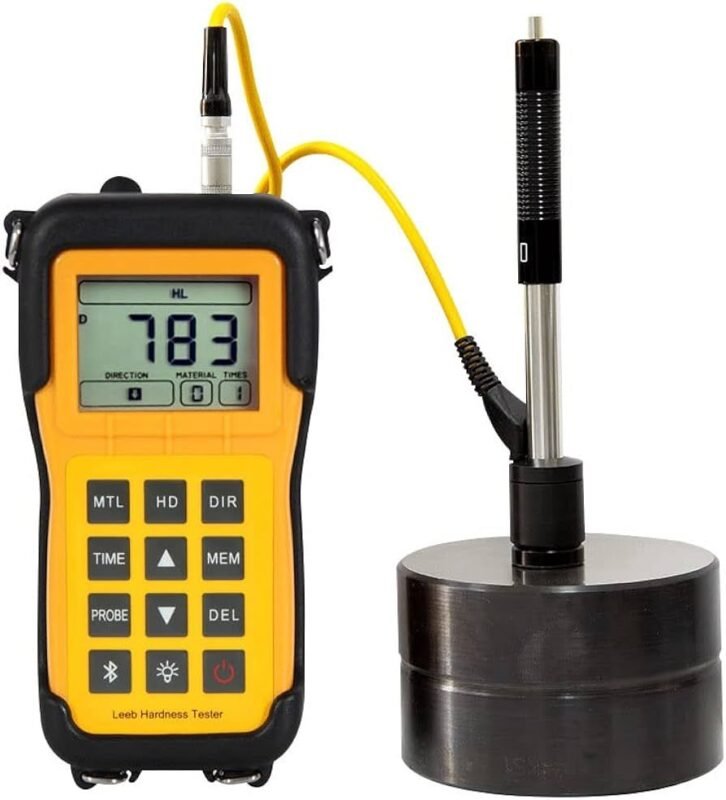
Factors to Consider When Choosing an Automatic Rockwell Hardness Tester 🔍
When selecting a tester, manufacturers should consider several factors.
Measurement Range
Ensure the tester supports all required Rockwell hardness scales.
Automation Level
Fully automatic models are ideal for high-volume production environments.
Data Connectivity
Modern testers may support:
- USB data export
- Computer integration
- Quality control software
Machine Stability
A rigid frame design ensures accurate load application and measurement.
Compliance with International Standards
Reliable testers comply with recognized standards such as:
- ASTM E18
- ISO 6508
- JIS standards
Maintenance and Calibration
Regular maintenance ensures consistent performance and measurement accuracy.
Routine Maintenance
- Clean the indenter and sample stage regularly
- Inspect mechanical components
- Verify electrical connections
Calibration
Calibration should be performed using certified hardness test blocks to maintain testing accuracy.
Future Developments in Automatic Hardness Testing 🚀
Material testing technology continues to evolve with new innovations.
AI-Based Testing Systems
Artificial intelligence may assist in analyzing test results and detecting material defects.
Smart Factory Integration
Hardness testers will increasingly integrate with digital manufacturing systems.
Automated Sample Handling
Future machines may include robotic systems for automatic sample positioning.
Advanced Data Analysis
Cloud-based platforms will allow remote monitoring and data analysis.
Conclusion
An automatic Rockwell hardness tester is an essential tool for modern material testing, providing fast, accurate, and reliable hardness measurements. By automating the Rockwell testing process, these machines improve productivity, reduce operator error, and ensure consistent quality control across industrial and laboratory environments.
From metal manufacturing and automotive production to aerospace engineering and research laboratories, automatic Rockwell hardness testers play a crucial role in verifying material performance and maintaining high manufacturing standards.