




Steel Hardness Tester: The Ultimate Guide to Accurate Steel Hardness Testing for Industrial Applications

Introduction to Steel Hardness Testers
A steel hardness tester is a specialized instrument designed to measure the resistance of steel materials to indentation, penetration, or deformation. Hardness is one of the most important mechanical properties of steel because it directly affects wear resistance, strength, durability, machinability, and service life.
Steel hardness testing is a critical quality control process in industries such as manufacturing, automotive, aerospace, oil and gas, power generation, heavy equipment, rail transportation, and metal fabrication. Whether inspecting raw materials, verifying heat treatment results, or ensuring finished product quality, a steel hardness tester provides reliable data that helps manufacturers maintain product consistency and comply with international standards.
Modern steel hardness testers combine precision mechanics, digital electronics, intelligent software, and automated measurement systems to deliver fast, repeatable, and highly accurate hardness results.
What Is a Steel Hardness Tester?
Tanım ve Amaç
A steel hardness tester is a testing instrument that evaluates the hardness of steel by applying a standardized force through an indenter or impact device and measuring the resulting indentation or rebound characteristics.
Common uses include:
- Steel quality control
- Heat treatment verification
- Gelen malzeme kontrolü
- Manufacturing process monitoring
- Weld inspection
- Arıza analizi
- Product certification
- Metalurjik araştırma
Why Steel Hardness Testing Matters
Steel hardness influences several key material properties, including:
- Aşınma direnci
- Çekme mukavemeti
- Yield strength
- Fatigue resistance
- Machinability
- Yüzey dayanıklılığı
Accurate hardness measurements help manufacturers detect processing issues early, optimize heat treatment parameters, and ensure components meet engineering specifications.
Steel Hardness Testing Methods
Rockwell Sertlik Testi
Rockwell testing measures hardness by calculating the depth of penetration under a major load after applying a preliminary minor load.
Suitable for:
- Carbon steel
- Alloy steel
- Stainless steel
- Isıl işlem görmüş bileşenler
- High-volume production
Brinell Sertlik Testi
Brinell testing uses a carbide ball indenter to produce a relatively large indentation, making it ideal for coarse-grained or non-uniform steel materials.
Suitable for:
- Yapısal çelik
- Cast steel
- Forged steel
- Heavy steel components
Vickers Sertlik Testi
Vickers testing uses a diamond pyramid indenter to provide highly accurate measurements across a wide hardness range.
Suitable for:
- Sertleştirilmiş çelik
- Tool steel
- Precision-machined parts
- Thin sections
Micro Vickers Hardness Testing
Micro Vickers testing applies low test forces to evaluate microscopic features, surface treatments, and thin layers.
Uygulamalar şunları içerir:
- Case depth measurement
- Kaplamalar
- Weld zones
- Metallographic analysis
Leeb Rebound Hardness Testing
Leeb testing measures the rebound velocity of an impact body, making it ideal for portable inspection of large steel components.
Suitable for:
- Pipelines
- Pressure vessels
- Large forgings
- Heavy machinery
Ultrasonic Contact Impedance (UCI) Testing
UCI testing uses a vibrating Vickers diamond indenter and is ideal for thin materials and precision components where Leeb testing is less suitable.
Types of Steel Hardness Testers
Bench Steel Hardness Testers
Bench-mounted systems provide maximum stability and are widely used in laboratories and quality control departments.
Portable Steel Hardness Testers
Portable testers enable fast field inspections of large or installed steel structures without removing them from service.
Automatic Steel Hardness Testers
Fully automated systems integrate automatic loading, optical measurement, autofocus, and report generation for high-throughput testing.
Digital Steel Hardness Testers
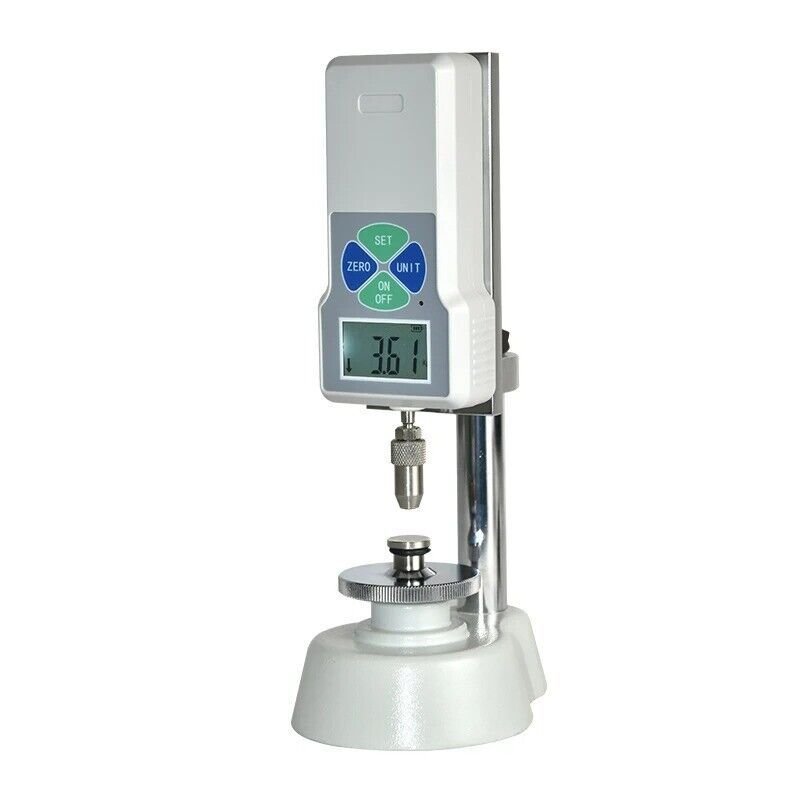
Digital models feature touchscreen interfaces, automatic hardness calculations, cloud connectivity, and statistical reporting.
Main Components of a Steel Hardness Tester
Indenter and Loading System
Farklı test yöntemleri, aşağıdakiler de dahil olmak üzere belirli girintiler gerektirir:
- Diamond cone (Rockwell)
- Carbide ball (Brinell)
- Diamond pyramid (Vickers)
- Diamond pyramid (Micro Vickers)
Automatic loading systems ensure precise force application and repeatable results.
Optik Ölçüm Sistemi
Many machines include:
- High-resolution microscope
- CCD/CMOS camera
- LED illumination
- Automatic edge detection
These systems improve measurement accuracy while reducing operator influence.
Electronic Control Unit
The control system manages:
- Test force control
- Hardness calculations
- Scale conversion
- Veri depolama
- Instrument diagnostics
Yazılım ve Veri Yönetimi
Modern software supports:
- Automatic hardness calculation
- Multi-scale conversion
- İstatistiksel analiz
- SPC raporlaması
- PDF ve Excel'e aktarma
- LIMS entegrasyonu
Key Features of Modern Steel Hardness Testers
High Accuracy and Repeatability
Servo-controlled loading systems and precision optics ensure reliable and repeatable measurements.
Automatic Hardness Scale Conversion
Many testers automatically convert values between:
- HRC
- HRB
- HBW
- HV
- HK
- HL
Intelligent Image Analysis
Advanced image processing software automatically measures indentation dimensions and minimizes operator error.
Digital Reporting and Connectivity
Modern instruments commonly include:
- USB
- Ethernet
- Wi-Fi
- Barcode support
- QR code tracking
- Cloud synchronization
Endüstriyel Uygulamalar
Çelik İmalatı
Hardness testing verifies raw materials, intermediate products, and finished steel components.
Isıl İşlem Doğrulaması
Inspect hardness after:
- Carburizing
- Nitriding
- Induction hardening
- Flame hardening
- Quenching and tempering
Otomotiv Endüstrisi
Typical applications include:
- Dişliler
- Şaftlar
- Rulmanlar
- Springs
- Motor bileşenleri
Havacılık ve Uzay Endüstrisi
Used to inspect:
- Landing gear
- Türbin bileşenleri
- Structural steel parts
- Bağlantı Elemanları
Oil, Gas, and Energy Equipment
Kontrol edin:
- Pipelines
- Pressure vessels
- Storage tanks
- Wind turbine shafts
- Offshore equipment
How to Choose the Best Steel Hardness Tester
Material Type and Hardness Range
Choose a tester compatible with the steel grades, dimensions, and hardness range required by your application.
Test Standartları
Ensure the tester complies with recognized standards such as ASTM and ISO for your selected hardness method.
Automation Requirements
Consider features including:
- Automatic loading
- Auto-focus
- Otomatik girinti ölçümü
- Robotic sample positioning
Software Features
Look for:
- İstatistiksel analiz
- Hardness conversion
- Rapor oluşturma
- User management
- Verilerin izlenebilirliği
Kalibrasyon ve Bakım
Rutin bakım aşağıdakileri içermelidir:
- Sertifikalı sertlik referans blokları kullanılarak yapılan doğrulama
- Cleaning indenters and optical components
- Annual calibration
- Yazılım güncellemeleri
- Önleyici bakım
Regular calibration ensures measurement accuracy and compliance with quality management systems.
Avantajlar ve Sınırlamalar
Avantajlar
A steel hardness tester offers:
- High measurement precision
- Mükemmel tekrarlanabilirlik
- Multiple testing methods
- Otomatik operasyon
- Digital reporting
- International standards compliance
- Improved manufacturing quality control
Sınırlamalar
Olası sınırlamalar şunlardır:
- Different steel grades may require different testing methods.
- Surface preparation may be necessary for accurate measurements.
- Portable testers may not replace laboratory systems for every application.
- Optical components require periodic maintenance.
Uluslararası Standartlar
Common standards for steel hardness tester Uygulama alanları şunlardır:
- ASTM E18 – Standard Test Methods for Rockwell Hardness of Metallic Materials
- ASTM E10 – Standard Test Method for Brinell Hardness of Metallic Materials
- ASTM E92 – Standard Test Methods for Vickers Hardness and Knoop Hardness of Metallic Materials
- ASTM E384 – Malzemelerin Mikroindentasyon Sertliği için Standart Test Yöntemi
- ISO 6506 – Brinell Hardness Test
- ISO 6507 – Vickers Hardness Test
- ISO 6508 – Rockwell Hardness Test
Resmi kaynaklar:
Sıkça Sorulan Sorular
1. What is a steel hardness tester used for?
A steel hardness tester measures the hardness of steel materials for quality control, heat treatment verification, material certification, failure analysis, and manufacturing process monitoring.
2. Which hardness testing method is best for steel?
The best method depends on the application. Rockwell is common for production, Brinell is suitable for large and coarse-grained steel, Vickers is ideal for precision measurements, and Leeb is preferred for portable field testing.
3. Can one steel hardness tester measure different hardness scales?
Yes. Many modern digital testers automatically calculate or convert results into HRC, HRB, HBW, HV, HK, and HL, depending on the testing method and software capabilities.
4. Which industries commonly use steel hardness testers?
Steel hardness testers are widely used in automotive, aerospace, manufacturing, oil and gas, power generation, mining, construction, rail transportation, and metallurgical laboratories.
5. How often should a steel hardness tester be calibrated?
Calibration should be verified regularly with certified reference blocks and performed according to manufacturer recommendations and applicable ASTM or ISO standards.
6. How do I select the right steel hardness tester?
Evaluate the steel grade, hardness range, testing standard, production volume, automation requirements, software features, and whether laboratory or portable testing is needed.
Sonuç
A steel hardness tester is an indispensable tool for evaluating the mechanical properties and quality of steel throughout manufacturing, inspection, and maintenance processes. Whether using Rockwell, Brinell, Vickers, Micro Vickers, Leeb, or UCI technology, the right tester provides accurate, repeatable, and standards-compliant results that support reliable quality assurance.
When selecting a steel hardness tester, consider your material characteristics, testing standards, required automation, and reporting capabilities. A high-quality system will improve inspection efficiency, reduce production risks, ensure compliance with industry standards, and help deliver consistent steel products with dependable mechanical performance.

