Vickers Sertlik Testi: İlkeler, Yöntem ve Uygulamalar

Vickers Sertlik Testi’ne Giriş
Bu Vickers sertlik testi malzeme sertliğini ölçmek için kullanılan en hassas ve çok yönlü yöntemlerden biridir. Yumuşak metallerden son derece sert alaşımlara ve yüzey kaplamalarına kadar geniş bir malzeme yelpazesini test edebildiği için kalite kontrol, metalurji, araştırma laboratuvarları ve imalat sektörlerinde yaygın olarak kullanılmaktadır.
Belirli malzemeler veya kalınlıklarla sınırlı olan bazı sertlik test yöntemlerinin aksine, Vickers yöntemi tek bir elmas indentör ve geniş bir test yükü aralığı kullanır. Bu esneklik, yöntemi hem makro sertlik hem de mikro sertlik test uygulamaları için uygun hale getirir.
Günümüzde Vickers sertlik testi, mekanik özellikleri değerlendirmek ve malzeme kalitesini sağlamak için güvenilir bir yöntem olarak dünya çapında kabul görmektedir.
Vickers Sertlik Testi Nedir?
Tanım ve Amaç
Bu Vickers sertlik testi Bu, kontrollü bir yük altında bir elmas piramit indentörü malzemenin yüzeyine bastırarak malzemenin deformasyona karşı direncini belirleyen bir çentik sertlik test yöntemidir.
Bu test genellikle şu amaçlarla kullanılır:
- Malzeme sertliğini değerlendirin
- Isıl işlem sonuçlarını doğrulayın
- Mikro yapıları analiz etmek
- İnce malzemeleri ve kaplamaları test etmek
- Kalite güvence programlarını desteklemek
Malzeme Testlerinde Önemi
Sertlik değerleri aşağıdaki konularda değerli bilgiler sağlar:
- Aşınma direnci
- Mukavemet özellikleri
- Malzeme tutarlılığı
- Üretim kalitesi
Vickers yöntemi mükemmel bir hassasiyet sunduğu için, ayrıntılı sertlik analizi gerektiğinde sıklıkla tercih edilmektedir.
Vickers Sertlik Testi’nin Tarihi ve Gelişimi
Vickers sertlik testi, 1921 yılında mühendisler tarafından Vickers Ltd.. Amaç, çok çeşitli malzemelerde kullanılabilecek evrensel bir sertlik test yöntemi geliştirmekti.
Eşsiz elmas piramit indentörü ve esnek yük aralığı sayesinde, bu yöntem kısa sürede endüstriyel ve laboratuvar ortamlarında en saygın sertlik test tekniklerinden biri haline geldi.
Vickers Sertlik Testi Nasıl Çalışır?
Temel Test Prensibi
Bu test, önceden belirlenmiş bir yük kullanılarak elmas piramit şekilli bir indentörün numune yüzeyine bastırılmasını içerir.
Yük kaldırıldıktan sonra, yüzeyde kalan çukur ölçülür ve bu ölçüm sertlik değerinin hesaplanmasında kullanılır.
Elmas Piramit İndenter
Vickers indentörünün özellikleri şunlardır:
- Kare tabanlı bir elmas piramit şekli
- 136°’lik zıt yüz açıları
Bu geometri, farklı malzemelerde tutarlı ve doğru sertlik ölçümleri sağlar.
Girintinin Ölçülmesi
Çentik uzunluğunun iki köşegeni şu şekilde ölçülür:
- Optik mikroskoplar
- Dijital görüntüleme sistemleri
- Otomatik ölçüm yazılımı
Sertlik değerini belirlemek için ortalama köşe boyu kullanılır.
Vickers Sertlik Değerlerini (HV) Anlamak
HV Nasıl Hesaplanır?
Vickers sertlik değerleri şu şekilde ifade edilir: HV.
Sertlik değeri aşağıdakilere göre hesaplanır:
- Uygulanan test kuvveti
- Çukurun yüzey alanı
Modern dijital sertlik ölçerler bu hesaplamaları otomatik olarak gerçekleştirir.
Test Sonuçlarını Etkileyen Faktörler
Ölçüm doğruluğunu etkileyebilecek çeşitli faktörler vardır:
- Yüzey kaplaması
- Numune kalınlığı
- Test yükü seçimi
- Optik kalibrasyon
- Operatör tekniği
Doğru test prosedürleri, değişkenliği en aza indirmeye yardımcı olur.
Vickers Sertlik Test Prosedürü
Örnek Hazırlama
Doğru testler için şunlar gereklidir:
- Yüzeyleri temizleyin
- Gerektiğinde doğru şekilde parlatma
- Yeterli numune kalınlığı
- Test sırasında kesintisiz destek
Test Yükünün Uygulanması
Seçilen yük, elmas indenter aracılığıyla belirlenen bir bekleme süresi boyunca uygulanır.
Yük aralıkları, uygulamaya göre değişiklik gösterir.
Girinti Köşegenlerinin Ölçülmesi
Testin ardından, çentik üzerindeki iki köşegen ölçülür ve ortalaması alınır.
Sertlik Değerlerinin Belirlenmesi
Modern test cihazları, HV değerini otomatik olarak hesaplayıp gösterirken, sonuçları ileride yapılacak analizler için kaydeder.
Vickers Sertlik Testinde Kullanılan Ekipmanlar
Vickers Sertlik Ölçerleri
Yaygın olarak kullanılan sistemler şunlardır:
- Manuel test uzmanları
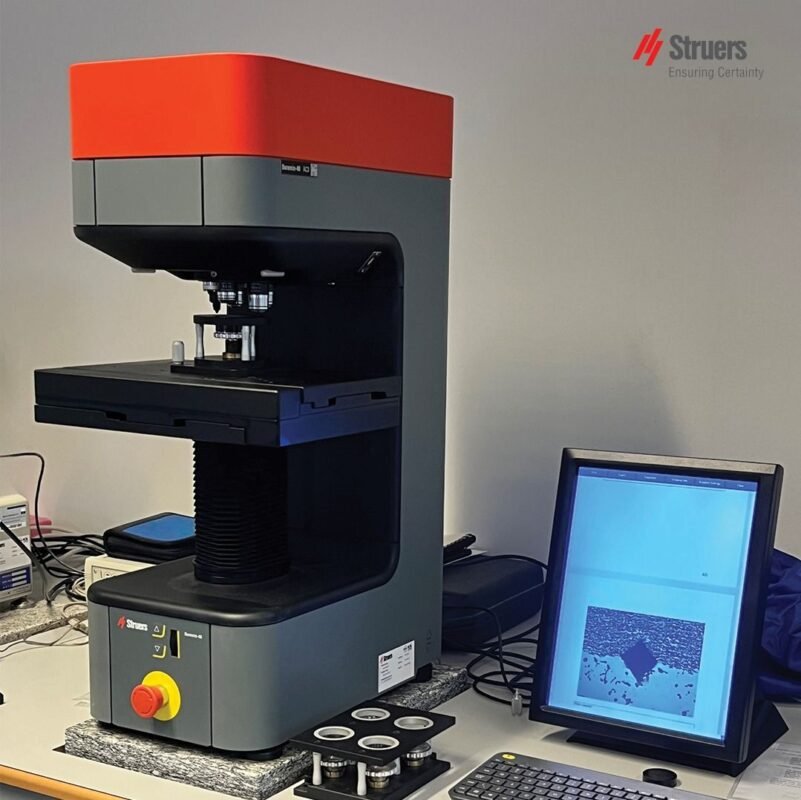
- Dijital test cihazları
- Mikrosertlik test cihazları
- Tamamen otomatik sistemler
Optik Ölçüm Sistemleri
Optik bileşenler genellikle şunları içerir:
- Hassas mikroskoplar
- CCD kameralar
- Yüksek çözünürlüklü görüntüleme cihazları
Dijital Görüntüleme Teknolojisi
Gelişmiş görüntüleme sistemleri şu alanlarda iyileştirme sağlar:
- Ölçüm doğruluğu
- Tekrarlanabilirlik
- Denetim hızı
Otomatik Sertlik Test Sistemleri
Modern otomatik sistemler şunları sağlar:
- Otomatik odaklama
- Otomatik girinti ölçümü
- İstatistiksel raporlama
- Veri yönetimi entegrasyonu
Bu özellikler verimliliği önemli ölçüde artırmaktadır.
Vickers Sertlik Testinin Avantajları
Vickers yöntemi birçok avantaj sunar:
- Yüksek ölçüm hassasiyeti
- Geniş sertlik ölçüm aralığı
- İnce malzemeler için uygundur
- Kaplamalar ve yüzey katmanları için uygundur
- Tek bir indenter, birçok uygulama için
- Mükemmel tekrarlanabilirlik
- Mikrosertlik testi yeteneği
Bu avantajlar, bu yöntemi mevcut en çok yönlü sertlik test yöntemlerinden biri haline getirmektedir.
Vickers Sertlik Testinin Sınırlamaları
Güçlü yönlerine rağmen, bazı sınırlamalar da bulunmaktadır:
- Optik ölçüm gerektirir
- Rockwell testine göre daha uzun test süresi
- Yüzey hazırlığına daha duyarlı
- Ekipmanın daha yüksek karmaşıklığı
Ancak, bu sınırlamalar genellikle yöntemin hassasiyeti ve esnekliği karşısında ikinci plana düşmektedir.
Endüstriyel Uygulamalar
Metal İmalatı
Üreticiler, malzeme kalitesini ve üretim tutarlılığını doğrulamak için Vickers testini kullanır.
Isıl İşlem Doğrulaması
Bu yöntem, aşağıdakileri değerlendirmek için yaygın olarak kullanılmaktadır:
Havacılık ve Uzay Bileşenleri
Havacılık ve uzay sektöründeki üreticiler, güvenlik ve performansı sağlamak için hassas sertlik ölçümlerine güvenmektedir.
Yüzey Kaplamaları ve İnce Filmler
Küçük çentik boyutu sayesinde Vickers testi aşağıdakiler için idealdir:
- Koruyucu kaplamalar
- İnce tabakalar
- Yüzey mühendisliği uygulamaları
Araştırma ve Metalurji Laboratuvarları
Araştırmacılar, mikro yapıları ve malzeme davranışını incelemek için Vickers sertlik testini kullanırlar.

Vickers ve Rockwell Sertlik Testleri
| Özellik | Vickers | Rockwell |
|---|---|---|
| Ölçüm Yöntemi | Optik | Derinlik Temelli |
| Hassasiyet | Çok Yüksek | Yüksek |
| İnce Malzemeler | Mükemmel | Sınırlı |
| Test Hızı | Orta düzeyde | Hızlı |
| Mikrosertlik Testi | Evet | Hayır |
Rockwell testi genellikle üretim ortamlarında tercih edilirken, Vickers testi hassas uygulamalarda üstün performans gösterir.
Vickers ve Brinell Sertlik Testleri
| Özellik | Vickers | Brinell |
|---|---|---|
| Girinti | Elmas Piramit | Karbür Top |
| İnce Malzemeler | Mükemmel | Sınırlı |
| Hassasiyet | Çok Yüksek | Yüksek |
| Mikrosertlik Ölçüm Kapasitesi | Evet | Hayır |
| Büyük Dökümler | Orta düzeyde | Mükemmel |
Vickers yöntemi, farklı malzeme türleri ve kalınlıkları arasında daha çok yönlüdür.
Endüstri Standartları ve Uyumluluk
Vickers sertlik testi, aşağıdakiler de dahil olmak üzere uluslararası düzeyde kabul görmüş standartlara tabidir:
- ASTM E384
- ISO 6507
Resmi standartlar hakkında bilgi için:
Uyumluluk, tutarlı ve dünya çapında kabul gören sertlik ölçümlerini garanti eder.
Sıkça Sorulan Sorular
1. Vickers sertlik testi ne için kullanılır?
Bu cihaz, özellikle ince malzemeler, kaplamalar ve hassas mühendislik uygulamalarında malzeme sertliğini ölçmek için kullanılır.
2. HV ne anlama gelir?
HV, Vickers Sertlik Değeri’nin kısaltmasıdır.
3. Elmas indentör neden kullanılır?
Elmas, olağanüstü bir sertlik sağlar ve testler sırasında geometrisini korur.
4. Vickers testi kaplamaları ölçebilir mi?
Evet. Bu, kaplamaları ve ince yüzey katmanlarını değerlendirmek için en yaygın olarak kullanılan yöntemlerden biridir.
5. Vickers sertlik testi tahribatlı mıdır?
Bu test çok küçük bir çentik bırakır ve genellikle asgari düzeyde tahribatlı bir test olarak kabul edilir.
6. Hangi sektörlerde Vickers sertlik testi kullanılır?
İmalat, havacılık ve uzay, otomotiv, elektronik, metalurji ve araştırma laboratuvarları.
Sonuç
Bu Vickers sertlik testi günümüzde mevcut en doğru ve esnek sertlik test yöntemlerinden biridir. İnce kesitler, kaplamalar ve mikro yapılar dahil olmak üzere çok çeşitli malzemeleri test etme yeteneği, onu kalite kontrol, araştırma ve ileri düzey malzeme analizi için vazgeçilmez bir araç haline getirir.
Vickers sertlik testinin ilkelerini, prosedürlerini, avantajlarını ve uygulama alanlarını kavrayarak, üreticiler ve laboratuvarlar en uygun sertlik testi çözümünü seçebilir ve malzemelerin güvenilir performansını garanti altına alabilirler.