




Laboratory Material Testing Equipment: The Complete Guide to Advanced Material Evaluation


Introduction to Laboratory Material Testing Equipment
Laboratory material testing equipment is essential for analyzing the physical, mechanical, and chemical properties of materials used in modern industries. These advanced instruments allow engineers, researchers, and quality control professionals to evaluate how materials perform under different conditions.
From metals and alloys to plastics, ceramics, composites, and coatings, laboratory testing equipment provides accurate information about strength, hardness, durability, and reliability. This data helps manufacturers improve products, prevent failures, and meet international quality standards.
Material testing laboratories are used in many industries, including automotive, aerospace, construction, electronics, energy, medical devices, and scientific research. With increasingly demanding engineering requirements, accurate laboratory testing has become a key part of material development and production processes.
What Is Laboratory Material Testing Equipment?
Definitie en doel
Laboratory material testing equipment refers to specialized machines and instruments designed to measure and analyze material properties under controlled laboratory conditions.
These systems evaluate characteristics such as:
- Hardheid
- Treksterkte
- Druksterkte
- Impact resistance
- Wear behavior
- Chemical composition
- Structural properties
The purpose of laboratory testing is to determine whether materials meet technical specifications and perform safely in real-world applications.
Role in Material Science and Engineering
Material testing plays an important role in understanding how materials behave during use.
Engineers use laboratory testing equipment to:
- Select suitable materials
- Improve manufacturing processes
- Develop new materials
- Analyze failures
- Verify product performance
Reliable testing data supports better engineering decisions and innovation.
Importance of Laboratory Material Testing
Ensuring Material Quality
Laboratory testing verifies whether materials meet required standards.
Testing helps identify:
- Material inconsistencies
- Manufacturing defects
- Incorrect processing conditions
- Performance limitations
Improving Product Reliability
Accurate testing allows engineers to improve:
- Sterkte
- Duurzaamheid
- Veiligheid
- Levensduur
Products made from properly tested materials are more reliable and predictable.
Supporting Research and Development
Research laboratories depend on testing equipment to develop:
- Advanced alloys
- Lightweight materials
- High-performance polymers
- Protective coatings
- Samengestelde constructies
Preventing Material Failures
Testing helps identify potential problems before products reach the market.
Toepassingen zijn onder andere:
- Failure investigation
- Structural analysis
- Quality improvement
Main Types of Laboratory Material Testing Equipment
Apparatuur voor hardheidsmetingen
Hardness testing equipment measures resistance to indentation or deformation.
Common hardness testing systems include:
Rockwell hardheidsmeter
Rockwell testers are widely used for fast hardness measurement of metals.
Toepassingen:
- Stalen onderdelen
- Warmtebehandelde onderdelen
- Industrial products
Voordelen:
- Quick operation
- Directe hardheidsmeting
- Easy use
Brinell hardheid testapparatuur
Brinell testers use a ball indenter to measure indentation size.
Veelvoorkomende toepassingen:
- Gietijzer
- Aluminiumlegeringen
- Grote metalen onderdelen
Benefits:
- Suitable for coarse materials
- Good for heavy samples
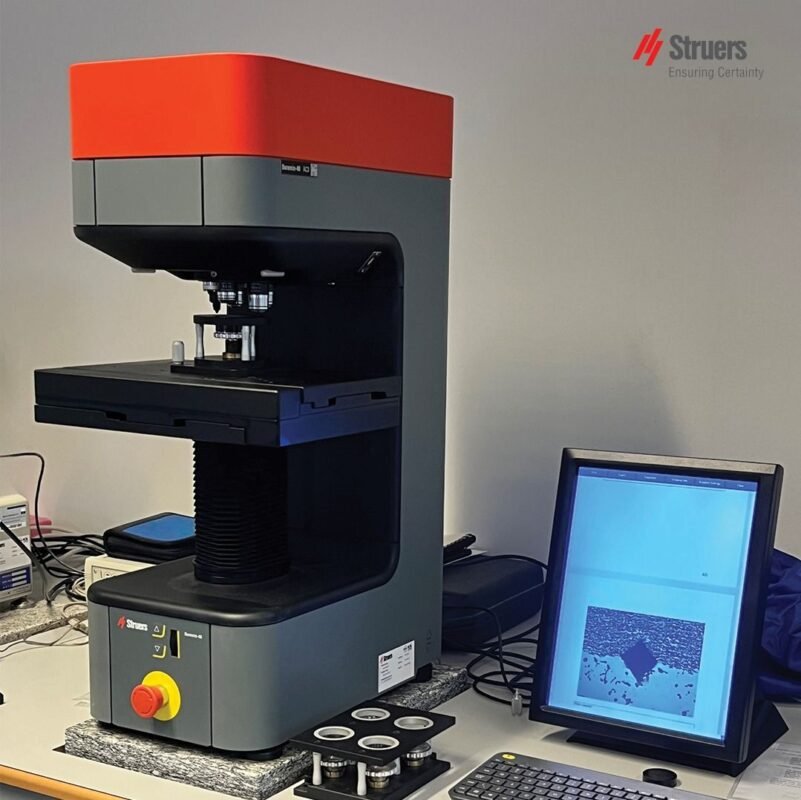
Vickers hardheidsmeter
Vickers hardness testers use a diamond pyramid indenter.
Toepassingen:
- Research laboratories
- Dunne materialen
- Coatings
- Heat-treated layers
Voordelen:
- Hoge nauwkeurigheid
- Wide testing range
Microhardheid Testsystemen
Microhardness equipment measures very small test areas.
Gebruikt voor:
- Dunne coatings
- Surface layers
- Small components
- Metallographic samples
Trekbanken
Tensile testing equipment measures how materials respond to pulling forces.
It evaluates:
- Treksterkte
- Vloeigrens
- Rek
- Elastic behavior
Toepassingen:
- Metalen
- Kunststoffen
- Rubber
- Composite materials
Compression Testing Equipment
Compression testing machines evaluate how materials behave under compressive forces.
Veelvoorkomende toepassingen:
- Concrete
- Kunststoffen
- Foam materials
- Constructieonderdelen
Impact Testing Machines
Impact testers measure a material’s ability to absorb sudden energy.
Common methods:
- Charpy impact testing
- Izod impact testing
Gebruikt voor:
- Structural materials
- Auto onderdelen
- Safety-critical products
Fatigue Testing Systems
Fatigue testing evaluates material durability under repeated loading.
Toepassingen:
- Lucht- en ruimtevaartonderdelen
- Mechanical components
- Industrial equipment
Metallographic Testing Equipment
Metallographic systems analyze internal material structures.
Equipment includes:
- Metallographic microscopes
- Sample preparation machines
- Polishing equipment
- Hardness testers
Toepassingen:
- Grain analysis
- Heat treatment evaluation
- Failure analysis
Apparatuur voor chemische analyse
Chemical testing equipment determines material composition.
Voorbeelden:
- Spectrometers
- X-ray fluorescence analyzers
Toepassingen:
- Alloy verification
- Material identification
- Quality control
Non-Destructive Testing Instruments
Non-destructive testing examines materials without damaging them.
De methoden omvatten:
- Ultrasoononderzoek
- Wervelstroomonderzoek
- Magnetische deeltjeskeuring
- Radiographic testing
Toepassingen:
- Lasinspectie
- Lucht- en ruimtevaartonderdelen
- Industrial structures
Material Properties Evaluated by Laboratory Equipment
Hardness and Surface Resistance
Hardness testing measures resistance to indentation and wear.
Common methods:
- Rockwell
- Brinell
- Vickers
- Microhardheid
Tensile Strength and Elasticity
Tensile testing determines how materials behave under stretching forces.
Compression Performance
Compression tests evaluate resistance to squeezing forces.
Impact Resistance
Impact testing determines how materials respond to sudden loading.
Wear and Fatigue Behavior
Testing helps predict long-term material performance.
Chemical Composition
Chemical analysis verifies:
- Alloy content
- Material grade
- Purity
Laboratory Material Testing Equipment for Different Materials
Metal Testing Applications
Metals commonly tested include:
- Staal
- Aluminium
- Copper
- Titanium
- Nickel alloys
Testing evaluates:
- Hardheid
- Sterkte
- Structure
- Duurzaamheid
Plastic and Polymer Testing
Plastic testing evaluates:
- Hardheid
- Flexibiliteit
- Tensile behavior
- Thermal performance
Ceramic Material Testing
Ceramic testing examines:
- Hardheid
- Brittleness
- Druksterkte
- Slijtvastheid
Composite Material Analysis
Composite testing evaluates:
- Fiber strength
- Layer bonding
- Mechanische prestaties
Coating- en oppervlaktetests
Surface testing measures:
- Coating hardness
- Adhesion
- Thickness
- Slijtvastheid
Advanced Features of Modern Testing Equipment
Digital Control Systems
Moderne systemen bieden:
- Electronic measurement
- Digital displays
- Automatic calculations
Automated Measurement Technology
Automatisering zorgt voor verbeteringen:
- Testing efficiency
- Nauwkeurigheid
- Herhaalbaarheid
Data Management Software
Software supports:
- Test reports
- Gegevensopslag
- Statistische analyse
- Laboratory management
High-Precision Sensors
Advanced sensors provide:
- Accurate force measurement
- Reliable results
- Improved testing control
Applications of Laboratory Material Testing Equipment
Autoproductie
Testing supports:
- Motoronderdelen
- Voertuigconstructies
- Metal parts
- Polymer components
Ruimtevaarttechniek
Toepassingen zijn onder andere:
- Aircraft alloys
- Samengestelde constructies
- Lightweight materials
Industriële kwaliteitscontrole
Manufacturers use testing equipment for:
- Controle van binnenkomend materiaal
- Process verification
- Final product testing
Academic Research
Universities use equipment for:
- Material science research
- Engineering education
- Laboratory experiments
Product Development
Testing supports:
- New material development
- Design optimization
- Performance improvement
How to Choose Laboratory Material Testing Equipment
Testvereisten
Determine required testing methods:
- Hardness testing
- Tensile testing
- Chemical analysis
- Structurele evaluatie
Material Compatibility
Consider whether testing involves:
- Metalen
- Kunststoffen
- Keramiek
- Composietmaterialen
- Coatings
Nauwkeurigheid en herhaalbaarheid
Belangrijke factoren zijn onder meer:
- Measurement precision
- Kalibratiemogelijkheden
- Testing consistency
Testnormen
Equipment should comply with standards such as:
- ASTM
- ISO
- DIN
- JIS
Automatiseringsniveau
Select from:
- Manual systems
- Semi-automatic equipment
- Fully automatic solutions

Calibration and Maintenance of Laboratory Equipment
Regular maintenance includes:
- Kalibratie van de sensor
- Mechanische inspectie
- Indenter verification
- Software-updates
- Cleaning procedures
Proper maintenance ensures accurate and reliable test results.
Voordelen en beperkingen
Voordelen
Laboratory material testing equipment provides:
- Accurate material evaluation
- Verbeterde productkwaliteit
- Reduced failure risks
- Better research capabilities
- Standard compliance
Beperkingen
Mogelijke uitdagingen zijn onder meer:
- Higher investment costs
- Need for trained operators
- Regular maintenance requirements
- Laboratory space requirements
International Testing Standards
Algemene normen met betrekking tot laboratory material testing equipment omvatten:
- ASTM E8/E8M – Tensile Testing of Metallic Materials
- ASTM E10 – Brinell-hardheidsbepaling
- ASTM E18 – Rockwell-hardheidsbepaling
- ASTM E384 – Hardheidsbepaling door middel van microindentatie
- ASTM E92 – Vickers Hardness Testing
- ISO 6506 – Brinell Hardness Test
- ISO 6507 – Vickers Hardness Test
- ISO 6508 – Rockwell Hardness Test
- ISO 6892 – Tensile Testing of Metallic Materials
Officiële bronnen:
Veelgestelde vragen
1. What is laboratory material testing equipment used for?
Laboratory material testing equipment is used to measure and analyze mechanical, physical, and chemical properties of materials for research and quality control.
2. What materials can be tested in a material testing laboratory?
Laboratories can test metals, plastics, ceramics, composites, coatings, and advanced engineering materials.
3. Why is hardness testing important in material testing?
Hardness testing helps evaluate strength, wear resistance, heat treatment quality, and surface performance.
4. Which industries use laboratory material testing equipment?
Industries include automotive, aerospace, manufacturing, construction, electronics, energy, and scientific research.
5. How often should laboratory testing equipment be calibrated?
Calibration schedules depend on equipment type, usage frequency, manufacturer recommendations, and applicable standards.
6. How do I select the right laboratory material testing equipment?
Selection depends on material type, required testing methods, accuracy needs, automation level, and industry standards.
Conclusie
Laboratory material testing equipment is a fundamental tool for modern engineering, research, and industrial quality assurance. By accurately measuring material properties such as hardness, strength, durability, and composition, these systems help organizations create safer and more reliable products.
From hardness testers and tensile machines to metallographic systems and advanced analysis instruments, laboratory testing equipment provides the data needed to improve materials, optimize manufacturing processes, and support technological innovation. Choosing the correct equipment ensures accurate results and long-term value for laboratories and industries worldwide.