




Metal Hardness Tester: Principles, Types, Applications, and Importance in Material Testing

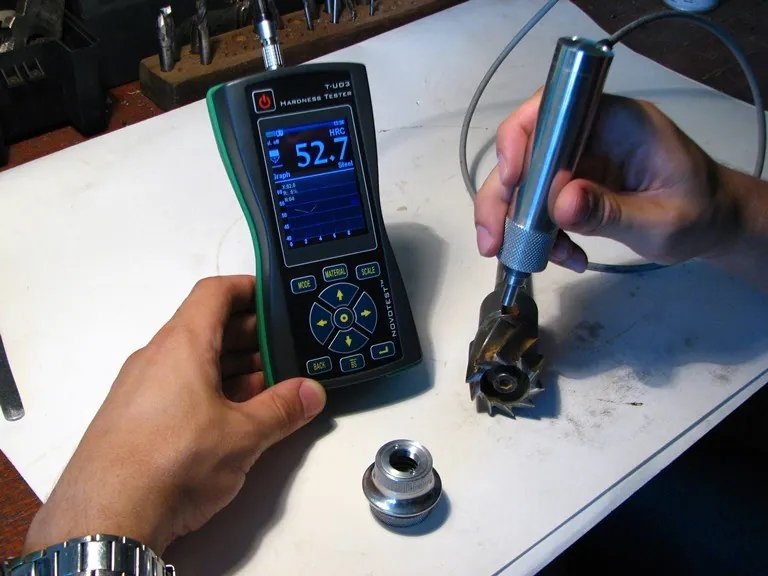
A metal hardness tester is an essential instrument used in materials engineering and quality control to determine the hardness of metallic materials. Hardness refers to a material’s resistance to indentation, deformation, scratching, or wear. It is a critical mechanical property because it often correlates with other material characteristics such as strength, durability, and wear resistance.
Metal hardness testing plays a vital role in industries such as manufacturing, aerospace, automotive, construction, metallurgy, and research laboratories. By accurately measuring hardness, engineers and technicians can ensure materials meet required standards, maintain product reliability, and optimize manufacturing processes.
What is Hardness in Metals? 🧱
In metallurgy, hardness is defined as the ability of a material to resist localized plastic deformation when subjected to an external force. Hardness testing involves pressing an indenter into the surface of a material under controlled conditions and measuring the resulting indentation.
The depth, size, or shape of the indentation provides information about the material’s hardness.
Hardness testing is widely used because it offers several advantages:
- Quick and relatively simple testing procedure
- Minimal sample preparation required
- Non-destructive or minimally destructive testing
- Reliable correlation with tensile strength and wear resistance
Common Types of Metal Hardness Testers 🔍
Different hardness testing methods are used depending on the material type, thickness, and required precision.
1. Rockwell Hardness Tester
The Rockwell hardness tester is one of the most widely used hardness testing machines for metals.
Principle
It measures hardness by determining the depth of penetration of an indenter under a large load compared to the penetration made by a preliminary minor load.
Key Features
- Direct hardness reading on the dial or digital display
- Fast and simple testing procedure
- Minimal operator influence
Common Scales
- HRC (Rockwell C) – used for hardened steels
- HRB (Rockwell B) – used for softer metals like brass and aluminum
Applications
- Heat-treated steel components
- Machine parts
- Industrial metal products
2. Brinell Hardness Tester
The Brinell hardness tester is commonly used for coarse or rough metal structures such as castings and forgings.
Principle
A hardened steel or tungsten carbide ball is pressed into the material under a specific load. The diameter of the indentation is measured to calculate hardness.
Advantages
- Suitable for heterogeneous materials
- Reliable results for rough surfaces
Applications
- Cast iron
- Forged steel
- Non-ferrous metals
3. Vickers Hardness Tester
The Vickers hardness tester is known for its high accuracy and versatility.

Principle
A diamond pyramid-shaped indenter is pressed into the material. The diagonal length of the indentation is measured using a microscope.
Benefits
- Suitable for both soft and hard metals
- Can measure very small samples and thin materials
- Highly precise results
Applications
- Metallurgical research
- Microstructure analysis
- Coatings and thin layers
4. Knoop Hardness Tester
The Knoop hardness tester is a microhardness testing method used for very small or thin materials.
Characteristics
- Uses an elongated diamond indenter
- Produces a shallow indentation
- Ideal for brittle materials or thin coatings
Applications
- Ceramic coatings
- Thin metal layers
- Microelectronics
Key Components of a Metal Hardness Tester ⚙️
A typical hardness testing machine consists of several important components:
1. Indenter
The indenter is the penetrating tip that presses into the material surface. Different testers use different indenters such as:
- Diamond cone
- Diamond pyramid
- Steel ball
2. Load Application System
This mechanism applies a controlled test force to the indenter.
Loads can range from a few grams (microhardness testing) to several thousand kilograms (macro hardness testing).
3. Anvil
The anvil supports the test specimen during testing and ensures stability.
4. Measuring System
Depending on the method, hardness is measured using:
- Dial indicators
- Optical microscopes
- Digital sensors
5. Control System
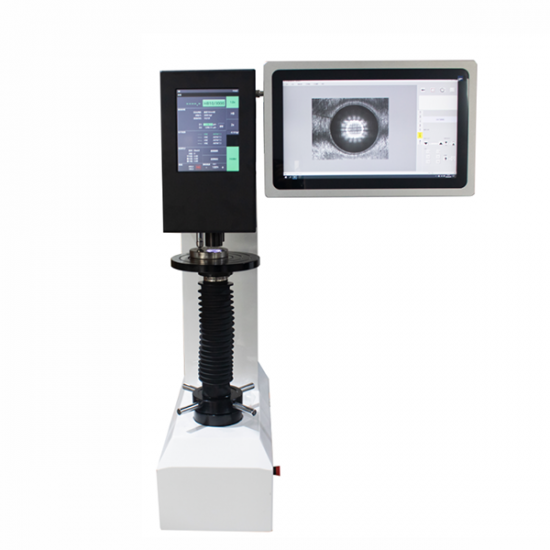
Modern hardness testers often include digital controllers, touch screens, and automated testing systems.
Types of Metal Hardness Testing Machines 🏭
Hardness testers are available in several forms depending on the testing environment.
1. Bench-top Hardness Tester
- Used in laboratories and quality control departments
- High precision and stable measurements
2. Portable Hardness Tester
- Lightweight and mobile
- Used for testing large or fixed components
3. Automatic Hardness Tester
- Computer-controlled testing
- High repeatability and efficiency
4. Microhardness Tester
- Used for extremely small samples
- Often integrated with microscopes
Industrial Applications of Metal Hardness Testing 🏗️
Metal hardness testers are widely used across numerous industries.
Manufacturing Industry
Used for verifying the hardness of machined parts, tools, and mechanical components.
Automotive Industry
Ensures proper hardness of gears, crankshafts, bearings, and engine components.
Aerospace Industry
Critical for testing high-performance alloys and structural materials.
Metallurgy and Research
Helps researchers study material properties, heat treatment effects, and microstructures.
Construction and Heavy Equipment
Ensures durability and strength of structural steel and heavy machinery components.
Advantages of Metal Hardness Testing ✅
Metal hardness testing offers many benefits in material evaluation:
- Fast and efficient testing process
- Cost-effective compared to tensile testing
- Minimal specimen damage
- Suitable for a wide range of materials
- Reliable indicator of mechanical performance
Factors Affecting Hardness Test Results ⚠️
Several factors can influence the accuracy of hardness measurements:
Surface Condition
Rough or contaminated surfaces can lead to inaccurate readings.
Test Load
Incorrect loads may produce unreliable results.
Indenter Condition
Worn or damaged indenters can affect indentation measurements.
Material Thickness
Thin materials may deform excessively during testing.
Operator Skill
Improper handling of equipment can lead to measurement errors.
Modern Developments in Hardness Testing 💻
Recent advancements have significantly improved hardness testing technology:
Digital Hardness Testers
Provide automated readings and improved accuracy.
Computerized Systems
Allow data storage, analysis, and reporting.
Image Processing Technology
Used in advanced Vickers and microhardness testers for precise indentation measurement.
Portable Ultrasonic Hardness Testers
Use ultrasonic contact impedance technology for quick field testing.
Maintenance and Calibration of Hardness Testers 🔧
Proper maintenance ensures reliable and accurate results.
Key maintenance practices include:
- Regular calibration using certified test blocks
- Cleaning and inspecting the indenter
- Ensuring stable load application
- Periodic machine servicing
Calibration is essential to maintain compliance with international standards such as ISO and ASTM.
Conclusion 🎯
A metal hardness tester is a fundamental tool in materials science and industrial quality control. By measuring a material’s resistance to deformation, hardness testers help engineers ensure product reliability, optimize manufacturing processes, and maintain strict quality standards.
Various testing methods—including Rockwell, Brinell, Vickers, and Knoop—provide flexibility for testing different metals and applications. With advancements in digital technology and automation, modern hardness testing equipment offers higher accuracy, efficiency, and data management capabilities.
As industries continue to demand stronger, lighter, and more durable materials, metal hardness testing will remain an indispensable part of material evaluation and quality assurance.