




Metal Hardness Scales Complete Guide 38 Essential Insights for Accurate Material Comparison

Outline for the Article on Metal Hardness Scales
| Topic Area | Detailed Coverage with LSI Keywords |
|---|---|
| Introduction to Metal Hardness Scales | hardness measurement systems |
| What Are Metal Hardness Scales | indentation scales |
| Why Hardness Scales Matter | material performance |
| History of Metal Hardness Scales | development timeline |
| Rockwell Metal Hardness Scales | HRC, HRB |
| Brinell Metal Hardness Scale | HB scale |
| Vickers Metal Hardness Scale | HV scale |
| Knoop Metal Hardness Scale | microhardness scale |
| Shore Hardness Scale for Metals | rebound testing |
| Leeb Hardness Scale | portable testing |
| Comparison of Metal Hardness Scales | scale conversion |
| Conversion Between Hardness Scales | comparison charts |
| Selecting the Right Hardness Scale | application guide |
| Hardness Scales for Heat-Treated Steel | HRC usage |
| Hardness Scales for Soft Metals | HRB, HB |
| Hardness Scales for Thin Materials | HV, HK |
| Industrial Applications | manufacturing |
| Laboratory Applications | research |
| Standards Governing Hardness Scales | ASTM, ISO |
| Accuracy and Calibration | certified test blocks |
| Advantages of Different Scales | benefits comparison |
| Limitations of Hardness Scale Conversion | approximation errors |
| Digital Integration of Hardness Scales | multi-scale testers |
| Johoyd Hardness Testing Solutions | trusted manufacturer |
| Future Trends in Hardness Measurement | smart systems |
| FAQs | common questions |
| Conclusion | summary |
Introduction
Metal Hardness Scales provide standardized ways to measure and compare the resistance of metals to indentation. Hardness is one of the most important mechanical properties in engineering, influencing wear resistance, strength, durability, and overall performance.
However, hardness is not measured using a single universal scale. Instead, different testing methods use different scales, each suited for specific materials, thicknesses, and applications. Understanding these scales is essential for engineers, quality control managers, and researchers.
This comprehensive guide explains the most widely used metal hardness scales, how they work, when to use them, and how they compare.
What Are Metal Hardness Scales
Metal hardness scales are numerical systems used to express a material’s resistance to indentation under controlled force.
Each scale corresponds to a specific testing method.
Standardization ensures consistent comparison.
Why Hardness Scales Matter
Hardness values help determine:
- Wear resistance
- Heat treatment quality
- Structural integrity
- Machinability
Accurate hardness measurement supports safe design.
History of Metal Hardness Scales
Hardness testing evolved over time to meet industrial demands:
- 1900 – Introduction of the Brinell hardness test
- 1919 – Development of the Rockwell hardness test
- 1921 – Introduction of the Vickers hardness test
Each method improved testing accuracy and efficiency.
Rockwell Metal Hardness Scales (HR)
The Rockwell scale measures hardness based on indentation depth.
Common Rockwell scales include:
- HRC (Rockwell C) – for hardened steel
- HRB (Rockwell B) – for softer metals
- HRA – for thin or surface-hardened materials
Rockwell testing is fast and widely used in manufacturing.
Brinell Metal Hardness Scale (HB)
The Brinell scale measures indentation diameter using a steel or carbide ball.
It is suitable for:
- Cast iron
- Forged steel
- Large metal parts
Brinell values are expressed as HB or HBW.
Ideal for coarse-grain structures.
Vickers Metal Hardness Scale (HV)
The Vickers scale uses a diamond pyramid indenter.
It is versatile and suitable for:
- Thin materials
- Coatings
- Microhardness applications
HV values apply across a wide hardness range.
Knoop Metal Hardness Scale (HK)
The Knoop scale is primarily used for microhardness testing.
It uses an elongated diamond indenter.
Best for:
- Thin layers
- Brittle materials
- Surface treatments
High precision for small samples.
Shore Hardness Scale for Metals (HS)
The Shore hardness scale measures rebound height.
Used in portable and dynamic testing.
Suitable for quick field inspections.
Leeb Hardness Scale (HL)
Leeb hardness testing uses rebound velocity measurement.
Common in portable hardness testers.
Ideal for heavy or installed components.
Comparison of Metal Hardness Scales
Each hardness scale has strengths:
- Rockwell – speed and simplicity
- Brinell – large surface evaluation
- Vickers – precision and versatility
- Knoop – thin coatings
- Leeb – portability
No single scale fits all applications.
Conversion Between Hardness Scales
Hardness values can be converted approximately between scales.
For example:
- HRC to HB
- HB to HV
- HV to HRC
However, conversions are estimations and may vary depending on material type.
Use conversion charts cautiously.
Selecting the Right Hardness Scale
Selection depends on:
- Material hardness range
- Sample thickness
- Required precision
- Industry standards
- Testing environment
Correct scale selection ensures accuracy.
Hardness Scales for Heat-Treated Steel
HRC is commonly used for hardened steel.
It provides reliable readings for high-strength materials.
Hardness Scales for Soft Metals
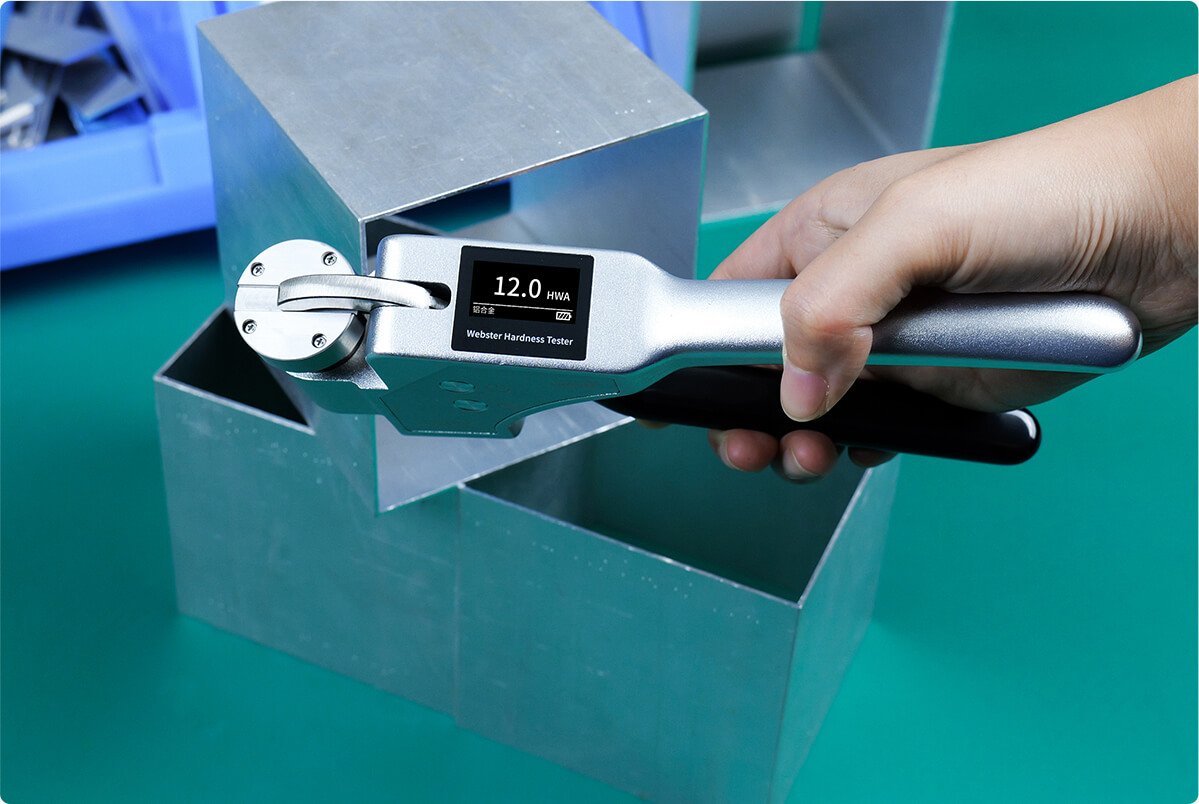
HRB and HB scales are preferred for softer materials like aluminum and copper alloys.
They prevent excessive penetration.
Hardness Scales for Thin Materials
HV and HK scales are ideal for thin sheets and coatings.
Low test loads minimize substrate influence.
Industrial Applications
Manufacturing industries rely on metal hardness scales to maintain quality standards.
Consistent testing ensures product reliability.
Laboratory Applications
Research laboratories use multiple hardness scales for material development and microstructure analysis.
Precision supports innovation.
Standards Governing Hardness Scales
Hardness scales follow international standards such as:
- ASTM E18 (Rockwell)
- ASTM E10 (Brinell)
- ASTM E384 (Vickers and Knoop)
- ISO 6506, 6507, 6508
Compliance ensures global acceptance.
Accuracy and Calibration
Calibration using certified hardness reference blocks is essential.
Regular verification ensures measurement reliability.
Advantages of Different Scales
- Rockwell – fast and operator-friendly
- Brinell – suitable for rough surfaces
- Vickers – universal scale
- Knoop – thin materials
- Leeb – field testing
Each scale offers specific benefits.
Limitations of Hardness Scale Conversion
Conversion charts provide approximate equivalency only.
Microstructure differences affect accuracy.
Direct testing is always preferred.
Digital Integration of Hardness Scales
Modern hardness testers support multi-scale conversion automatically.
Digital systems reduce calculation errors.
Johoyd Hardness Testing Solutions
Understanding Metal Hardness Scales requires reliable testing equipment. Johoyd, through https://hardnesstests.com, provides advanced Rockwell, Brinell, Vickers, Knoop, and portable hardness testers designed for accurate and standards-compliant measurement. Johoyd systems support multi-scale conversion, digital reporting, and calibration traceability for industrial and laboratory applications.
Future Trends in Hardness Measurement
Advancements include:
- Automated indentation measurement
- AI-assisted scale conversion
- Integrated smart testing systems
- Cloud-based data storage
Technology continues to improve precision and efficiency.
Frequently Asked Questions
Which metal hardness scale is most commonly used?
Rockwell (HRC and HRB) is widely used in manufacturing.
Can hardness values be converted between scales?
Yes, but conversions are approximate.
Which scale is best for thin coatings?
Vickers or Knoop scales are recommended.
Why are there multiple hardness scales?
Different materials and thicknesses require different testing methods.
Is calibration necessary for hardness testing?
Yes, regular calibration ensures accuracy.
Which hardness scale is best for field testing?
Leeb hardness scale is ideal for portable applications.
Conclusion
Metal Hardness Scales provide standardized methods for evaluating material strength and durability. From Rockwell and Brinell to Vickers and Knoop, each scale serves a specific purpose depending on material type, thickness, and application.
With advanced hardness testing solutions from Johoyd at hardnesstests.com, industries and laboratories can perform accurate, standards-compliant hardness measurement across multiple scales. Selecting the correct hardness scale ensures reliable results and long-term product performance.
Suggested Internal Links
- Hardness Testing Machine
- Surface Hardness Measurement
Suggested Outbound Links
- ASTM Hardness Testing Standards
- ISO Hardness Testing Guidelines