- Appareil d'essai de dureté Micro Vickers
- Appareil d'essai de dureté Vickers
- Capteur de dureté Vickers
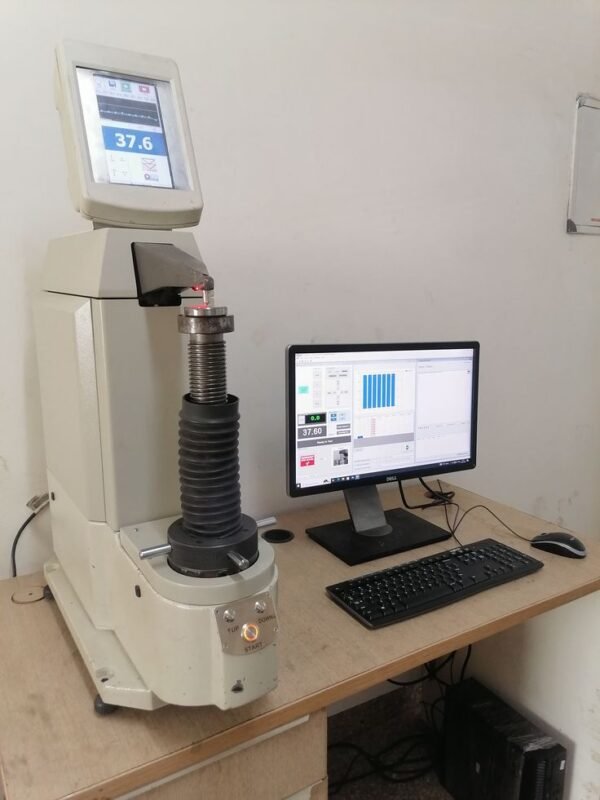
- Appareil d'essai de dureté Rockwell
- Appareil d'essai de dureté Brinell
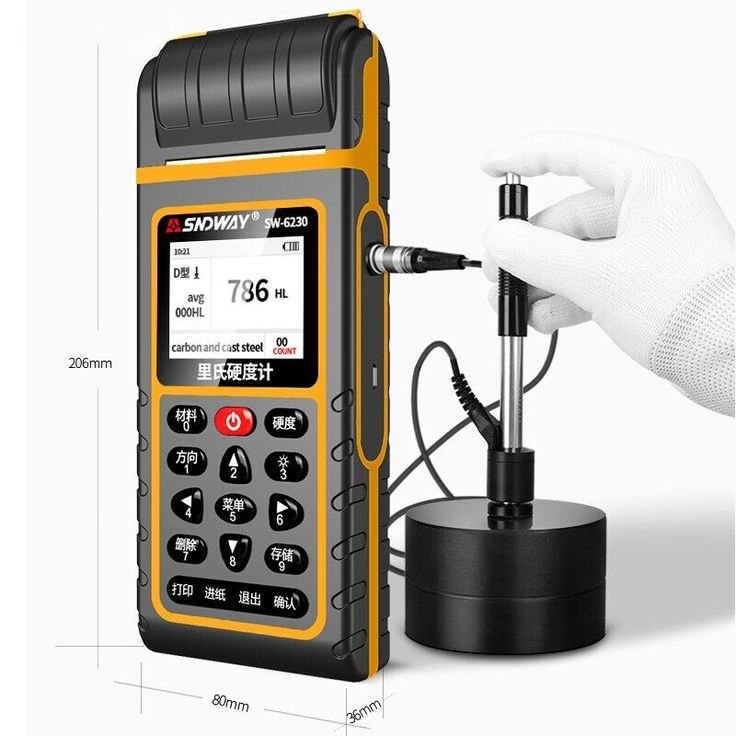
- Appareil de dureté Leeb
- Appareil de mesure de la dureté Shore
- Testeur de dureté Webster
- Appareil de mesure de la dureté Barcol
- Barre d'essai de dureté



Brinell Hardness Tester: Working Principle, Types and Buying Guide


Introduction to Brinell Hardness Testers
A brinell hardness tester is a widely used material testing instrument designed to measure the hardness of metals, especially those with coarse or uneven grain structures such as cast iron and forgings. It is one of the oldest and most reliable hardness testing methods and remains highly relevant in modern industrial applications.
The Brinell method is particularly effective for large or rough-surfaced materials where other hardness testing methods like Rockwell or Vickers may not provide accurate results. It uses a hardened steel or carbide ball indenter pressed into the material surface under a specific load, and the resulting indentation diameter is measured to calculate hardness.
Qu'est-ce qu'un testeur de dureté Brinell ?
Définition et objectif
A brinell hardness tester is a machine that determines the hardness of a material by pressing a spherical indenter into its surface under a known load and measuring the diameter of the resulting indentation.
Its main purposes include:
- Testing large and rough materials
- Evaluating castings and forgings
- Quality control in metal production
- Material comparison and classification
- Industrial inspection and certification
How a Brinell Hardness Tester Works
The testing process includes:
- Applying a known load using a spherical indenter.
- Holding the load for a fixed dwell time.
- Removing the load after indentation.
- Measuring the diameter of the indentation.
- Calculating the Brinell Hardness Number (BHN).
Unlike Rockwell testing, Brinell requires optical measurement of the indentation, making it more suitable for laboratory and heavy industrial applications.
Brinell Hardness Testing Principle
Indentation Method
The Brinell method is based on plastic deformation resistance. A hard ball indenter presses into the material surface, and the resistance to indentation determines hardness.
Test Load and Indenter Ball
Parmi les paramètres courants, on peut citer :
- Indenter: 10 mm hardened steel or tungsten carbide ball
- Load: 500 kgf to 3000 kgf depending on material
- Dwell time: 10–30 seconds
Indice de dureté Brinell (BHN)
The hardness value is expressed as BHN, calculated from indentation diameter, load, and indenter size. Higher BHN indicates harder material.
Types d'appareils d'essai de dureté Brinell
Manual Brinell Hardness Testers
Suitable for:
- Small workshops
- Low-volume testing
- Educational use
Hydraulic Brinell Hardness Testers
Common in industrial environments:
- High load capacity
- Stable force application
- Suitable for large parts
Digital Brinell Hardness Testers
Features include:
- Digital load control
- Automatic calculation
- Image-based indentation measurement
- Stockage des données
Automatic Brinell Hardness Testers
Designed for high efficiency:
- Motorized loading
- Automatic indentation measurement
- Software integration
- Batch testing capability
Key Features of Modern Brinell Hardness Testers
High Load Capacity
Essential for testing heavy and coarse-grain materials like castings and steel blocks.
Système de mesure numérique
Modern systems may include optical sensors or camera-based measurement for accuracy.
Automated Indentation Reading
Reduces human error and improves repeatability.
Stockage des données et connectivité
Supports USB export, SPC systems, and laboratory software integration.
Applications des appareils d'essai de dureté Brinell
Cast Iron Testing
Widely used due to Brinell’s suitability for coarse grain structures.
Forgings and Large Parts
Ideal for heavy components that cannot be tested using smaller indentation methods.
Steel Manufacturing
Used for raw material and finished product inspection.
Heavy Machinery Industry
Ensures durability and structural integrity of large components.
Laboratoires de contrôle de la qualité
Used for certification and comparative material testing.

Comment choisir le bon appareil de mesure de la dureté Brinell ?
Type de matériau
Select based on whether you test cast iron, steel, or large forged parts.
Capacité de charge
Higher loads are required for harder or larger materials.
Niveau d'automatisation
Manual vs digital vs fully automatic systems depending on workload.
Méthode de mesure
Optical measurement systems improve accuracy and efficiency.
Étalonnage et maintenance
Test Blocks
Certified Brinell hardness blocks ensure accuracy and traceability.
Indenter Inspection
Regular checks prevent deformation or wear issues.
Entretien courant
Includes cleaning optical systems, verifying load accuracy, and mechanical inspection.
Advantages and Limitations
Avantages
- Excellent for large and rough materials
- Reliable and widely accepted method
- High load capability
- Suitable for castings and forgings
Limitations
- Requires optical measurement
- Slower than Rockwell testing
- Not suitable for thin materials
- Indentation is relatively large
Industry Standards
Common standards include:
- ASTM E10 – Brinell Hardness of Metallic Materials
- ISO 6506 – Brinell Hardness Test
Official references:
Questions fréquemment posées
1. What is a Brinell hardness tester used for?
It is used to measure hardness of metals, especially castings, forgings, and large industrial parts.
2. What materials can be tested?
Cast iron, steel, aluminum alloys, and other coarse-grain metals.
3. Why is Brinell testing used for cast iron?
Because it handles uneven and coarse grain structures better than other methods.
4. What is BHN?
BHN stands for Brinell Hardness Number, representing material hardness based on indentation size.
5. Is Brinell testing destructive?
It is semi-destructive because it leaves a visible indentation.
6. What is the difference between Brinell and Rockwell testing?
Brinell uses optical measurement of indentation size, while Rockwell measures indentation depth directly.
Conclusion
A brinell hardness tester remains one of the most reliable solutions for testing large, rough, and coarse-grain materials. With manual, hydraulic, digital, and automatic options available, it continues to play a critical role in metal manufacturing, heavy industry, and quality control laboratories.
Choosing the right Brinell hardness tester improves testing accuracy, ensures compliance with standards, and supports consistent material quality across industrial applications.