

- Appareil d'essai de dureté Micro Vickers
- Appareil d'essai de dureté Vickers
- Capteur de dureté Vickers
- Appareil d'essai de dureté Rockwell
- Appareil d'essai de dureté Brinell
- Appareil de dureté Leeb
- Appareil de mesure de la dureté Shore
- Testeur de dureté Webster
- Appareil de mesure de la dureté Barcol
- Barre d'essai de dureté



Machine d'essai de dureté Brinell : 13 avantages majeurs pour une analyse précise des matériaux

Plan de l'article
| Niveau de titre | Sujet |
|---|---|
| H1 | Machine d'essai de dureté Brinell |
| H2 | Introduction to Brinell Hardness Testing Machines |
| H3 | What Is a Brinell Hardness Testing Machine |
| H3 | History and Development |
| H2 | Working Principle of Brinell Hardness Testing Machine |
| H3 | Indentation Method |
| H3 | Calcul de la dureté |
| H2 | Key Components of Brinell Hardness Testing Machine |
| H3 | Bille de pénétration |
| H3 | Système d'application des charges |
| H3 | Système de mesure |
| H2 | Types of Brinell Hardness Testing Machines |
| H3 | Manual Machines |
| H3 | Digital Machines |
| H3 | Automatic Machines |
| H2 | Advantages of Brinell Hardness Testing Machine |
| H3 | Accurate Results for Soft Materials |
| H3 | Large Indentation Area |
| H3 | Des essais fiables et reproductibles |
| H2 | Applications of Brinell Hardness Testing Machine |
| H3 | Fabrication de produits métalliques |
| H3 | Fonderies et forge |
| H3 | Laboratoires de contrôle de la qualité |
| H2 | Comparaison avec d'autres méthodes d'essai de dureté |
| H3 | Brinell contre Rockwell |
| H3 | Brinell contre Vickers |
| H2 | How to Choose a Brinell Hardness Testing Machine |
| H3 | Caractéristiques techniques |
| H3 | Exigences du secteur |
| H2 | Maintenance et étalonnage |
| H2 | Future Trends in Hardness Testing Technology |
| H2 | Questions fréquemment posées |
| H2 | Conclusion |
Brinell Hardness Testing Machine: Complete Guide to Reliable Material Hardness Measurement
A brinell hardness testing machine is a widely used instrument for measuring the hardness of metals and alloys, particularly those with coarse grain structures or uneven surfaces. It provides reliable and accurate results, making it essential in industries such as manufacturing, metallurgy, and heavy engineering.
The machine operates based on the Brinell Hardness Test, which determines hardness by measuring the diameter of an indentation made by a hardened ball under a specific load.
Introduction to Brinell Hardness Testing Machines
Brinell hardness testing machines are fundamental tools in material testing.
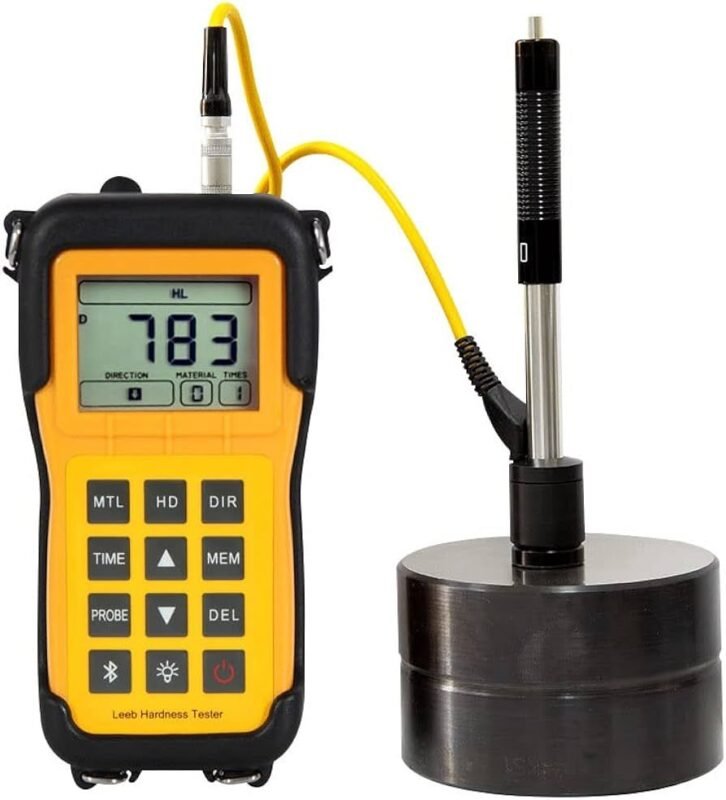
What Is a Brinell Hardness Testing Machine
A brinell hardness testing machine is a device that measures material hardness by pressing a spherical indenter into the surface and analyzing the resulting indentation.
Les principales caractéristiques sont les suivantes :
- Large indentation for better averaging of material properties
- Suitable for soft to medium-hard materials
- High reliability and repeatability
History and Development
The Brinell hardness test was developed by Swedish engineer Johan August Brinell in the early 20th century. It became one of the first standardized hardness testing methods and remains widely used today.
Working Principle of Brinell Hardness Testing Machine ⚙️
The machine operates using an indentation-based method.
Indentation Method
A hardened steel or tungsten carbide ball is pressed into the material under a specified load.
Parmi les paramètres courants, on peut citer :
- Diamètre du pénétrateur : de 1 mm à 10 mm
- Load range: 500 kgf to 3000 kgf
After applying the load for a fixed duration, the indenter is removed, leaving an indentation.
Calcul de la dureté
The diameter of the indentation is measured, and the hardness value is calculated as the HB (indice de dureté Brinell).
This value represents the material’s resistance to deformation.
Key Components of Brinell Hardness Testing Machine
The machine consists of several important components.
Bille de pénétration
Une bille en acier trempé ou en carbure qui provoque l'empreinte.
Système d'application des charges
Applies the required force using:
- Hydraulic systems
- Mechanical systems
- Electronic systems
Système de mesure
Measures the indentation using:
- Microscopes optiques
- Systèmes d'imagerie numérique
- Automated measurement tools
Types of Brinell Hardness Testing Machines
Different types are available based on operation and automation.
Manual Machines
Require manual operation and measurement.
Digital Machines
Utiliser des systèmes électroniques de mesure et d'affichage.
Automatic Machines
Effectuer automatiquement des tests, des mesures et des calculs.
Advantages of Brinell Hardness Testing Machine 🌟
Brinell hardness testing machines offer several benefits.
Accurate Results for Soft Materials
Ideal for testing materials like cast iron and aluminum.
Large Indentation Area
Provides an average hardness value over a larger surface area.
Des essais fiables et reproductibles
Garantit des résultats cohérents d'un test à l'autre.
Applications of Brinell Hardness Testing Machine 🏭
Ces machines sont largement utilisées dans divers secteurs industriels.
Fabrication de produits métalliques
Utilisé pour le contrôle qualité des métaux et des alliages.
Fonderies et forge
Garantit la dureté des pièces moulées et forgées.
Laboratoires de contrôle de la qualité
Utilisé pour les essais de routine et la certification.
Comparaison avec d'autres méthodes d'essai de dureté
Brinell contre Rockwell
L'essai de dureté Rockwell mesure la profondeur de l'empreinte, tandis que celui de Brinell mesure son diamètre.
Brinell contre Vickers
L'essai de dureté Vickers utilise un pénétrateur en diamant et convient à un large éventail de matériaux.
How to Choose a Brinell Hardness Testing Machine 🔍
Selecting the right machine depends on your requirements.
Caractéristiques techniques
Envisager :
- Capacité de charge
- Taille du pénétrateur
- Méthode de mesure
- Niveau d'automatisation
Exigences du secteur
Choose a machine that meets specific application needs and standards.
Maintenance et étalonnage
Un entretien adéquat garantit des performances optimales.
Entretien courant
- Nettoyer le pénétrateur et l'éprouvette
- Vérifiez régulièrement les composants
- Veillez à ce que l'alignement soit correct
Calibrage
Use certified reference blocks to maintain measurement accuracy.
Future Trends in Hardness Testing Technology 🚀
The field of hardness testing is evolving rapidly.
Automatisation et intégration de l'IA
Advanced systems use artificial intelligence for better accuracy.
Connectivité numérique
Les machines s'intègrent aux systèmes de données pour permettre une analyse en temps réel.
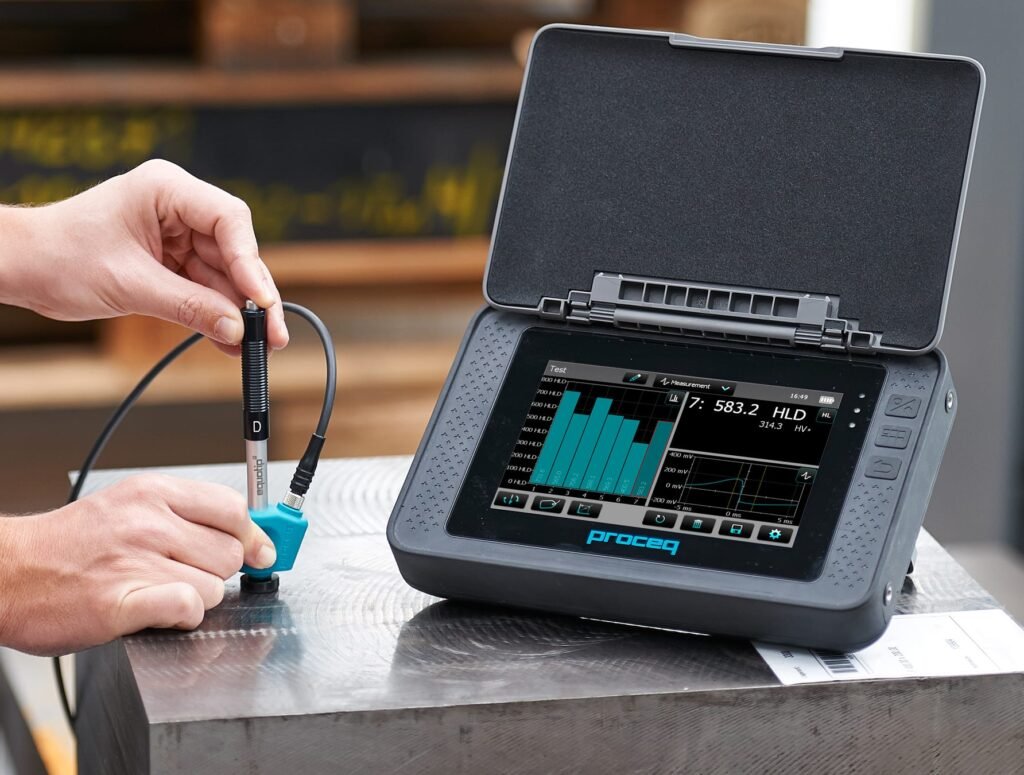
Enhanced Imaging Technology
Les caméras haute résolution améliorent la précision des mesures.
Intégration de la fabrication intelligente
Les machines de contrôle sont intégrées dans des chaînes de production automatisées.
Questions fréquemment posées
What is a Brinell hardness testing machine?
Il s'agit d'un appareil servant à mesurer la dureté des matériaux selon la méthode Brinell.
Quels matériaux peuvent être testés ?
Matériaux tendres à moyennement durs, tels que la fonte, l'aluminium et l'acier.
Quelle est l'unité de mesure ?
L'unité est HB (indice de dureté Brinell).
Why is Brinell testing used?
Elle fournit des résultats fiables pour les matériaux présentant une structure à gros grains.
Comment calcule-t-on la dureté ?
En mesurant le diamètre de l'empreinte laissée par le pénétrateur.
L'étalonnage est-il nécessaire ?
Yes, regular calibration ensures accurate and reliable results.
Conclusion
A brinell hardness testing machine is an essential tool for evaluating material hardness in industrial and laboratory settings. Based on the proven Brinell Hardness Test, it provides accurate, reliable, and repeatable results for a wide range of materials.
With advancements in automation and digital technology, modern Brinell hardness testing machines continue to evolve, offering improved efficiency and precision for quality control and material testing applications. 🔍

