- Appareil d'essai de dureté Micro Vickers
- Appareil d'essai de dureté Vickers
- Capteur de dureté Vickers
- Appareil d'essai de dureté Rockwell
- Appareil d'essai de dureté Brinell
- Appareil de dureté Leeb
- Appareil de mesure de la dureté Shore
- Testeur de dureté Webster
- Appareil de mesure de la dureté Barcol
- Barre d'essai de dureté



Essai de dureté Knoop : Un guide technique complet

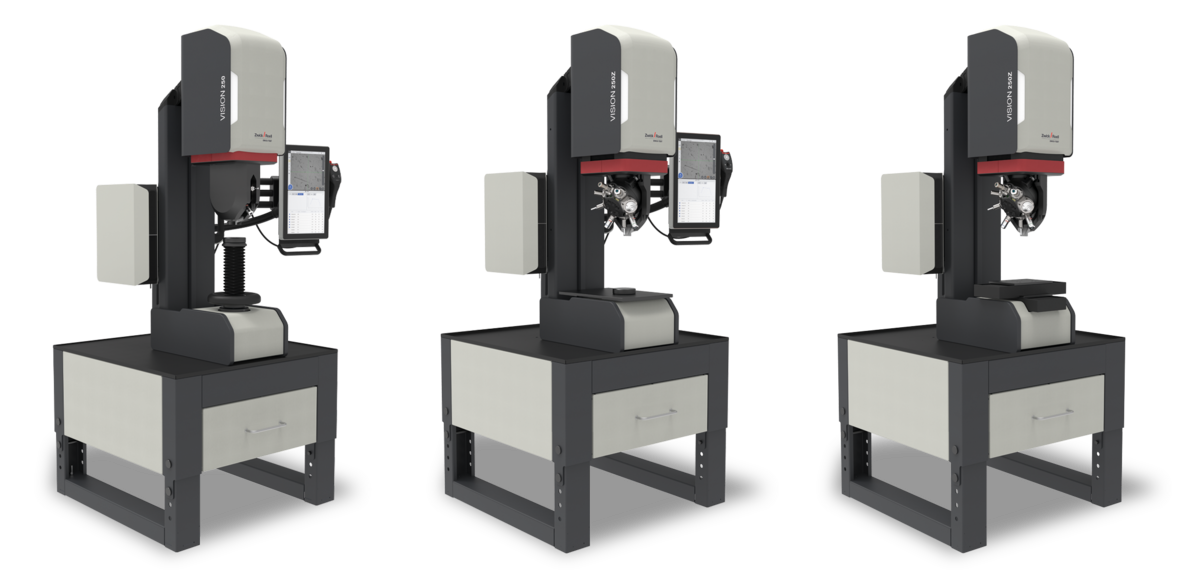
Introduction to the Knoop Hardness Test
Le Knoop hardness test is a micro-indentation hardness testing method primarily used to measure the hardness of brittle materials, thin films, and small, delicate components. Developed in 1939 by Frederick Knoop and colleagues at the National Bureau of Standards (now NIST), this test was specifically designed to address the limitations of existing hardness tests—such as Brinell and Rockwell—when applied to materials like glass, ceramics, and gemstones.
Unlike macro-hardness tests that use large indenters and high loads, the Knoop test employs a rhombic diamond indenter and relatively light loads (typically 10 gf to 1000 gf). This produces a shallow, elongated indentation that minimizes cracking in brittle materials and allows for localized hardness measurement without damaging the specimen.
Today, the Knoop test is standardized under ASTM E384 (Standard Test Method for Microindentation Hardness of Materials) and remains a critical tool in materials science, particularly for characterizing ceramics, glasses, thin films, and coated surfaces.
Historical Development and Purpose
Before the Knoop test, hardness testing relied heavily on macro-scale methods:
- Essai de dureté Brinell (1900): Used a spherical indenter and high loads (500–3000 kgf), unsuitable for brittle materials.
- Essai de dureté Rockwell (1919): Employed conical or ball indenters with moderate loads, but still too aggressive for small or fragile specimens.
- Essai de dureté Vickers (1921): Introduced a pyramidal diamond indenter, improving precision but still generating relatively large indentations.
The Knoop test emerged from the need to:
- Measure hardness on brittle materials without inducing fracture.
- Characterize films minces et revêtements without substrate interference.
- Perform micro-scale hardness mapping for material research.
By using a lighter load and an elongated indenter, the Knoop test produces a shallow indentation with minimal lateral cracking, making it ideal for fragile or micro-structured materials.
Principle of the Knoop Hardness Test
The Knoop hardness test operates on the same fundamental principle as other indentation hardness tests: a hard indenter is pressed into the material under a specific load, and the size of the resulting impression is measured to calculate hardness.
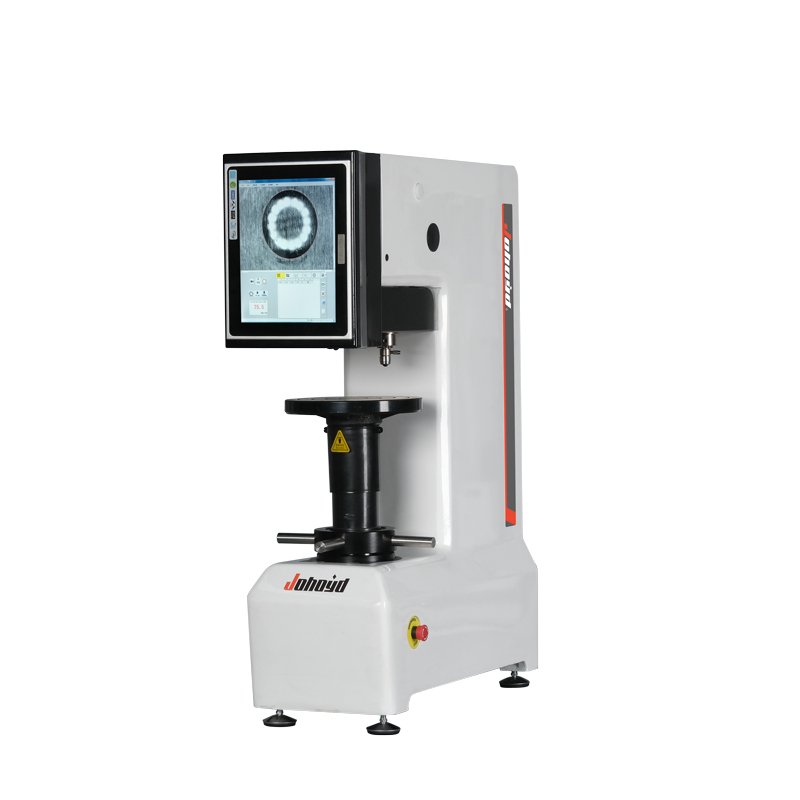
Key Steps in the Test Process
- Indentation: A rhombic diamond indenter is pressed into the polished specimen surface under a predefined load.
- Holding: The load is maintained for a specified dwell time (usually 10–15 seconds).
- Unloading: The load is removed, leaving a permanent indentation.
- Mesures: The long diagonal of the indentation is measured optically.
- Calcul: Knoop hardness is calculated using a formula based on the indentation geometry.
The Knoop Indenter Geometry
The Knoop indenter is a precisely ground rhombic-based pyramid made of diamond. Its unique geometry creates an elongated, shallow indentation.
Geometric Characteristics
- Face angles:
- Two opposite edges: 172.5°
- Other two opposite edges: 130°
- Resulting indentation shape: A long, narrow rhombus.
- Depth-to-diagonal ratio: Approximately 1:30, meaning the indentation is very shallow relative to its length.
This elongated shape ensures:
- Minimal penetration depth.
- Reduced stress concentration.
- Lower likelihood of crack formation in brittle materials.
Knoop Hardness Number (KHN) Calculation
The Knoop Hardness Number (KHN) is defined as the ratio of the applied load to the projected area of the indentation.
Formula
KHN=ApP
Où ?
- P= Applied load (kgf)
- Ap= Projected area of the indentation (mm²)
The projected area is calculated from the long diagonal length (d, in mm):
Ap=2⋅tan(86.25∘)⋅tan(65∘)d2≈30.573d2
Thus, the simplified formula becomes:
KHN≈(30.573d2)P=d230.573⋅P
Example Calculation
- Applied load: P=0.1kgf
- Measured long diagonal: d=0.12mm
KHN=(0.12)230.573×0.1=0.01443.0573≈212
So, the Knoop hardness value is reported as KHN 212.
Standard Test Procedure (ASTM E384)
Following standardized procedures ensures consistency, accuracy, and comparability of results.
1. Specimen Preparation
- Surface must be flat, smooth, and polished (typically 1 µm finish).
- Specimen thickness should be sufficient to prevent substrate influence (at least 10× the indentation depth).
2. Indenter and Microscope Calibration
- Verify indenter geometry and optical measurement system accuracy.
- Calibrate the microscope using certified standards.
3. Load Application
- Select an appropriate load (commonly 10 gf – 1000 gf).
- Apply the load smoothly without shock or vibration.
4. Dwell Time
- Typically 10–15 seconds, as specified by the standard or application requirement.
5. Measurement
- Measure the long diagonal (d) optically with a calibrated microscope.
- Take multiple measurements (usually 5–10) and compute the average KHN.
Comparison with Vickers and Other Hardness Tests
| Fonctionnalité | Knoop | Vickers | Brinell | Rockwell |
|---|---|---|---|---|
| Forme du pénétrateur | Rhombic pyramid | Square pyramid | Spherical | Conical/Ball |
| Typical Load | 10–1000 gf | 1–120 kgf | 500–3000 kgf | 60–150 kgf |
| Indentation Size | Small, shallow | Small | Large | Small |
| Meilleur pour | Brittle materials, thin films | General purpose | Métaux doux | Production testing |
| Cracking Risk | Low | Modéré | Élevé | Modéré |
Key Advantages Over Vickers
- Shallower indentation → less cracking in brittle materials.
- Better suited for films minces et revêtements.
- More accurate for materials with anisotropic hardness.
Applications of the Knoop Hardness Test
1. Ceramics and Glass
- Measuring hardness of technical ceramics, glass, and gemstones.
- Evaluating surface treatments and strengthening processes.
2. Thin Films and Coatings
- Hardness profiling of PVD/CVD coatings.
- Determining coating-substrate composite hardness.
3. Metals and Alloys
- Microstructural hardness mapping (e.g., carbides in steel).
- Studying heat-affected zones and case hardening.

4. Geological and Archaeological Samples
- Mineral identification via hardness.
- Non-destructive analysis of artifacts.
5. Quality Control and Research
- Validating surface modification processes.
- Correlating hardness with wear, erosion, or fracture resistance.
Advantages and Limitations
Avantages
- Minimal damage to brittle materials.
- High spatial resolution (ideal for microstructures).
- Suitable for thin films and small components.
- Low risk of crack initiation.
Limitations
- Requires highly polished surfaces.
- Manual measurement can introduce operator error.
- Not suitable for very thick or soft materials.
- Less common in industrial production compared to Rockwell/Vickers.
Best Practices for Accurate Results
- Utilisation consistent load and dwell time.
- Ensure proper surface preparation.
- Maintain calibrated equipment.
- Avoid edge effects (indent ≥ 2–3× diagonal length from edges).
- Average multiple indentations to reduce statistical error.
Future Developments
- Automated image analysis for faster, more repeatable measurements.
- Nanoindentation hybrid systems combining Knoop and depth-sensing methods.
- AI-assisted hardness mapping for microstructure characterization.
- Integration with digital twin and materials database platforms.
Conclusion
The Knoop hardness test remains a vital micro-indentation technique for evaluating the hardness of brittle, thin, or delicate materials where traditional macro-hardness tests fail. Its shallow, elongated indentation minimizes cracking and preserves sample integrity, making it indispensable in ceramics, thin films, coatings, and precision materials research.
By adhering to standardized procedures such as ASTM E384 and leveraging modern automation, engineers and researchers can obtain accurate, repeatable Knoop hardness data essential for material selection, process validation, and quality assurance.
For high-precision Knoop hardness testing equipment and calibration services, consult specialized materials testing providers who adhere to international standards and offer traceable calibration certificates.