Durómetro Automático: Guía Completa para la Medición Automática de la Dureza

Introduction to Automatic Hardness Tester
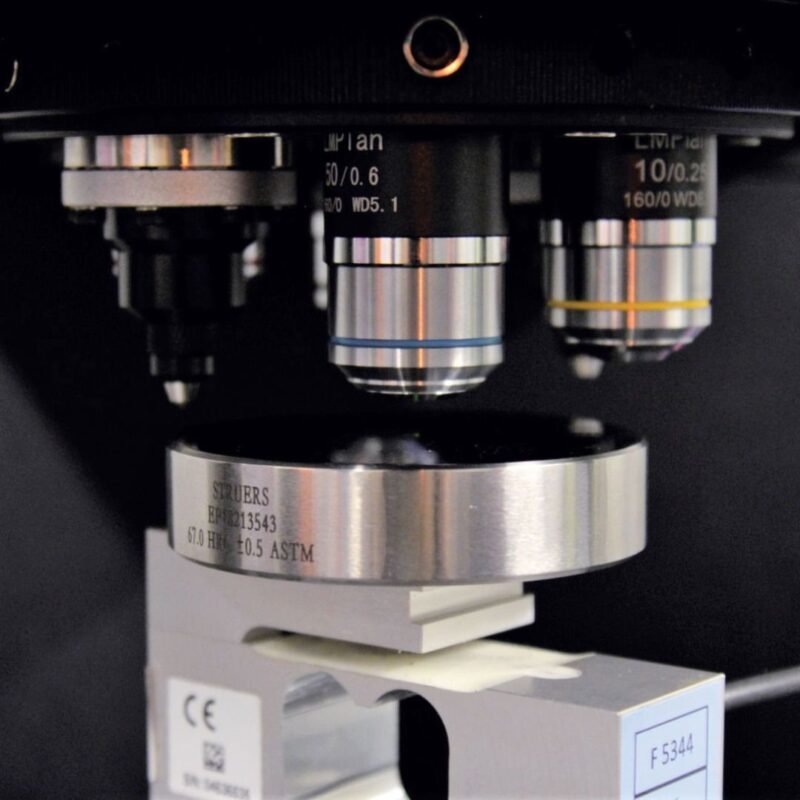
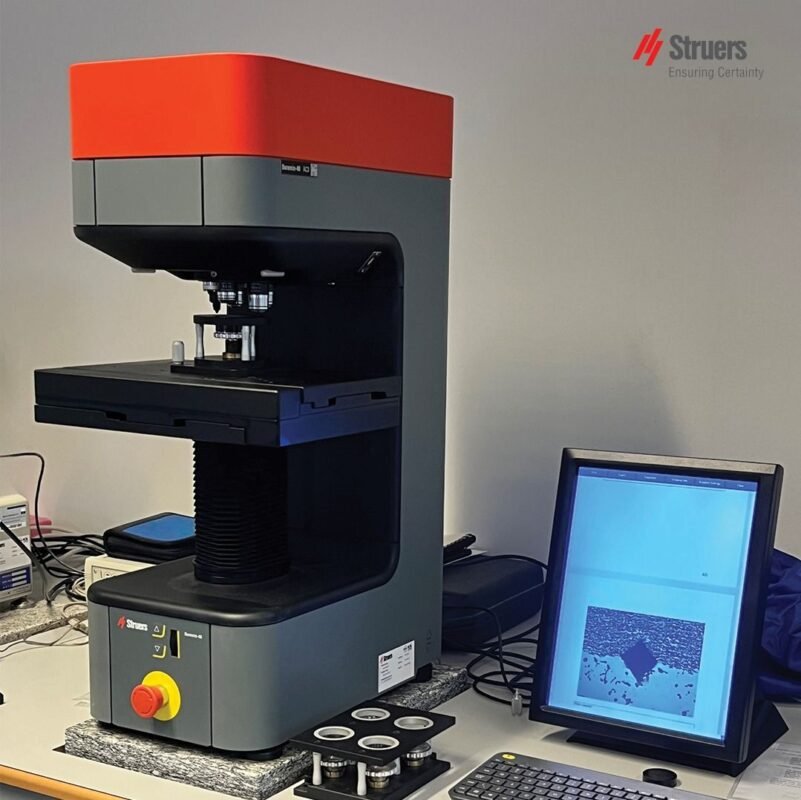
En automatic hardness tester is an advanced industrial testing system designed to improve efficiency, accuracy, and consistency in hardness measurement. These machines are widely used in manufacturing plants, laboratories, aerospace engineering, and quality control departments.
Compared with manual equipment, an automatic hardness tester reduces operator involvement and improves repeatability through digital control and automated testing processes.
Why Automated Hardness Testing Is Important
Improved Efficiency in Industrial Inspection
Automated systems significantly increase testing speed and reduce production downtime.
Reduced Operator Error and Better Consistency
Automation ensures stable testing conditions and improves measurement repeatability.
📎 Referencia de salida:
https://en.wikipedia.org/wiki/Hardness_testing
📎 Referencia adicional:
https://www.iso.org/
How an Automatic Hardness Tester Works
Automated Indentation and Load Control
The machine applies test loads automatically using programmable control systems.
Digital Measurement and Analysis
Optical sensors and digital systems evaluate indentation size and hardness values.
Automatic Data Processing and Reporting
Results are stored digitally and can be exported for quality control documentation.
👉 Enlace interno:
https://hardnesstests.com/digital-hardness-tester
Common Types of Automatic Hardness Testers
Durómetros automáticos Rockwell
Suitable for fast industrial hardness inspection.
Automatic Brinell Hardness Testers
Designed for large components and cast materials.
Automatic Vickers Hardness Testers
Se utiliza para aplicaciones de precisión y microdureza.
Integrated Robotic Hardness Testing Systems
Advanced automated systems support high-volume production lines.
👉 Enlace interno:
https://hardnesstests.com/rockwell-hardness-tester
Materiales probados habitualmente
Acero al carbono
Used in automotive, construction, and machinery industries.
Acero inoxidable
Requires reliable hardness verification for industrial quality control.
Aleaciones de aluminio
Automated testing improves lightweight material inspection.
Componentes sometidos a tratamiento térmico
Hardness measurement verifies heat treatment effectiveness.
👉 Enlace interno:
https://hardnesstests.com/hardness-testing-for-heat-treatment
Key Features of Modern Automatic Hardness Testers
CNC-Controlled Testing Systems
Modern systems provide programmable and repeatable testing procedures.
Automatic Optical Measurement
Integrated cameras and optical systems improve precision.
Conversión multiescala de dureza
Machines can automatically convert hardness values into multiple scales.
Smart Data Management and Connectivity
Advanced systems support USB export, cloud integration, and industrial networking.
👉 Enlace interno:
https://hardnesstests.com/precision-hardness-testing-system
Industrial Applications of Automatic Hardness Tester
Fabricación de automóviles
Used for inspecting gears, shafts, and engine parts.
Ingeniería aeroespacial
Supports precise quality control for critical components.
Production Line Inspection
Automated systems improve testing efficiency in mass production.
Laboratorios metalúrgicos
Laboratories use automated systems for advanced material analysis.
👉 Enlace interno:
https://hardnesstests.com/metallographic-hardness-tester
Advantages of Using Automatic Hardness Testers
- Improved testing efficiency
- Reducción de los errores del operador
- High repeatability and consistency
- Automatic data recording and reporting
- Suitable for high-volume industrial inspection
Retos y limitaciones
- Higher equipment investment cost
- Requires regular maintenance and calibration
- Operator training may still be necessary
Normas y cumplimiento de la industria
Automatic hardness testing commonly follows:
- Normas ASTM → https://www.astm.org/
- Normas ISO → https://www.iso.org/
Best Practices for Accurate Automated Testing
- Use calibrated automated equipment
- Maintain clean and stable testing surfaces
- Seleccione cuidadosamente las escalas de dureza adecuadas
- Seguir los procedimientos de ensayo industriales aprobados
Productos recomendados y enlaces internos
Explora soluciones relacionadas:
- https://hardnesstests.com/brinell-hardness-tester
- https://hardnesstests.com/vickers-hardness-tester
- https://hardnesstests.com/hardness-calibration-blocks
- https://hardnesstests.com/hardness-testing-machine-manufacturer
FAQs About Automatic Hardness Tester
1. What is an automatic hardness tester used for?
It measures material hardness using automated testing and digital analysis systems.
2. Which industries use automated hardness testing?
Automotive, aerospace, manufacturing, and metallurgical industries.
3. Are automatic hardness testers accurate?
Yes, automation improves consistency and reduces operator error.
4. Can automatic systems store testing data?
Most modern systems support digital storage and reporting functions.
5. What materials can be tested?
Steel, aluminum, stainless steel, cast iron, and heat-treated materials.
6. ¿Por qué es importante el calibrado?
Calibration ensures reliable and repeatable testing results.
Conclusión
En automatic hardness tester is a powerful solution for industrial quality control and advanced material inspection. With automated measurement, digital reporting, and precision testing capabilities, these systems improve efficiency and reliability across a wide range of industrial applications.