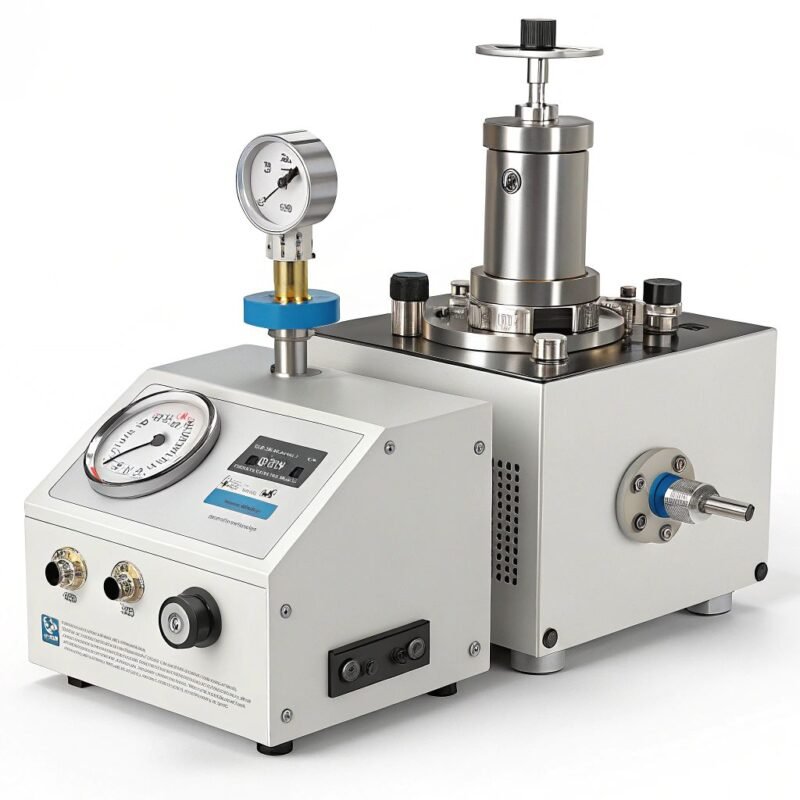
Heat Treatment Hardness Testing: Methods, Standards and Quality Control


Introduction to Heat Treatment Hardness Testing
Heat treatment hardness testing is a critical quality control process used to verify whether a heat-treated material has achieved the desired mechanical properties. Heat treatment processes such as quenching, tempering, carburizing, nitriding, and induction hardening are designed to alter the microstructure of metals, improving hardness, strength, wear resistance, and durability.
Because hardness is often the most direct indicator of successful heat treatment, manufacturers routinely perform hardness testing to confirm process effectiveness and compliance with engineering specifications. Without proper testing, components may fail prematurely, leading to costly repairs, safety risks, and production losses.
Today, heat treatment hardness testing is widely used in automotive, aerospace, energy, tooling, manufacturing, and metallurgical industries.
What Is Heat Treatment Hardness Testing?
Definition und Zweck
Heat treatment hardness testing is the process of measuring the hardness of a material after it has undergone a thermal treatment process.
The primary objectives include:
- Verifying heat treatment results
- Confirming hardness specifications
- Evaluating case depth
- Ensuring wear resistance
- Supporting quality assurance
- Reducing product failures
Importance in Manufacturing and Quality Assurance
Hardness testing helps manufacturers determine whether the desired metallurgical changes have occurred during heat treatment.
It provides a fast, reliable, and cost-effective method for validating process consistency.
Understanding Heat Treatment Processes
Annealing
Annealing softens materials and improves machinability by reducing internal stresses.
Normalizing
Normalizing refines grain structure and improves mechanical properties.
Quenching
Quenching rapidly cools steel to increase hardness and strength.
Tempering
Tempering reduces brittleness while maintaining adequate hardness.
Aufkohlen
Carburizing introduces carbon into the surface layer to create a hard wear-resistant case.
Nitriding
Nitriding diffuses nitrogen into the material surface to improve hardness and fatigue resistance.
Induktionshärten
Induction hardening selectively hardens specific surface areas using electromagnetic heating and rapid cooling.
Why Hardness Testing Is Essential After Heat Treatment
Verifying Process Effectiveness
Hardness testing confirms that the heat treatment process achieved the intended material properties.
Ensuring Material Performance
Proper hardness levels contribute to:
- Abriebfestigkeit
- Fatigue strength
- Load-bearing capability
- Service life
Meeting Industry Specifications
Many industries require documented hardness verification to satisfy customer and regulatory requirements.
Common Heat Treatment Hardness Testing Methods
Rockwell-Härteprüfung
Rockwell testing is the most common method for evaluating heat-treated steel components.
Zu den Vorteilen gehören:
- Fast results
- Direkte Messwerte
- High production efficiency
Common scales:
- HRC for hardened steels
- HRB for softer metals
Brinell-Härteprüfung
Brinell testing is often used for:
- Große Schmiedestücke
- Gussteile
- Heavy industrial parts
Results are reported as HBW.
Vickers-Härteprüfung
Vickers testing offers:
- Hohe Präzision
- Großer Lastbereich
- Surface hardness evaluation
Results are reported as HV.
Mikrohärteprüfung
Microhardness testing is used for:
- Case depth analysis
- Surface-treated layers
- Hardness gradients
Methods include:
- Vickers-Mikrohärte
- Knoop microhardness
Tragbare Härteprüfung
Portable methods include:
- Leeb hardness testing
- UCI hardness testing
These methods are ideal for field inspections and large components.
Heat Treatment Hardness Testing Equipment
Benchtop Hardness Testers
Common systems include:
- Rockwell-Härteprüfgeräte
- Brinell-Härteprüfgeräte
- Vickers-Härteprüfgeräte
Digitale Härteprüfgeräte
Modern systems provide:
- Automated measurements
- Touchscreen-Schnittstellen
- Statistische Analyse
- Datenspeicherung
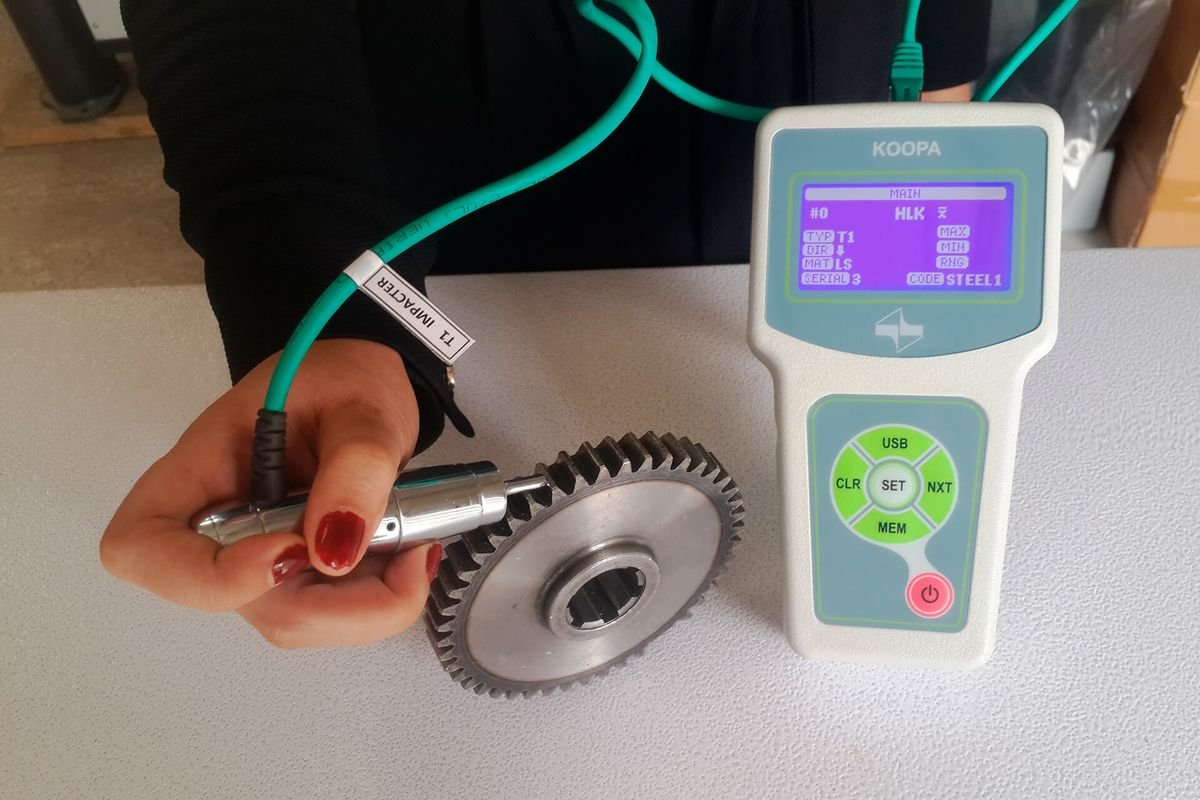
Tragbare Härteprüfgeräte
Portable equipment allows on-site testing of:
- Große Maschinen
- Druckbehälter
- Strukturelle Komponenten
Mikrohärte-Prüfsysteme
These systems are used for detailed analysis of surface-hardened layers and metallographic samples.
Heat Treatment Hardness Testing Procedure
Vorbereitung der Probe
Proper preparation includes:
- Cleaning the surface
- Removing scale if necessary
- Ensuring adequate flatness
Selecting the Appropriate Test Method
Method selection depends on:
- Material Typ
- Härtebereich
- Größe der Komponente
- Applicable standards
Performing the Test
The indenter applies a controlled force according to the selected hardness testing method.
Interpreting Results
Results are compared with:
- Engineering specifications
- Heat treatment requirements
- Customer acceptance criteria
Case Depth and Surface Hardness Evaluation
Effective Case Depth Measurement
Case-hardened components often require hardness profile measurements to determine effective case depth.
Hardness Traverse Testing
Multiple hardness measurements are performed from the surface toward the core.
Surface vs Core Hardness Analysis
Comparing surface and core hardness helps verify proper heat treatment performance.
Factors Affecting Test Accuracy
Surface Condition
Surface roughness, scale, and contamination can influence hardness readings.
Material Thickness
Thin materials may produce inaccurate measurements if the indentation penetrates too deeply.
Calibration and Verification
Routine calibration ensures:
- Measurement accuracy
- Traceability
- Compliance
Heat Treatment Variability
Variations in process temperature, cooling rate, or atmosphere can affect hardness results.
Advantages of Heat Treatment Hardness Testing
Heat treatment hardness testing offers numerous benefits:
- Fast verification of heat treatment quality
- Cost-effective inspection method
- Supports process control
- Improves product reliability
- Reduces risk of component failure
- Widely accepted industry practice
- Applicable to many metals and alloys
Limitations of Heat Treatment Hardness Testing
Despite its advantages, limitations include:
- Localized measurement only
- Different methods use different scales
- Surface preparation may be required
- Hardness alone does not describe all material properties
- Conversion between scales may introduce uncertainty
Proper interpretation is essential for meaningful results.

Industrielle Anwendungen
Automotive Components
Zu den üblichen Anwendungen gehören:
- Zahnräder
- Camshafts
- Lager
- Transmission parts
Aerospace Parts
Critical aerospace components require strict hardness verification after heat treatment.
Tool and Die Manufacturing
Hardness testing ensures proper wear resistance and service life.
Oil and Gas Equipment
Used for evaluating:
- Drill components
- Valves
- Pressure-containing parts
Schwermaschinen
Heat-treated industrial equipment requires hardness verification to ensure durability.
Industriestandards und Compliance
Common standards for Härteprüfung durch Wärmebehandlung include:
- ASTM E18 (Rockwell)
- ASTM E10 (Brinell)
- ASTM E92 (Vickers)
- ASTM E384 (Microhardness)
- ISO 6506
- ISO 6507
- ISO 6508
Offizielle Quellen:
Compliance ensures reliable and internationally accepted test results.
Häufig gestellte Fragen
1. What is heat treatment hardness testing?
It is the process of measuring hardness after heat treatment to verify that the desired material properties have been achieved.
2. Why is hardness testing important after quenching and tempering?
It confirms that the material has reached the required hardness and performance levels.
3. Which hardness test is most commonly used for heat-treated steel?
Rockwell hardness testing, particularly the HRC scale, is the most common method.
4. Can hardness testing measure case depth?
Yes. Microhardness traverse testing is widely used to evaluate effective case depth.
5. What industries use heat treatment hardness testing?
Automotive, aerospace, manufacturing, energy, tooling, and heavy equipment industries.
6. Is portable hardness testing suitable for heat-treated components?
Yes. Leeb and UCI hardness testers are commonly used for field inspections.
Fazit
Heat treatment hardness testing is an essential quality assurance tool for verifying the effectiveness of thermal processing operations. By measuring hardness after quenching, tempering, carburizing, nitriding, or induction hardening, manufacturers can ensure that components meet performance requirements and industry specifications.
From automotive gears and aerospace components to industrial machinery and tooling, heat treatment hardness testing plays a crucial role in improving reliability, durability, and operational safety.