




Vickers Härteprüfgerät Power Guide 17 Präzisionsvorteile für genaue Materialbewertung


Gliederung für den Artikel über Vickers-Härteprüfer
| Themenbereich | Detaillierte Abdeckung mit LSI-Schlüsselwörtern |
|---|---|
| Einführung in das Vickers-Härteprüfgerät | Vickers hardness testing, precision measurement |
| Was ist ein Vickers-Härteprüfer? | diamond indentation method |
| Understanding the Vickers Hardness Principle | indentation geometry, load accuracy |
| Warum die Vickers-Härteprüfung wichtig ist | versatility, precision |
| History of Vickers Hardness Tester | development of Vickers method |
| Working Principle of Vickers Hardness Tester | Diamant-Pyramiden-Eindringkörper |
| Key Components of Vickers Hardness Tester | Eindringkörper, Optik, Lastsystem |
| Vickers Hardness Formula Explained | HV calculation |
| Types of Vickers Hardness Tester | micro, macro, digital |
| Mikro-Vickers-Härteprüfer | coatings and thin materials |
| Makro-Vickers-Härteprüfer | Schüttgut |
| Digitaler Vickers-Härteprüfer | Vorteile der Automatisierung |
| Automatisches Vickers-Härteprüfgerät | high-efficiency testing |
| Loads and Test Ranges | force selection |
| Materials Suitable for Vickers Testing | metals, ceramics |
| Vorteile des Vickers-Härteprüfers | wide application range |
| Einschränkungen des Vickers-Härteprüfers | Oberflächenvorbereitung |
| Genauigkeit und Reproduzierbarkeit | influencing factors |
| Calibration and International Standards | ASTM, ISO |
| Selecting the Right Test Load | anwendungsbezogene Auswahl |
| Vickers Hardness Tester in Manufacturing | Qualitätsprüfung |
| Vickers Hardness Tester in Laboratories | research precision |
| Vickers Hardness Tester in Coating Analysis | layer evaluation |
| Vickers Hardness Tester in Heat Treatment | Prozessvalidierung |
| Sicherheitspraktiken | Bedienerschutz |
| Wartung und Pflege | equipment longevity |
| Interpreting Vickers Hardness Results | Datenanalyse |
| Markenkompetenz und Lösungen | Johoyd Vickers testers |
| Common Vickers Testing Errors | Prävention |
| Zukünftige Trends in der Vickers-Härteprüfung | automation, AI |
| FAQs | allgemeine Fragen |
| Fazit | Zusammenfassung |
Einführung
A Vickers-Härteprüfer is widely recognized as one of the most precise and versatile hardness testing instruments available today. Unlike methods limited to narrow hardness ranges, the Vickers method applies to both soft and extremely hard materials. This flexibility makes it invaluable in laboratories, manufacturing facilities, and research centers.
As industries continue to develop advanced materials and surface treatments, the need for precise hardness measurement grows. The Vickers Hardness Tester meets this demand by combining a simple testing principle with exceptional accuracy.
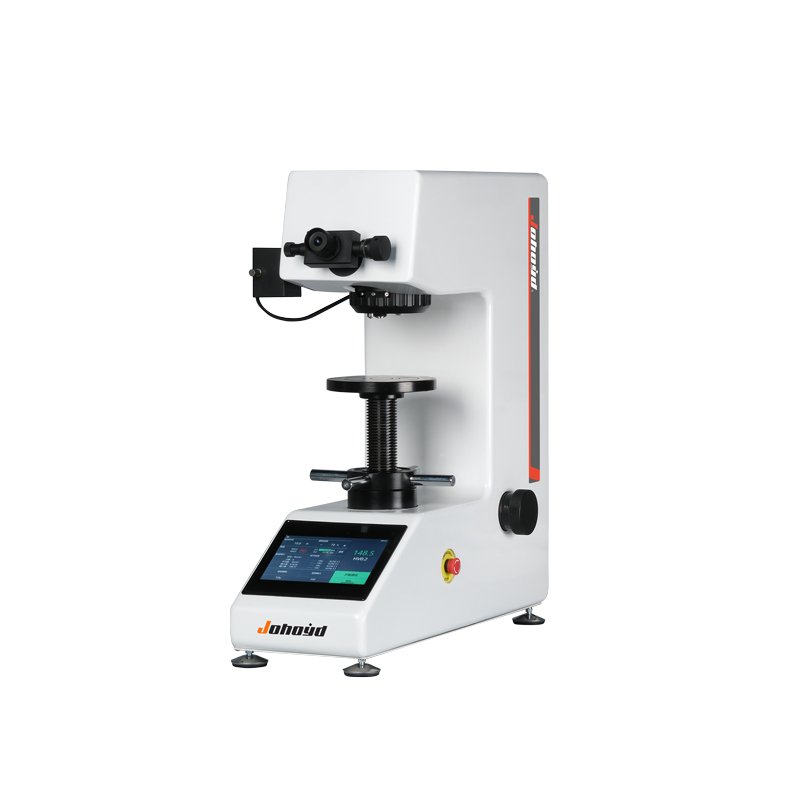
Vickers-Härteprüfer
A Vickers-Härteprüfer measures material hardness by pressing a diamond pyramid indenter into the surface under a controlled load. The size of the resulting square-shaped indentation determines the hardness value.
Because the indenter geometry remains constant, the Vickers method produces consistent results across a wide range of loads. This consistency is a key advantage of Vickers hardness testing.
Understanding the Vickers Hardness Principle
The Vickers hardness principle is based on measuring the diagonal lengths of an indentation left by a diamond pyramid indenter. The applied load and indentation size are used to calculate the hardness value.
Harder materials create smaller indentations, while softer materials create larger ones. This straightforward relationship allows accurate comparison between different materials and treatments.
Warum die Vickers-Härteprüfung wichtig ist
Vickers hardness testing is important because it offers unmatched versatility. A single testing method can cover microhardness and macrohardness applications.
This capability simplifies quality control and research workflows. Engineers and researchers can rely on one method instead of multiple testing systems.
History of Vickers Hardness Tester
The Vickers method was developed in the early twentieth century to provide a universal hardness test. It addressed the limitations of earlier methods that were restricted to specific material types.
Over time, improvements in optics and electronics enhanced the Vickers Hardness Tester. Modern systems reflect decades of refinement and industrial experience.
Working Principle of Vickers Hardness Tester
The tester applies a precise load through a diamond pyramid indenter. After holding the load for a specified dwell time, it is removed.
The indentation is measured using optical or digital systems. The hardness value is calculated automatically in modern testers.
Key Components of Vickers Hardness Tester
A typical Vickers Hardness Tester includes:
- Diamond pyramid indenter
- High-precision load application system
- Optical microscope or camera
- Digital measurement and calculation system
- Rigid frame and specimen stage
Jede Komponente trägt zur Genauigkeit und Wiederholbarkeit bei.
Vickers Hardness Formula Explained
The Vickers hardness value, expressed as HV, is calculated using applied load and indentation diagonal length. This formula ensures consistency across different loads.
Digital systems perform this calculation instantly, reducing operator error.
Types of Vickers Hardness Tester
Vickers testers are available in several configurations, including micro, macro, digital, and automatic models. Each serves different testing needs.
Selecting the right type depends on material thickness and required precision.
Mikro-Vickers-Härteprüfer
Micro Vickers testers apply very small loads. They are ideal for thin materials, coatings, and surface layers.
This method supports detailed analysis without damaging underlying material.
Makro-Vickers-Härteprüfer
Macro Vickers testers use higher loads to evaluate bulk material hardness. They provide representative values for solid components.
This approach complements microhardness testing.
Digitaler Vickers-Härteprüfer
Digital Vickers testers use electronic measurement and display systems. They improve accuracy and reduce subjective interpretation.
Data storage and reporting enhance traceability.
Automatisches Vickers-Härteprüfgerät
Automatic testers perform loading, focusing, and measurement automatically. They deliver high efficiency and repeatability.
These systems are ideal for laboratories and production environments.
Loads and Test Ranges
Vickers testing supports a wide range of loads. Proper load selection ensures accurate and meaningful results.
Guidelines help users match load to material properties.
Materials Suitable for Vickers Testing
Vickers hardness testing suits metals, ceramics, composites, and coatings. It handles both soft and hard materials effectively.
This broad applicability sets it apart from other methods.
Vorteile des Vickers-Härteprüfers

Die wichtigsten Vorteile sind:
- Wide hardness range coverage
- Hohe Genauigkeit und Wiederholbarkeit
- Single indenter geometry
- Suitable for micro and macro testing
These benefits make it a preferred method in precision testing.
Einschränkungen des Vickers-Härteprüfers
Vickers testing requires careful surface preparation. Rough surfaces may affect measurement accuracy.
Optical measurement also requires proper training.
Genauigkeit und Reproduzierbarkeit
Accuracy depends on calibration, load control, and optical measurement quality. Repeatability improves with rigid frames and automated systems.
Standards ensure consistent results.
Calibration and International Standards
Vickers hardness testing follows ASTM and ISO standards. Regular calibration ensures traceability and compliance.
Standards support global acceptance of results.
Selecting the Right Test Load
Selecting the correct load depends on material thickness and hardness. Too much load may cause excessive deformation.
Proper selection ensures valid results.
Vickers Hardness Tester in Manufacturing
Manufacturers use Vickers testing to verify heat treatment and surface quality. It supports quality assurance.
Precision testing improves product reliability.
Vickers Hardness Tester in Laboratories
Laboratories rely on Vickers testers for research and reference testing. High precision supports material development.
Data accuracy is critical in this environment.
Vickers Hardness Tester in Coating Analysis
Coating thickness and hardness are critical performance factors. Micro Vickers testing evaluates coatings without damaging substrates.
This capability supports advanced surface engineering.
Vickers Hardness Tester in Heat Treatment
Heat treatment affects hardness profiles. Vickers testing verifies hardness gradients and treatment effectiveness.
It supports process optimization.
Sicherheitspraktiken
Operators should follow safety guidelines and handle samples carefully. Training reduces risk.
Safe practices protect equipment and personnel.
Wartung und Pflege
Regular cleaning, calibration, and optical inspection extend equipment life. Neglect reduces accuracy.
Proper care ensures consistent performance.
Interpreting Vickers Hardness Results
Results should be interpreted with awareness of material behavior and testing conditions. Conversion to other scales requires caution.
Experience ensures meaningful conclusions.
Markenkompetenz und Lösungen
Reliable testing depends on quality equipment. Brands like Johoyd, durch https://hardnesstests.com, provide dependable Vickers Hardness Tester solutions aligned with international standards.
Their expertise supports precision, consistency, and long-term reliability.
Common Vickers Testing Errors
Common errors include improper focusing and incorrect load selection. Awareness reduces mistakes.
Standardized procedures improve reliability.

Zukünftige Trends in der Vickers-Härteprüfung
Future trends include automated image analysis, AI-assisted measurement, and smart data integration. These advancements enhance efficiency.
Vickers hardness testing continues to evolve with technology.
Häufig gestellte Fragen
What is a Vickers Hardness Tester used for?
It measures hardness across a wide range of materials with high precision.
Why choose Vickers over Rockwell?
Vickers offers broader applicability and higher precision.
Is Vickers testing destructive?
It causes minimal surface damage.
Can Vickers test thin coatings?
Yes, micro Vickers testing is ideal for coatings.
How often should calibration be done?
Je nach Normen oder Nutzungshäufigkeit.
Können Vickers-Tests automatisiert werden?
Yes, modern systems support full automation.
Fazit
Die Vickers-Härteprüfer stands out as one of the most precise and versatile hardness testing instruments available. Its ability to evaluate a wide range of materials, from thin coatings to bulk metals, makes it indispensable in modern material testing.
Mit erfahrenen Herstellern wie Johoyd Lieferung von fortschrittlichen Lösungen durch hardnesstests.com, industries gain confidence in accurate and reliable hardness measurement. As technology advances, the Vickers Hardness Tester will continue to play a central role in quality assurance and material innovation.
Vorgeschlagene interne Links
Vorgeschlagene ausgehende Links
- ASTM Vickers Hardness Testing Standards
- ISO Guidelines for Vickers Measurement