




Hardness Tester Distributor for Reliable Material Testing Solutions


Introduction to Hardness Tester Distributors
A professional hardness tester distributor plays an important role in connecting manufacturers of hardness-testing equipment with customers who need reliable material inspection solutions.
While manufacturers focus on product development and production, distributors often provide additional value through local support, product selection assistance, installation, training, maintenance, and customer service.
Hardness testing equipment is widely used to evaluate the mechanical properties of materials and components, including:
- Stahl
- Aluminium-Legierungen
- Gusseisen
- Rostfreier Stahl
- Heat-treated parts
- Beschichtungen
- Precision components
- Industrial products
Different applications require different testing methods.
For example:
- Rockwell testers are commonly used for fast production inspection.
- Brinell testers are often selected for castings and large components.
- Vickers testers are widely used in laboratories and metallurgical applications.
- Microhardness testers are suitable for thin layers and small areas.
- Portable hardness testers allow testing of large components directly on-site.
A knowledgeable distributor helps customers choose equipment that matches their material, testing requirements, and quality-control objectives.
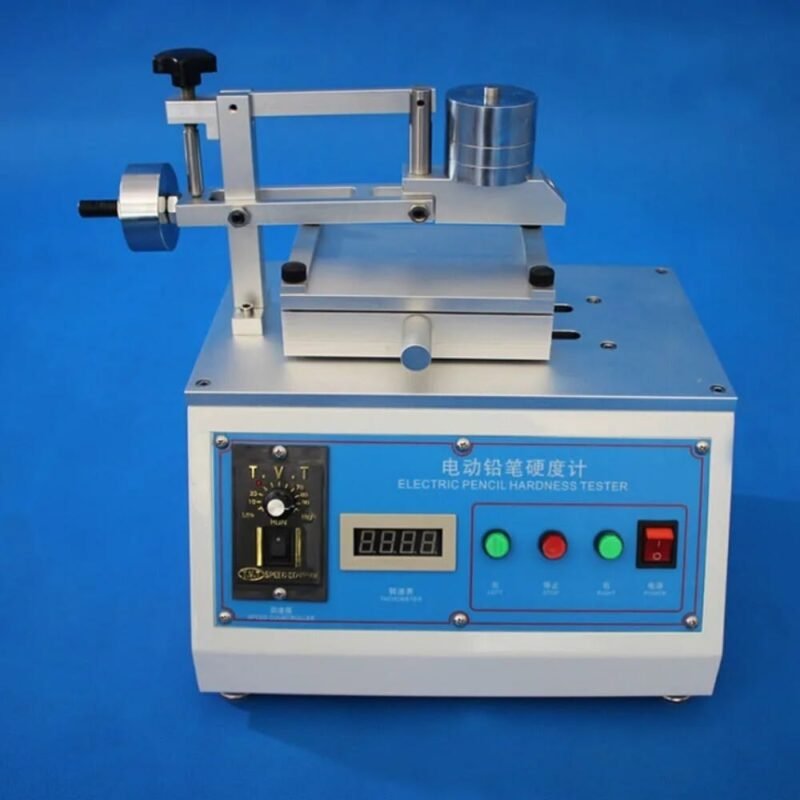
What Does a Hardness Tester Distributor Provide?
A reliable distributor typically provides more than equipment sales.
Hardness Testing Equipment
A distributor may supply various types of hardness-testing systems, including:
- Rockwell-Härteprüfgeräte
- Brinell-Härteprüfgeräte
- Vickers-Härteprüfgeräte
- Knoop hardness testers
- Mikrohärteprüfgeräte
- Universal hardness testers
- Tragbare Härteprüfgeräte
- Automatic hardness testing systems
The distributor should understand the technical differences between these systems and recommend suitable equipment according to the application.
Testing Accessories and Consumables
Hardness testing requires various supporting components.
Common accessories include:
- Diamant-Eindringkörper
- Ball indenters
- Kugeln aus Wolframkarbid
- Anvils
- Specimen fixtures
- Microscope accessories
- Replacement parts
- Hardness reference blocks
Selecting the correct accessories is important because incorrect components can affect measurement reliability.
Calibration Products and Services
Quality-control departments and laboratories often require verification materials and calibration support.
A distributor may provide:
- Certified hardness test blocks
- Calibration kits
- Force verification equipment
- Indenter inspection tools
- Calibration documentation
These products help maintain confidence in hardness measurement results.
Technical Support and Maintenance
A professional distributor can assist with:
- Equipment installation
- Operator training
- Troubleshooting
- Vorbeugende Wartung
- Software support
- Spare parts replacement
- Application guidance
This support can reduce downtime and improve equipment utilization.
Types of Hardness Testers Available Through Distributors
Rockwell-Härteprüfer
Rockwell hardness testing measures indentation depth under specific loading conditions.
It is widely used because it offers:
- Schnelle Prüfgeschwindigkeit
- Einfache Bedienung
- Production suitability
- Multiple hardness scales
Zu den typischen Anwendungsbereichen gehören:
- Steel components
- Heat-treated parts
- Tools
- Automotive products
ASTM E18 provides requirements for Rockwell hardness testing of metallic materials.
Brinell-Härteprüfer
Brinell hardness testing uses a spherical indenter to create a larger indentation.
It is commonly applied to:
- Gusseisen
- Schmiedeteile
- Gussteile
- Aluminium-Legierungen
- Kupferlegierungen
The method can be useful when testing materials with non-uniform structures.
Vickers-Härteprüfer
Vickers hardness testing uses a diamond pyramid indenter.
It is suitable for:
- Laboruntersuchungen
- Metallographische Analyse
- Heat-treatment inspection
- Quality control
- Forschungsanwendungen
Advanced Vickers systems may include automatic image measurement and software analysis.
Mikrohärteprüfer
Microhardness testers use very small test forces.
Sie werden in der Regel verwendet für:
- Dünne Schichten
- Surface-treated layers
- Kleine Komponenten
- Metallographische Proben
- Material phase analysis
Because indentation sizes are small, precision optics and stable positioning systems are important.
Tragbarer Härteprüfer
Portable hardness testers allow inspection of large or fixed components.
Die Anwendungen umfassen:
- Rohrleitungen
- Schwermaschinen
- Große Schmiedestücke
- Schweißnahtprüfung
- Field maintenance
Portable systems can use different measurement technologies depending on the application.
Advantages of Working with a Professional Hardness Tester Distributor
Local Technical Support
One major advantage of working with a distributor is easier access to technical assistance.
Local support can help with:
- Installation questions
- Operation guidance
- Maintenance issues
- Troubleshooting
This can be especially valuable for companies using hardness testers in daily production.
Faster Equipment Supply
A distributor may maintain inventory or have established logistics channels.
This can help customers obtain:
- New instruments
- Accessories
- Replacement parts
- Verbrauchsmaterial
more efficiently.
Application Consultation
Choosing the correct hardness tester requires understanding:
- Art des Materials
- Hardness range
- Sample shape
- Surface condition
- Häufigkeit der Prüfungen
- Required standards
An experienced distributor can help evaluate these factors.
Installation and Training
Proper operation affects measurement quality.
Training may cover:
- Machine operation
- Sample preparation
- Test procedures
- Result interpretation
- Maintenance practices
After-Sales Service
Long-term support is an important factor when purchasing precision equipment.
A good distributor should provide:
- Warranty assistance
- Repair coordination
- Spare parts
- Calibration support
- Technical consultation
How to Choose the Right Hardness Tester Distributor
Product Knowledge and Experience
A distributor should understand the products it supplies.
Look for experience with:
- Different hardness methods
- Industrial applications
- Laboratory requirements
- Testing standards
A knowledgeable distributor should ask questions about your application before recommending equipment.
Authorized Supply Capability
When possible, verify whether the distributor works directly with the manufacturer or has authorized supply relationships.
This can help ensure:
- Genuine products
- Accurate documentation
- Reliable warranty support
- Technical communication
Calibration and Service Support
Ask whether the distributor can provide:
- Calibration assistance
- Reference blocks
- Verification guidance
- Maintenance services
- Technical support
A supplier that supports the equipment after delivery provides greater long-term value.
Spare Parts Availability
Before purchasing, check availability of:
- Indenters
- Anvils
- Optical components
- Sensors
- Electronic parts
- Fixtures
Reliable spare-parts access helps maintain equipment operation.
Customer Application Experience
A distributor with experience across different industries can better understand practical requirements.
For example:
- Automotive parts may require fast production testing.
- Research laboratories may need high precision.
- Foundries may require Brinell testing for large components.
- Heat-treatment companies may need verification of hardness changes.
Hardness Tester Distributor for Different Industries
Autoindustrie
Automotive manufacturers use hardness testing for:
- Zahnräder
- Wellen
- Motorkomponenten
- Heat-treated parts
- Transmission components
Fast and repeatable testing is often important.
Metallverarbeitung
Metal producers may test:
- Steel products
- Aluminum components
- Gussteile
- Schmiedeteile
- Rohstoffe
The selected hardness method depends on product size and material characteristics.
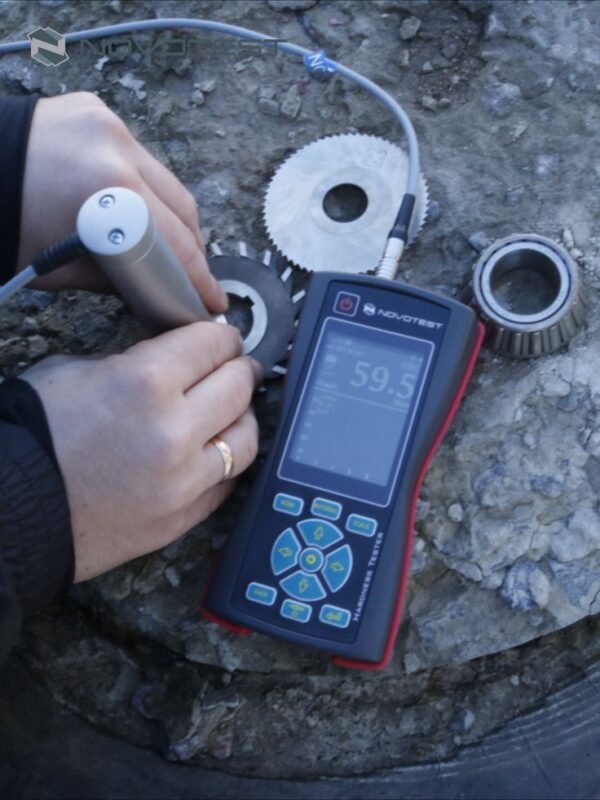
Heat Treatment Industry
Heat-treatment companies use hardness testing to verify processes such as:
- Quenching
- Tempering
- Aufkohlen
- Surface hardening
Accurate measurement helps confirm whether the required material properties have been achieved.
Laboratory and Research
Laboratories may require:
- Vickers systems
- Mikrohärteprüfgeräte
- Automated measurement
- Advanced software
- Precision accessories
A distributor with laboratory experience can help configure suitable systems.
Comparing Hardness Tester Distributors
When comparing distributors, consider the complete service package.
| Evaluation Factor | Importance |
|---|---|
| Product quality | Ensures reliable measurement |
| Technical knowledge | Helps select suitable equipment |
| Calibration support | Maintains measurement confidence |
| Spare parts | Reduces downtime |
| Training service | Improves operation |
| Warranty support | Protects investment |
| Delivery capability | Improves project planning |
| Application experience | Provides better solutions |
The lowest price is not always the best option. Consider the overall value provided throughout the equipment lifecycle.
Häufig gestellte Fragen
1. What is a hardness tester distributor?
A hardness tester distributor supplies hardness-testing equipment and related products while often providing technical support, installation, training, and after-sales service.
2. What products can a hardness tester distributor supply?
Products may include Rockwell, Brinell, Vickers, microhardness, and portable hardness testers, along with indenters, anvils, reference blocks, calibration equipment, and spare parts.
3. How do I choose a reliable hardness tester distributor?
Evaluate product knowledge, technical support, authorized supply capability, calibration services, spare-parts availability, and industry experience.
4. Can a distributor help select the right hardness tester?
Yes. A professional distributor can recommend equipment based on material type, hardness range, specimen size, testing frequency, and applicable standards.
5. Do distributors provide calibration support?
Many distributors provide calibration-related products and services, including reference blocks, verification guidance, and documentation support.
6. Why buy from a distributor instead of directly from a manufacturer?
A distributor may provide local service, faster communication, installation support, training, and easier access to spare parts.
7. What industries use hardness testers?
Hardness testers are widely used in automotive, aerospace, metal manufacturing, heat treatment, foundries, laboratories, and research organizations.
8. Are hardness tester accessories important?
Yes. Proper indenters, anvils, fixtures, and reference blocks are essential for accurate and repeatable hardness measurements.
Schlussfolgerung
Eine zuverlässige hardness tester distributor can provide valuable support throughout the entire equipment lifecycle. From selecting the correct testing method to installation, calibration, maintenance, and spare parts, a professional distributor helps customers achieve dependable hardness measurement results.
When choosing a distributor, consider more than equipment price. Evaluate product knowledge, technical capability, service support, calibration assistance, delivery ability, and industry experience.
Whether you need Rockwell testing for production, Brinell testing for heavy components, Vickers testing for laboratory analysis, microhardness testing for coatings, or portable testing for field inspection, the right distributor can help create an effective hardness-testing solution.
A strong distributor relationship can improve testing efficiency, reduce equipment downtime, and provide long-term value for your quality-control operations.