




Hardness Tester Price: 7 Key Factors That Affect the Cost


When companies search for hardness tester price, they often expect to find one simple number. In practice, hardness testing equipment can vary considerably in cost because different machines use different testing methods, force ranges, measurement systems, automation levels, and accessories.
A basic manual Rockwell tester and a fully automatic Vickers microhardness system may both be called hardness testers, but they’re designed for very different applications.
The right purchasing decision therefore isn’t simply about finding the lowest price. It’s about finding equipment that provides the required measurement capability without paying for features you don’t actually need.
What Determines Hardness Tester Price?
Several factors influence the final purchase cost.
Testing Method
The testing method is one of the biggest factors.
Rockwell testers are often relatively straightforward because hardness is determined from indentation depth. Brinell equipment may require larger indenters and optical measurement. Vickers and microhardness systems can require precision diamond indenters, microscopes, cameras, and image-analysis software.
As the measurement system becomes more sophisticated, the equipment cost can increase.
Manual or Automatic Operation
Manual machines generally have a simpler configuration.
Automatic systems can include:
- Motorized test forces
- Automatic indentation measurement
- Motorized stages
- Digital cameras
- Test-program management
- Automated result calculation
- Data storage
Automation can increase the initial purchase price, but it may reduce operator workload and improve productivity in high-volume applications.
Test Force and Measurement Range
Different applications require different test forces.
A machine designed for routine testing of standard metal components may have a very different configuration from equipment designed for microhardness testing.
When comparing prices, make sure the quoted machine supports your required:
- Test force
- Hardness scale
- Material
- Specimen dimensions
- Testing method
Optical and Digital Systems
Optical systems can have a major impact on equipment cost.
A basic system may use manual measurement, while an advanced machine may include a high-resolution camera and software that automatically measures indentation dimensions.
For laboratories performing many Vickers or Brinell tests, automatic image analysis may justify the additional investment.
Accessories and Configuration
The advertised equipment price doesn’t always include every accessory required for your application.
Additional items may include:
- Diamond indenters
- Ball indenters
- Anvils
- Specimen fixtures
- Reference blocks
- Calibration accessories
- Software
- Printers
- Protective covers
It’s important to compare complete configurations rather than headline prices alone.
Hardness Tester Price by Testing Method
There isn’t a universal price for each category because specifications differ among manufacturers. However, the following comparison can help explain why different systems have different costs.
| Tester Type | Typical Application | Relative Cost |
|---|---|---|
| Basic Rockwell | Routine metal inspection | Low to medium |
| Digital Rockwell | Industrial quality control | Medium |
| Brinell | Castings and large components | Medium |
| Vickers | Laboratory and precision testing | Medium to high |
| Microhardness | Small areas and thin layers | High |
| Portable Leeb | On-site metal inspection | Medium |
| Automated Vickers | High-volume laboratory testing | High |
These are broad market categories rather than fixed quotations. Actual prices depend on specifications, brand, region, certification, accessories, and order quantity.

Rockwell Hardness Tester Cost
Rockwell equipment is often selected by manufacturers that need fast and straightforward hardness inspection.
Basic manual systems generally have fewer electronic and optical components. More advanced digital models may offer automatic force application, digital displays, multiple scales, and data-management features.
For production environments, the additional cost of automation may be worthwhile if many parts need to be tested every day.
Brinell Hardness Tester Cost
Brinell machines can have different configurations depending on the test force and indentation measurement method.
A system with integrated optical measurement and software will generally cost more than a basic configuration.
Brinell testing is often considered for:
- Cast iron
- Castings
- Forgings
- Aluminum alloys
- Large metal parts
Vickers Hardness Tester Cost
Vickers systems generally require more precision than basic Rockwell machines.
Equipment may include:
- Diamond pyramid indenter
- Microscope
- Camera
- Illumination system
- Digital measurement
- Automatic calculation
Fully automatic Vickers systems can therefore be considerably more expensive than manual laboratory models.
Microhardness Tester Cost
Microhardness testers are specialized instruments.
Their price can be influenced by:
- Low-force loading systems
- High-quality optics
- Precision positioning
- Motorized stages
- Image-analysis software
- Automated testing
They’re often used for coatings, surface-hardened layers, thin materials, and metallographic research.
Portable Hardness Tester Cost
Portable testers are available in different configurations.
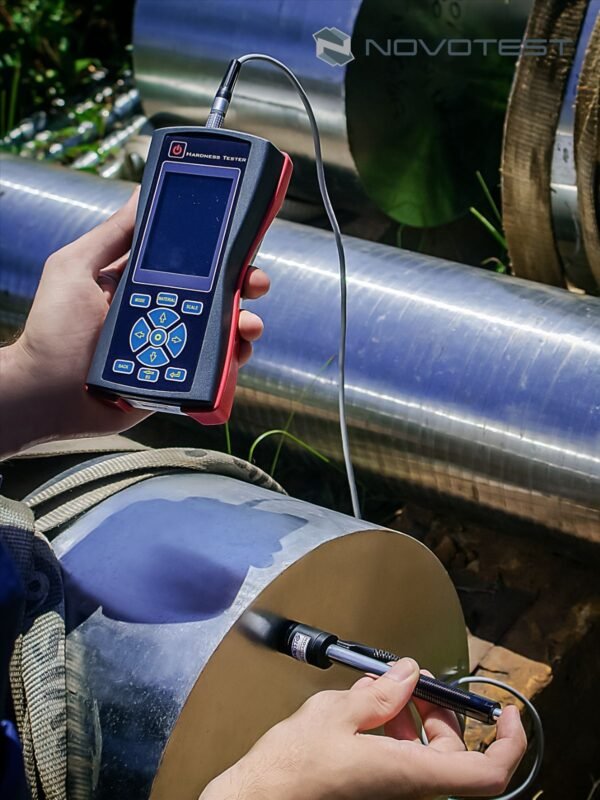
A basic handheld instrument may be designed for simple field measurements, while an advanced system may include multiple probes, data storage, wireless communication, software, and specialized accessories.
Probe selection is especially important because different component shapes and testing applications can require different configurations.
Entry-Level vs. Professional Hardness Testers
Basic Models
Entry-level equipment can be suitable for users with straightforward testing requirements.
Typical characteristics include:
- Manual operation
- Basic display
- Limited automation
- Standard accessories
- Simple data management
These systems can be attractive when the testing volume is relatively low.
Industrial Models
Professional industrial testers may offer:
- Better mechanical stability
- Digital controls
- Multiple test scales
- Improved measurement systems
- More robust construction
- Data storage
They’re designed for regular use in manufacturing and quality-control environments.
Automated Systems
Automated hardness testing systems are aimed at laboratories and high-volume applications.
They may automate:
- Specimen positioning
- Test-force application
- Indentation measurement
- Hardness calculation
- Data recording
- Report generation
The higher initial investment can make sense when testing volume is high and operator time is expensive.
What Is Included in the Equipment Price?
Before comparing quotations, request a detailed equipment configuration.
A quotation may include some or all of the following:
- Main hardness tester
- Standard indenter
- Anvils
- Specimen table
- Test blocks
- Software
- Calibration certificate
- Operating manual
- Packaging
- Training
Don’t assume that every item shown in a product photograph is included.
It’s a good idea to ask the supplier to provide a complete packing list with the quotation.
That simple step can prevent unpleasant surprises later.
Hidden Costs to Consider Before Buying
The purchase price is only one part of the total cost.
Calibration
Hardness testers require appropriate verification and calibration procedures.
Depending on your quality system, you may need:
- Certified reference blocks
- Periodic calibration
- Verification services
- Calibration documentation
For laboratories working under formal quality systems, these costs should be included in the budget.
Indenters and Reference Blocks
Indenters are precision components and may eventually require inspection or replacement.
Reference blocks are also important for routine verification.
For example, a Rockwell system may require different indenters and reference blocks depending on the hardness scales being used.
Maintenance and Spare Parts
Consider the long-term availability of:
- Indenters
- Anvils
- Optical components
- Sensors
- Electronic boards
- Mechanical components
A cheap machine with poor spare-parts support can become expensive if repairs are difficult.
Training and Software
Advanced systems may require specialized software or operator training.
If several employees will operate the equipment, training can be a worthwhile investment.
How to Compare Hardness Tester Prices
Don’t compare machines using price alone.
A better approach is to create a technical comparison table.
| Factor | Supplier A | Supplier B | Supplier C |
|---|---|---|---|
| Testing method | |||
| Hardness scales | |||
| Test-force range | |||
| Accuracy | |||
| Automation | |||
| Indenters included | |||
| Reference blocks | |||
| Software | |||
| Calibration | |||
| Warranty | |||
| Spare parts | |||
| Delivery | |||
| Total price |
This makes it much easier to see whether a low quotation is genuinely better value.
A supplier that costs slightly more may include important accessories, calibration support, training, and better after-sales service.
How to Reduce the Total Cost of Ownership
There are several ways to control hardness-testing costs.
Choose the Correct Method
Don’t automatically buy the most advanced machine.
If you only need routine Rockwell testing, a basic Rockwell system may be more practical than a fully automated Vickers machine.
Avoid Unnecessary Accessories
Purchase the accessories that match your actual applications.
There’s little benefit in paying for probes, indenters, or fixtures that you’ll never use.
Consider Testing Volume
For occasional testing, manual equipment may be sufficient.
For hundreds of tests per day, automation can potentially reduce labor costs and improve workflow.
Check After-Sales Support
Reliable spare parts and technical service can reduce downtime.
A machine that remains operational for many years can offer better value than a cheaper machine that is difficult to maintain.
Choosing the Right Hardness Tester for Your Budget
The best purchasing strategy is to start with the application rather than the budget.
First determine:
- What material will you test?
- What hardness scale is required?
- What is the expected hardness range?
- How large and heavy are the specimens?
- How many tests will you perform?
- Do you need portable or laboratory equipment?
- Is automatic measurement required?
- Which testing standard applies?
Once these questions are answered, you can request comparable quotations from manufacturers or suppliers.
For example, a company inspecting large steel shafts may prioritize a portable Leeb system, while a metallography laboratory may need an automated Vickers or microhardness tester.
In other words, the “best” hardness tester price is the price of the equipment that meets your actual testing requirements with a reasonable total cost of ownership.
Frequently Asked Questions
1. How much does a hardness tester cost?
There is no single price because hardness testers range from relatively simple manual machines to sophisticated automated laboratory systems. The testing method, specifications, automation, accessories, and brand all influence the final cost.
2. Why do Vickers hardness testers cost more than some Rockwell testers?
Vickers systems often require precision diamond indentation and optical measurement. Advanced models may also include cameras, automated stages, and image-analysis software.
3. Are portable hardness testers expensive?
Portable testers are available across a broad price range. Basic handheld models generally cost less than advanced systems with multiple probes, software, and data-management capabilities.
4. What is included in a hardness tester quotation?
It depends on the supplier. Always confirm whether the quotation includes indenters, anvils, reference blocks, software, calibration documents, shipping, installation, and training.
5. Is a cheap hardness tester a good choice?
Not necessarily. A low purchase price may be attractive, but measurement performance, calibration, spare parts, technical support, and long-term reliability should also be considered.
6. How can I get an accurate hardness tester price?
Provide the supplier with your material, hardness range, testing method, specimen dimensions, test volume, required standard, and desired accessories. A detailed application description allows the supplier to prepare a more accurate quotation.
7. Should I buy a manual or automatic hardness tester?
Manual equipment may be sufficient for occasional testing. Automatic equipment can be more productive for laboratories or production environments with high testing volumes.
8. What is the most important factor when comparing prices?
The most important factor is whether the machine meets your required testing method, accuracy, range, and application. Compare the complete system and its long-term operating costs rather than the initial price alone.
Conclusion
Hardness tester price can vary significantly because hardness-testing machines are available in many different configurations. Rockwell, Brinell, Vickers, microhardness, and portable systems each serve different purposes and have different equipment requirements.
When purchasing, don’t focus only on the number on the quotation. Consider the complete package, including testing capability, accuracy, indenters, anvils, reference blocks, calibration, software, warranty, spare parts, and technical support.
For routine production inspection, a straightforward industrial tester may provide excellent value. For advanced laboratory work, investing in automated measurement and precision optics may be worthwhile. For large components, a portable system can eliminate the practical problems of moving heavy specimens.
The smartest way to control your investment is to define the testing requirements first and then compare suppliers using the same technical specifications. This approach helps you find equipment that delivers the right balance of price, performance, reliability, and long-term value.