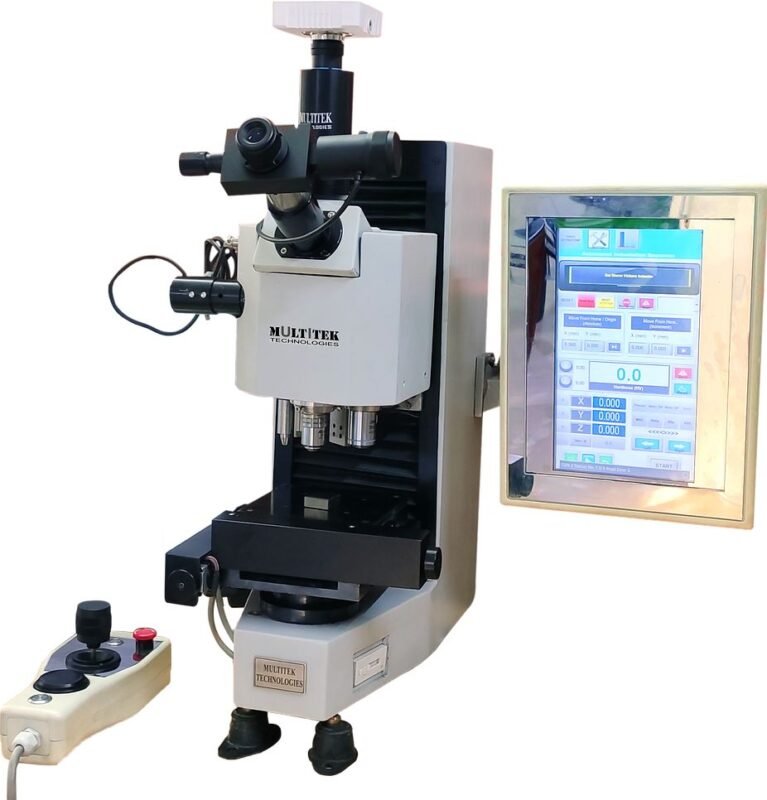
Digital Rockwell Hardness Tester: Principles, Features, Applications, and Buying Guide


A digital Rockwell hardness tester is an advanced material testing instrument used to measure the hardness of metals and other materials using the Rockwell Hardness Test method. By integrating digital technology with traditional Rockwell testing principles, this device provides faster, more accurate, and easier hardness measurements for laboratories and industrial production lines.
Digital Rockwell hardness testers are widely used in quality control, heat treatment verification, and material inspection, making them essential equipment in modern manufacturing and research environments.
What is a Digital Rockwell Hardness Tester?
A digital Rockwell hardness tester is an upgraded version of the conventional Rockwell hardness testing machine. It uses electronic sensors, digital displays, and microprocessor control systems to measure and display hardness values automatically.
The tester determines hardness by measuring the depth of penetration of an indenter under a specified load applied to a material sample.
Unlike traditional analog machines, digital testers provide:
- Automatic load control
- Real-time digital readouts
- Data storage and analysis
- Improved testing accuracy
Principle of the Rockwell Hardness Test 🔧
The operation of a digital Rockwell hardness tester is based on the Rockwell Hardness Test, which determines hardness by measuring indentation depth.
Testing Procedure
- Preliminary Test Force Applied
- A minor load is applied to establish contact between the indenter and the sample surface.
- Major Load Applied
- A major load is applied to create a deeper indentation in the material.
- Load Removal
- The major load is removed while the minor load remains.
- Depth Measurement
- The machine measures the permanent indentation depth and converts it into a hardness value.
The result is displayed directly in Rockwell hardness scales such as:
- HRC (Rockwell C scale)
- HRB (Rockwell B scale)
- HRA (Rockwell A scale)
Key Components of a Digital Rockwell Hardness Tester
Modern digital hardness testers consist of several precision components that ensure accurate measurements.
1. Indenter System
The indenter penetrates the material surface during testing.
Common indenters include:
- Diamond cone indenter (Brale indenter)
- Hardened steel ball indenter
2. Load Application System
This system applies controlled forces to the indenter. In digital machines, loads are typically applied using:
- Motorized mechanisms
- Electronic force control systems
3. Digital Measurement System
Sensors measure indentation depth and transmit the data to the digital display.
4. Control Panel and Display
The digital interface allows operators to:
- Select hardness scales
- View real-time test results
- Store testing data
5. Sample Stage
The anvil or stage holds the specimen securely during testing.
Types of Digital Rockwell Hardness Testers
Manufacturers offer different models depending on testing requirements.
Standard Digital Rockwell Hardness Tester
Designed for routine hardness testing of metal materials in workshops and laboratories.
Superficial Rockwell Hardness Tester
Used for thinner materials or surface-hardened components with lighter test loads.

Automatic Rockwell Hardness Tester
Features fully automated load application, indentation measurement, and result display.
Integrated Multi-Scale Hardness Tester
Capable of performing multiple hardness tests such as Rockwell, Brinell, and Vickers.
Applications of Digital Rockwell Hardness Testers 🏭
Digital Rockwell hardness testers are widely used across many industries.
Metal Manufacturing
Used to test hardness of materials such as:
- Steel
- Aluminum alloys
- Brass
- Copper alloys
Heat Treatment Inspection
Ensures materials achieve the correct hardness after processes such as:
- Quenching
- Tempering
- Carburizing
Automotive Industry
Hardness testing ensures the quality of components including:
- Gears
- Shafts
- Bearings
- Engine components
Aerospace Engineering
Critical parts must meet strict hardness specifications for safety and performance.
Quality Control Laboratories
Laboratories use hardness testers to verify material properties and maintain production standards.
Advantages of Digital Rockwell Hardness Testers 🌟
Digital Rockwell testers offer several advantages compared with traditional mechanical machines.
High Measurement Accuracy
Digital sensors reduce human error and improve repeatability.
Fast Testing Speed
Automatic load application and digital readings significantly reduce testing time.
User-Friendly Operation
The digital interface simplifies operation, even for less experienced technicians.
Data Storage and Connectivity
Many modern testers can:
- Store test results
- Export data to computers
- Integrate with quality management systems
Reduced Operator Error
Automated processes ensure consistent testing conditions.
Important Testing Parameters
When performing Rockwell hardness testing, several parameters must be controlled carefully.
Test Force
Common Rockwell loads include:
- Minor load: 10 kgf
- Major loads: 60 kgf, 100 kgf, or 150 kgf
Indenter Type
Different indenters are used depending on the hardness scale.
Surface Condition
The specimen surface must be clean and smooth for accurate measurements.
Sample Thickness
Samples must be thick enough to prevent deformation during testing.
Factors to Consider When Choosing a Digital Rockwell Hardness Tester 🔍
Selecting the right equipment depends on several factors.
Measurement Range
Ensure the tester supports the hardness scales required for your materials.

Automation Level
Fully automatic machines are ideal for high-volume testing environments.
Display and Data Functions
Advanced models offer touchscreen interfaces and digital data management.
Build Quality
Robust mechanical construction ensures long-term reliability.
Compliance with Standards
The tester should comply with recognized testing standards such as:
- ASTM E18
- ISO 6508
- GB/T standards
Maintenance and Calibration
To maintain accuracy, regular maintenance and calibration are essential.
Routine Maintenance
- Clean the indenter and anvil regularly
- Ensure proper lubrication of mechanical parts
- Inspect electrical components
Calibration
Periodic calibration using certified hardness test blocks ensures measurement accuracy.
Future Trends in Digital Hardness Testing 🚀
Material testing technology continues to evolve with new innovations.
Automated Testing Systems
Robotic systems can perform multiple hardness tests automatically.
Smart Data Integration
Modern testers integrate with digital quality management systems.
AI-Assisted Analysis
Artificial intelligence may soon help analyze hardness patterns and detect material defects.
Portable Digital Hardness Testers
Compact digital testers allow on-site hardness testing in field environments.
Conclusion
A digital Rockwell hardness tester is a vital tool in modern material testing and quality control. By combining the reliability of the Rockwell hardness method with digital automation, these machines provide accurate, efficient, and user-friendly hardness measurement solutions.
Industries ranging from metal manufacturing and automotive production to aerospace engineering and research laboratories rely on digital Rockwell hardness testers to ensure materials meet strict mechanical performance standards.
As testing technology continues to advance, digital hardness testers will play an increasingly important role in improving manufacturing quality, process control, and material reliability.