




Knoop Hardness Tester Power Guide 20 Precision Advantages for Micro and Brittle Material Testing

Outline for the Article on Knoop Hardness Tester
| Topic Area | Detailed Coverage with LSI Keywords |
|---|---|
| Introduction to Knoop Hardness Tester | Knoop hardness testing, microhardness |
| What Is a Knoop Hardness Tester | elongated diamond indenter |
| Understanding the Knoop Hardness Principle | anisotropic indentation |
| Why Knoop Hardness Testing Is Important | thin materials, brittle surfaces |
| History of Knoop Hardness Tester | development of Knoop method |
| Working Principle of Knoop Hardness Tester | low-load indentation |
| Key Components of Knoop Hardness Tester | indenter, microscope, load system |
| Knoop Hardness Formula Explained | HK value calculation |
| Types of Knoop Hardness Tester | manual, digital, automatic |
| Micro Knoop Hardness Tester | ultra-thin layers |
| Digital Knoop Hardness Tester | precision measurement |
| Automatic Knoop Hardness Tester | repeatability and efficiency |
| Loads and Test Ranges | micro-load testing |
| Materials Suitable for Knoop Testing | ceramics, coatings, glass |
| Advantages of Knoop Hardness Tester | minimal damage |
| Limitations of Knoop Hardness Tester | surface preparation |
| Accuracy and Repeatability | influencing factors |
| Calibration and International Standards | ASTM, ISO |
| Selecting the Right Test Load | application guidance |
| Knoop Hardness Tester in Laboratories | research applications |
| Knoop Hardness Tester in Microelectronics | semiconductor testing |
| Knoop Hardness Tester in Coating Analysis | surface engineering |
| Knoop Hardness Tester in Ceramics Industry | brittle materials |
| Safety Practices | operator care |
| Maintenance and Care | optical system protection |
| Interpreting Knoop Hardness Results | data analysis |
| Brand Expertise and Solutions | Johoyd Knoop testers |
| Common Knoop Testing Errors | prevention |
| Comparison with Vickers Hardness Tester | method selection |
| Future Trends in Knoop Hardness Testing | automation, AI |
| FAQs | common questions |
| Conclusion | summary |
Introduction
A Knoop Hardness Tester is a specialized microhardness testing instrument designed for measuring extremely thin, brittle, or delicate materials. When conventional hardness methods risk excessive damage or inaccurate results, the Knoop method offers a precise alternative. Its elongated diamond indenter creates shallow impressions, making it ideal for surface layers and microstructures.
In advanced manufacturing, electronics, and materials research, accuracy at the microscopic level is critical. The Knoop Hardness Tester fulfills this requirement by delivering reliable hardness values without compromising the integrity of sensitive materials.
Knoop Hardness Tester
A Knoop Hardness Tester measures material hardness by pressing an elongated diamond-shaped indenter into the surface under a very small load. The length of the indentation, rather than depth or area, determines the hardness value.

This approach minimizes penetration depth while still providing measurable deformation. As a result, Knoop hardness testing excels where surface preservation is essential.
Understanding the Knoop Hardness Principle
The Knoop hardness principle is based on asymmetric indentation geometry. The diamond indenter produces a long, shallow impression with one diagonal significantly longer than the other.
Hardness is calculated using the applied load and the length of the long diagonal. This design reduces stress penetration into the material and limits cracking in brittle substances.
Why Knoop Hardness Testing Is Important
Knoop hardness testing is important because many modern materials are thin, layered, or brittle. Traditional hardness tests may crack or distort these materials.
By using a Knoop Hardness Tester, engineers and researchers obtain accurate hardness data without compromising material integrity. This capability supports quality, innovation, and reliability.
History of Knoop Hardness Tester
The Knoop method was developed in the early twentieth century to address the limitations of existing microhardness tests. It was specifically designed for brittle and thin materials.
Over time, advancements in optics and electronics refined the Knoop Hardness Tester, making it a cornerstone of microhardness analysis.
Working Principle of Knoop Hardness Tester
The tester applies a precisely controlled low load through a diamond indenter. After a defined dwell time, the load is removed.
The indentation is examined under a microscope. The length of the long diagonal is measured, and the hardness value is calculated automatically in modern systems.
Key Components of Knoop Hardness Tester
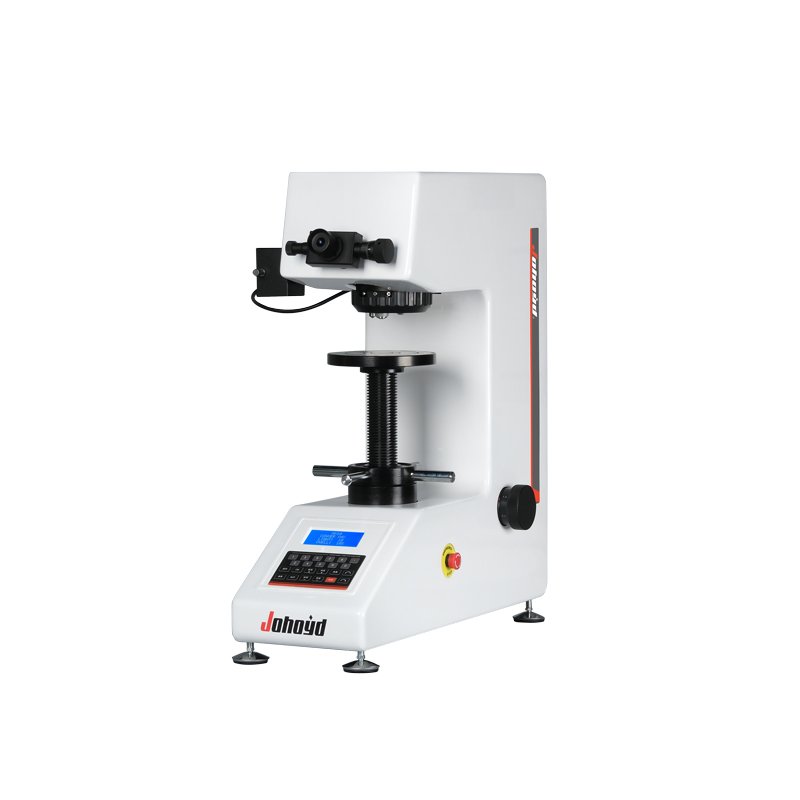
A typical Knoop Hardness Tester includes:
- Elongated diamond indenter
- High-precision load application system
- Optical microscope or digital camera
- Measurement and calculation software
- Rigid frame and fine positioning stage
Each component supports accurate microhardness measurement.
Knoop Hardness Formula Explained
The Knoop hardness number, expressed as HK, is calculated using the applied load divided by the projected area of the indentation.
Digital testers perform this calculation instantly, reducing human error and improving repeatability.
Types of Knoop Hardness Tester
Knoop hardness testers are available in manual, digital, and automatic versions. Each type supports different levels of precision and throughput.
Modern laboratories increasingly prefer digital and automatic systems.
Micro Knoop Hardness Tester
Micro Knoop testers apply extremely low loads. They are ideal for coatings, thin films, and microelectronic components.
This method allows hardness profiling across layers.
Digital Knoop Hardness Tester
Digital models use camera-based measurement and software analysis. They reduce subjectivity and improve data consistency.
Data storage enhances traceability and reporting.
Automatic Knoop Hardness Tester
Automatic systems control loading, focusing, and measurement automatically. They deliver excellent repeatability and efficiency.
These testers are ideal for research and quality laboratories.
Loads and Test Ranges
Knoop hardness testing uses very low loads compared to macro methods. Proper load selection ensures accurate results without cracking.
Guidelines help users match load to material sensitivity.
Materials Suitable for Knoop Testing
Knoop hardness testing suits ceramics, glass, coatings, thin metals, composites, and semiconductors.
It is especially valuable for brittle and layered materials.
Advantages of Knoop Hardness Tester
Key advantages include:
- Extremely shallow indentation
- Ideal for thin and brittle materials
- High precision and resolution
- Minimal surface damage
These advantages make Knoop testing indispensable in microanalysis.
Limitations of Knoop Hardness Tester
Knoop testing requires careful surface preparation and skilled operation. Rough surfaces affect measurement accuracy.
Optical measurement demands proper training.
Accuracy and Repeatability
Accuracy depends on calibration, optical quality, and load control. Repeatability improves with automated measurement.
Standards guide best practices.
Calibration and International Standards
Knoop hardness testing follows ASTM and ISO standards. Regular calibration ensures traceability and confidence.
Compliance supports global acceptance.
Selecting the Right Test Load
Selecting the correct load prevents cracking and ensures valid results. Thin materials require minimal force.
Experience and guidelines support proper selection.
Knoop Hardness Tester in Laboratories
Laboratories use Knoop testers for research and reference testing. High precision supports material characterization.
Reliable data underpins scientific conclusions.
Knoop Hardness Tester in Microelectronics
Microelectronics rely on Knoop hardness testing to evaluate thin films and semiconductor materials.
Minimal damage is essential in this field.
Knoop Hardness Tester in Coating Analysis
Coating thickness and hardness profiles influence performance. Knoop testing enables layer-by-layer analysis.
This capability supports surface engineering.
Knoop Hardness Tester in Ceramics Industry
Ceramics are brittle and sensitive to cracking. Knoop hardness testing evaluates hardness without inducing fractures.
This method supports quality and reliability.
Safety Practices
Operators should handle optics and samples carefully. Proper posture and lighting improve measurement accuracy.
Training supports safe and effective operation.
Maintenance and Care
Regular cleaning, optical calibration, and software updates ensure long-term reliability. Neglect affects precision.
Proper care protects investment.
Interpreting Knoop Hardness Results
Results should be interpreted considering material anisotropy and surface condition. Comparison with other methods requires caution.
Expert analysis ensures meaningful insights.
Brand Expertise and Solutions
Precision microhardness testing requires dependable equipment. Brands like Johoyd, through https://hardnesstests.com, provide advanced Knoop Hardness Tester solutions designed for high-accuracy applications.
Their expertise supports confidence in micro-scale hardness measurement.
Common Knoop Testing Errors
Common errors include incorrect focusing and unsuitable load selection. Awareness reduces mistakes.
Standard procedures improve reliability.
Comparison with Vickers Hardness Tester
Both Knoop and Vickers methods measure microhardness. Knoop produces shallower indentations, making it better for thin and brittle materials.
Understanding differences supports correct method selection.
Future Trends in Knoop Hardness Testing
Future trends include automated image analysis, AI-assisted measurement, and integrated data platforms. These advancements improve efficiency and accuracy.
Knoop hardness testing continues to evolve with material innovation.
Frequently Asked Questions

What is a Knoop Hardness Tester used for?
It measures microhardness of thin and brittle materials.
Why choose Knoop over Vickers?
Knoop causes less penetration and surface damage.
Is Knoop testing destructive?
It is minimally destructive.
Can Knoop test coatings?
Yes, it is ideal for thin coatings.
How often should calibration be done?
According to standards or usage.
Can Knoop testing be automated?
Yes, modern systems support automation.
Conclusion
The Knoop Hardness Tester is a critical tool for microhardness evaluation where precision and surface preservation matter most. Its unique indentation geometry enables accurate testing of thin, brittle, and advanced materials that other methods cannot handle effectively.
With experienced manufacturers like Johoyd delivering professional solutions through hardnesstests.com, industries and laboratories gain confidence in micro-scale hardness measurement. As materials become thinner and more complex, the Knoop Hardness Tester will remain essential in modern material science.
Suggested Internal Links
- Microhardness Testing Methods
- Precision Material Analysis Tools
Suggested Outbound Links
- ASTM Knoop Hardness Testing Standards
- ISO Guidelines for Microhardness Measurement