




Rockwell Hardness Tester Ultimate Guide Powerful Facts for Accurate Metal Testing

Outline for the Article on Rockwell Hardness Tester
| Oblasť témy | Podrobné pokrytie pomocou kľúčových slov LSI |
|---|---|
| Introduction to Rockwell Hardness Tester | Rockwell hardness testing |
| Definition of Rockwell Hardness Tester | Rockwell testing machine |
| Importance of Rockwell Hardness Testing | material quality control |
| History and Development of Rockwell Test | indentation testing evolution |
| Basic Principle of Rockwell Hardness Testing | depth measurement method |
| Rockwell Hardness Scales | HRC, HRB, HRA |
| Rockwell Indenters and Loads | diamond cone, steel ball |
| Rockwell Test Procedure | step-by-step testing |
| Types of Rockwell Hardness Testers | manual, digital, automatic |
| Manual Rockwell Hardness Tester | traditional operation |
| Digitálny Rockwellov tester tvrdosti | elektronické meranie |
| Automatic Rockwell Hardness Tester | high-volume testing |
| Portable Rockwell Hardness Tester | on-site inspection |
| Materials Suitable for Rockwell Testing | kovy a zliatiny |
| Rockwell Hardness Testing for Steel | heat treatment validation |
| Rockwell Hardness Testing for Aluminum | soft metals |
| Rockwell Hardness Testing for Brass and Copper | non-ferrous metals |
| Sample Preparation Requirements | stav povrchu |
| Presnosť a opakovateľnosť | reliable results |
| Calibration of Rockwell Hardness Tester | vysledovateľnosť |
| Standards for Rockwell Hardness Testing | ASTM E18, ISO 6508 |
| Advantages of Rockwell Hardness Tester | speed and simplicity |
| Limitations of Rockwell Hardness Testing | test constraints |
| Aplikácie vo výrobe | riadenie procesu |
| Aplikácie v kontrole kvality | akceptačné testovanie |
| Aplikácie v automobilovom priemysle | component inspection |
| Aplikácie v leteckom priemysle | compliance testing |
| Applications in Heat Treatment Shops | hardness verification |
| Data Recording and Reporting | digital outputs |
| Bežné chyby pri testovaní | prevention tips |
| Selecting the Right Rockwell Hardness Tester | sprievodca nákupom |
| Maintenance of Rockwell Hardness Tester | long-term accuracy |
| Integration with Digital Quality Systems | Industry 4.0 |
| Odborné znalosti a riešenia značky | Johoyd Rockwell testers |
| Future Trends in Rockwell Hardness Testing | automation and AI |
| Často kladené otázky | bežné otázky |
| Záver | zhrnutie |
Úvod
A Tester tvrdosti podľa Rockwella is one of the most widely used instruments for measuring material hardness in industrial and laboratory environments. Known for its speed, simplicity, and reliability, the Rockwell method has become a standard approach for evaluating metal strength and consistency.
Because it provides direct hardness readings without complex calculations, the Rockwell hardness tester plays a vital role in manufacturing, quality control, and research laboratories worldwide.
Rockwell Hardness Tester
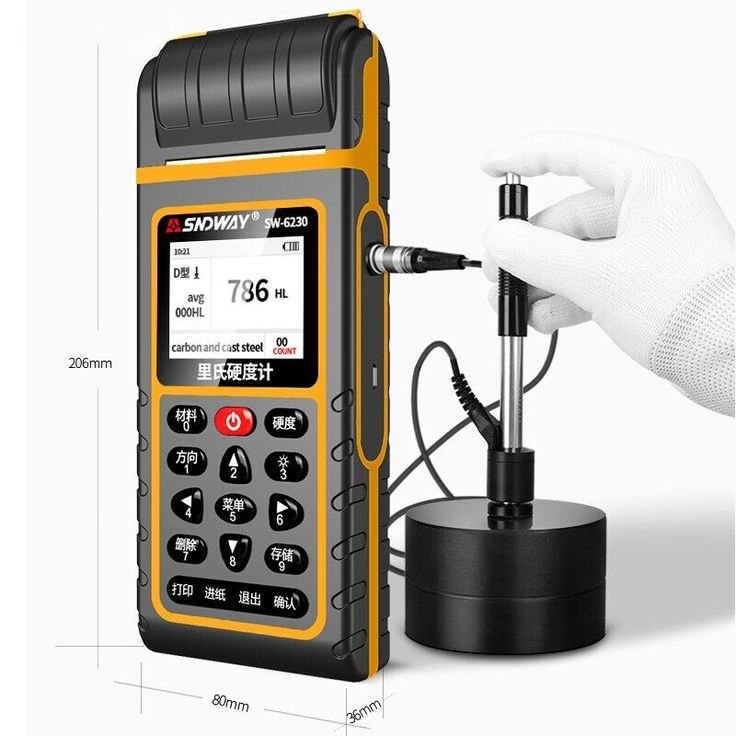
A Tester tvrdosti podľa Rockwella measures material hardness by determining the depth of penetration of an indenter under a specified load. The test produces a direct numerical value, making it efficient and easy to interpret.
This method is especially suitable for routine industrial testing.
Definition of Rockwell Hardness Tester
A Rockwell hardness tester is a mechanical or electronic device that evaluates hardness based on permanent indentation depth. It uses standardized indenters and loads to produce consistent and comparable results.
The simplicity of the method contributes to its global adoption.
Importance of Rockwell Hardness Testing
Rockwell hardness testing is important because it provides fast feedback on material properties. Variations in hardness often reveal issues with heat treatment, composition, or processing.
This makes the Rockwell hardness tester essential for maintaining quality and safety.
History and Development of Rockwell Test
The Rockwell test was developed to simplify hardness measurement compared to earlier methods. By focusing on indentation depth rather than size, it reduced operator influence.
Over time, the Rockwell hardness tester evolved into highly accurate digital and automatic systems.
Basic Principle of Rockwell Hardness Testing
The Rockwell test applies a minor load followed by a major load. The difference in penetration depth is measured.
This depth difference is converted into a hardness value.
Rockwell Hardness Scales
Rockwell hardness testers use multiple scales to accommodate different materials. Common scales include HRC for hardened steel and HRB for softer metals.
Selecting the correct scale is critical for accuracy.
Rockwell Indenters and Loads
Rockwell hardness testers use either a diamond cone or hardened steel ball indenter. Loads vary depending on the selected scale.
Standardization ensures consistency across tests.
Rockwell Test Procedure
The Rockwell test procedure is straightforward. The sample is positioned, a minor load is applied, followed by a major load, and then the hardness value is read directly.
Minimal preparation is required.
Types of Rockwell Hardness Testers
Rockwell hardness testers are available in several configurations. Options range from manual models to fully automatic systems.
Each type suits specific testing needs.
Manual Rockwell Hardness Tester
Manual Rockwell hardness testers rely on operator control for loading and reading. They are cost-effective and reliable for low-volume testing.
Skilled operation ensures accuracy.
Digitálny Rockwellov tester tvrdosti
Digital Rockwell hardness testers use electronic sensors and displays. They improve repeatability and reduce operator influence.
Digital output supports documentation.
Automatic Rockwell Hardness Tester
Automatic Rockwell hardness testers control loading, measurement, and data recording automatically. They are ideal for high-volume production environments.
Automation enhances consistency.
Portable Rockwell Hardness Tester
Portable Rockwell hardness testers allow on-site testing of large or installed components. They provide flexibility without compromising reliability.
They are used in maintenance and inspection.
Materials Suitable for Rockwell Testing
Rockwell hardness testing is primarily used for metals and alloys. Steel, aluminum, brass, and copper are commonly tested.
Correct scale selection ensures valid results.
Rockwell Hardness Testing for Steel
Steel is the most common material tested using the Rockwell method. HRC values verify heat treatment and mechanical performance.
This is critical for safety-related components.
Rockwell Hardness Testing for Aluminum
Aluminum alloys are tested using softer Rockwell scales. This ensures accurate evaluation without excessive indentation.
Testing supports alloy consistency.
Rockwell Hardness Testing for Brass and Copper
Brass and copper require appropriate scales and loads. Rockwell testing helps verify material quality for electrical and mechanical applications.
Consistency is essential.
Sample Preparation Requirements
Sample surfaces must be clean and smooth. Excessive roughness can affect indentation depth.
Proper preparation improves reliability.
Presnosť a opakovateľnosť
Accuracy depends on calibration and correct procedure. Repeatability improves with digital and automatic testers.
Consistent testing builds confidence.
Calibration of Rockwell Hardness Tester
Regular calibration ensures accurate results. Certified test blocks support verification and traceability.
Calibration is essential for compliance.
Standards for Rockwell Hardness Testing
Rockwell hardness testing follows ASTM E18 and ISO 6508 standards. These standards define procedures, loads, and tolerances.
Compliance ensures global comparability.
Advantages of Rockwell Hardness Tester
Medzi hlavné výhody patrí:
- Rýchle testovanie
- Direct readings
- Minimal preparation
- Wide material range
These benefits make the Rockwell hardness tester widely adopted.
Limitations of Rockwell Hardness Testing
Rockwell testing is less suitable for very thin materials or coatings. Indentation depth may exceed material thickness.
Alternative methods may be required.
Aplikácie vo výrobe
Manufacturers use Rockwell hardness testers for process control. Quick feedback supports consistent production.
Testing reduces defects.
Aplikácie v kontrole kvality
Quality control teams rely on Rockwell hardness testers for acceptance testing. Results verify compliance with specifications.
Rozhodujúca je dôslednosť.
Aplikácie v automobilovom priemysle
Automotive components require strict hardness control. Rockwell testing supports safety and durability requirements.
It is widely used.
Aplikácie v leteckom priemysle
Aerospace applications demand precise hardness verification. Rockwell hardness testers support compliance and traceability.
Accuracy is essential.
Applications in Heat Treatment Shops
Heat treatment shops use Rockwell hardness testers to verify process effectiveness. Hardness confirms desired microstructure.
Testing supports optimization.
Data Recording and Reporting
Modern Rockwell hardness testers store data digitally. Reports support audits and quality systems.
Digital records improve efficiency.
Bežné chyby pri testovaní
Errors include incorrect scale selection and poor surface condition. Training and standard procedures reduce mistakes.
Consistency improves results.
Selecting the Right Rockwell Hardness Tester
Selection depends on testing volume, automation level, and accuracy needs. Expert advice ensures optimal investment.
The right tester enhances productivity.
Maintenance of Rockwell Hardness Tester
Routine maintenance preserves accuracy and extends equipment life. Proper care ensures long-term reliability.
Maintenance supports consistent results.
Integration with Digital Quality Systems
Rockwell hardness testers increasingly integrate with digital quality management systems. Data supports Industry 4.0 initiatives.
Connectivity enhances control.
Odborné znalosti a riešenia značky
Spoľahlivé Tester tvrdosti podľa Rockwella solutions require precision engineering and professional support. Johoyd, prostredníctvom https://hardnesstests.com, provides advanced Rockwell hardness testers designed for manufacturing, laboratories, and quality control, delivering accuracy, durability, and compliance for global industries.
Future Trends in Rockwell Hardness Testing
Future developments include higher automation, smarter software, and improved connectivity. These trends will further enhance efficiency and reliability.
Často kladené otázky
What does a Rockwell hardness tester measure?
It measures resistance to indentation depth.
Is Rockwell hardness testing destructive?
It is minimally destructive.
Which materials are suitable for Rockwell testing?
Mostly metals and alloys.
Do Rockwell testers require calibration?
Áno, je potrebná pravidelná kalibrácia.
Are digital Rockwell testers more accurate?
They improve repeatability and reduce operator influence.
Which standards apply to Rockwell testing?
ASTM E18 and ISO 6508.

Záver
A Tester tvrdosti podľa Rockwella remains one of the most practical and reliable tools for material hardness evaluation. Its speed, simplicity, and standardized approach make it indispensable across manufacturing, quality control, and research environments.
S dôveryhodnými poskytovateľmi, ako je Johoyd poskytovanie profesionálnych riešení prostredníctvom hardnesstests.com, industries can rely on Rockwell hardness testers that ensure accuracy, consistency, and compliance. As technology evolves, Rockwell hardness testing will continue to play a central role in modern material evaluation.