




Vickers Hardness Test: Complete Guide to Principle, Equipment, Formula, and Applications

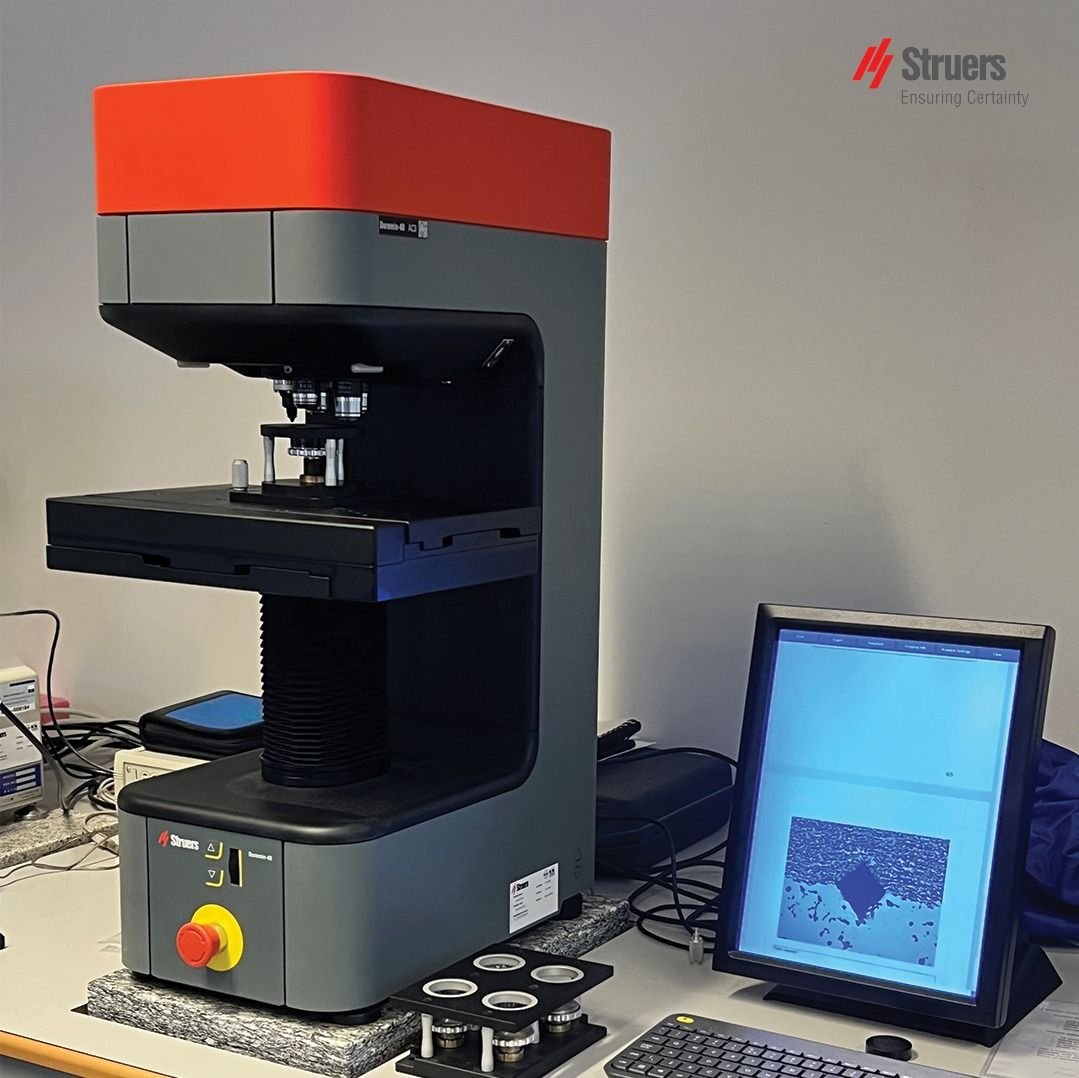
De vickers hardness test is one of the most precise and versatile methods used to measure the hardness of materials. It determines hardness by pressing a diamond-shaped indenter into the surface of a material under a specific load and measuring the diagonal length of the resulting indentation.
Unlike many other hardness testing methods, the vickers hardness test can be used for both soft and extremely hard materials. It is widely used in laboratories, research facilities, and industrial quality control environments.
Because of its accuracy and adaptability, the vickers hardness test plays an essential role in metallurgy, material science, aerospace, automotive manufacturing, and engineering research.
What Is the Vickers Hardness Test?
De vickers hardness test is a material testing method that measures hardness by pressing a diamond pyramid indenter into the surface of a specimen and measuring the diagonal length of the indentation.
The hardness value obtained from the test is called the Vickers Hardness Number (HV).
The process involves:
- Applying a specific load using a diamond indenter
- Creating a square-shaped indentation
- Measuring the diagonals of the indentation
- Calculating hardness using a standard formula
Because the indenter shape remains the same for all loads, the vickers hardness test is suitable for testing a wide range of materials.
History of the Vickers Hardness Test
De vickers hardness test was developed in 1921 by engineers at Vickers Ltd. in the United Kingdom.
The test was designed to overcome limitations of earlier hardness testing methods such as the Brinell test.
Key Advantages Introduced
- Ability to test both hard and soft materials
- Use of a single indenter for all loads
- High accuracy and precision
- Suitable for small samples and thin materials
Today, the vickers hardness test is standardized under international standards such as:
- ASTM E384
- ISO 6507
These standards ensure consistency and reliability in hardness measurements worldwide.
Principle of the Vickers Hardness Test
The principle of the vickers hardness test is based on measuring the surface area of the indentation produced by a diamond pyramid indenter.
The indenter has a square base with an angle of 136 degrees between opposite faces.
Basic Testing Principle
- A diamond pyramid indenter is pressed into the material surface.
- A specific load is applied for a fixed time.
- The load is removed after indentation.
- The two diagonals of the indentation are measured.
- The hardness value is calculated using a formula.
Because the indentation is small, this test is ideal for microhardness measurements and thin materials.
Vickers Hardness Test Formula
The hardness value is calculated using the following formula:
HV = 1.854 × (F / d²)
Where:
- HV = Vickers hardness number
- F = Applied load (kgf)
- d = Average diagonal length of indentation (mm)
The result represents the hardness of the material.
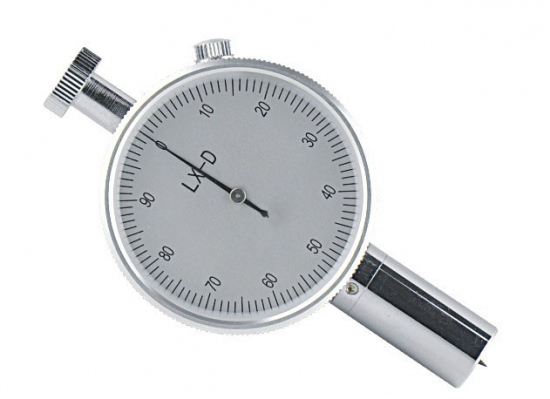
Equipment Used in the Vickers Hardness Test
Several components are required to perform the vickers hardness test.
1. Vickers Hardness Tester
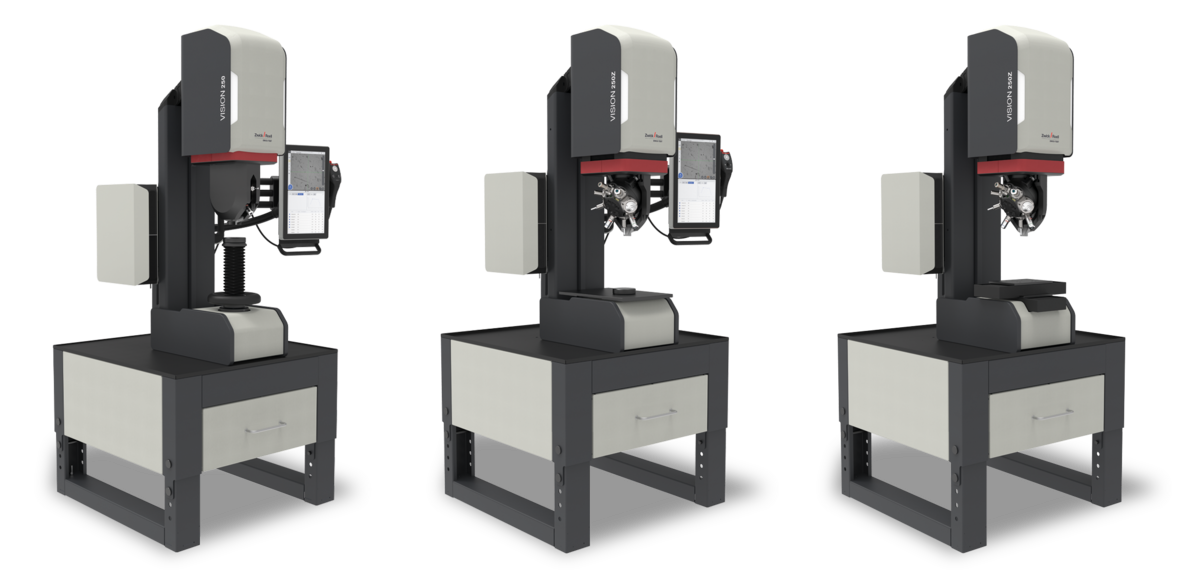
The testing machine applies the load and holds the specimen during the test.
Modern testers often include digital control systems and automated measurement features.
2. Diamond Pyramid Indenter
The indenter used in the vickers hardness test is made of diamond, the hardest known material.
The pyramid-shaped indenter ensures accurate indentation even in very hard materials.
3. Optical Microscope
After indentation, the diagonal lengths are measured using a microscope.
Many modern systems include digital image analysis.
4. Load Application System
Loads used in the test can range from 1 gf to 100 kgf, depending on the material and test type.
5. Specimen Stage or Anvil
The specimen stage holds the material firmly during testing to ensure accurate results.
Types of Vickers Hardness Testing
The vickers hardness test can be performed in two main forms.
1. Macro Vickers Hardness Test
This method uses larger loads (typically 1 kgf to 100 kgf) and is used for general hardness testing.
Applications include:
- Metals
- Alloys
- Engineering materials
2. Micro Vickers Hardness Test
Micro Vickers testing uses very small loads (typically 1 gf to 1000 gf).
It is commonly used for:
- Thin coatings
- Microstructures
- Surface layers
- Small components
Vickers Hardness Test Procedure
The testing process follows standardized steps.
Step-by-Step Procedure
- Prepare the specimen surface by polishing it.
- Place the specimen on the testing stage.
- Select the appropriate test load.
- Apply the diamond indenter to the material surface.
- Maintain the load for a specific dwell time.
- Remove the load after indentation forms.
- Measure the diagonal lengths of the indentation.
- Calculate the hardness value using the formula.
Digital machines often perform measurements automatically.
Advantages of the Vickers Hardness Test
De vickers hardness test offers many advantages compared with other hardness testing methods.
1. High Accuracy
The diamond indenter produces precise and consistent results.
2. Suitable for All Materials
It can test both soft metals and extremely hard materials.
3. Small Indentation Size
The indentation is very small, minimizing damage to the specimen.
4. Ideal for Thin Materials
Thin sheets and coatings can be tested without distortion.
5. Wide Range of Test Loads
The test can accommodate both micro and macro hardness measurements.
6. Reliable for Research Applications
It is widely used in material science laboratories.
Limitations of the Vickers Hardness Test
Despite its advantages, the vickers hardness test has some limitations.
Surface Preparation Required
The specimen surface must be smooth and polished.
Optical Measurement Needed
Measuring the indentation requires a microscope.
Slower Testing Process
Compared to Rockwell testing, the process can be slower.
Operator Skill Required
Accurate measurement depends on proper technique.
Applications of the Vickers Hardness Test
De vickers hardness test is widely used in various industries.
Metallurgy and Material Science
Studying the mechanical properties of metals and alloys.
Ruimtevaartindustrie
Testing high-performance materials used in aircraft and spacecraft.
Automotive Manufacturing
Evaluating hardness of engine components and mechanical parts.
Microelectronics
Testing thin coatings and microstructures in electronic components.
Quality Control Laboratories
Ensuring materials meet required hardness specifications.
Comparison with Other Hardness Tests
Different hardness testing methods are used depending on the material and application.
| Testmethode | Measurement Method | Typical Applications |
|---|---|---|
| Rockwell | Indentation depth | Industrial production |
| Brinell | Indentation diameter | Cast metals |
| Vickers | Diagonal indentation | Precision testing |
| Knoop | Micro indentation | Thin coatings |
Among these methods, the vickers hardness test is known for its precision and versatility.
Future Developments in Vickers Hardness Testing
Advances in material testing technology are improving hardness measurement techniques.
Emerging Innovations
- Fully automated hardness testing machines
- AI-assisted indentation measurement
- Integrated digital microscopes
- Advanced data analysis software
These improvements are making hardness testing faster and more accurate.
Frequently Asked Questions (FAQs)
1. What is the vickers hardness test used for?
The vickers hardness test measures the hardness of materials by evaluating the size of an indentation made by a diamond pyramid indenter.
2. What does HV mean in hardness testing?
HV stands for Vickers Hardness Number, which represents the hardness value obtained from the test.
3. Why is a diamond indenter used in the Vickers test?
Diamond is extremely hard and can create precise indentations even in very hard materials.
4. What materials can be tested using the Vickers hardness test?
Metals, ceramics, coatings, composites, and microstructures can all be tested.
5. What is the difference between Vickers and Rockwell hardness tests?
The Vickers test measures indentation diagonals, while the Rockwell test measures indentation depth.
6. Is the Vickers hardness test destructive?
The indentation is extremely small, so the test causes minimal damage to the material.
Conclusie
De vickers hardness test is one of the most accurate and versatile hardness testing methods available today. Its ability to measure hardness across a wide range of materials—from soft metals to extremely hard alloys—makes it indispensable in modern engineering and material science.
With advanced digital testers and automated measurement systems, the vickers hardness test continues to play a crucial role in quality control, research, and industrial material testing.
As technology evolves, this testing method will remain a key tool for evaluating material strength, durability, and performance.