




Hardness Testers for R&D Labs: The Definitive Guide to Precision, Innovation, and Material Discovery

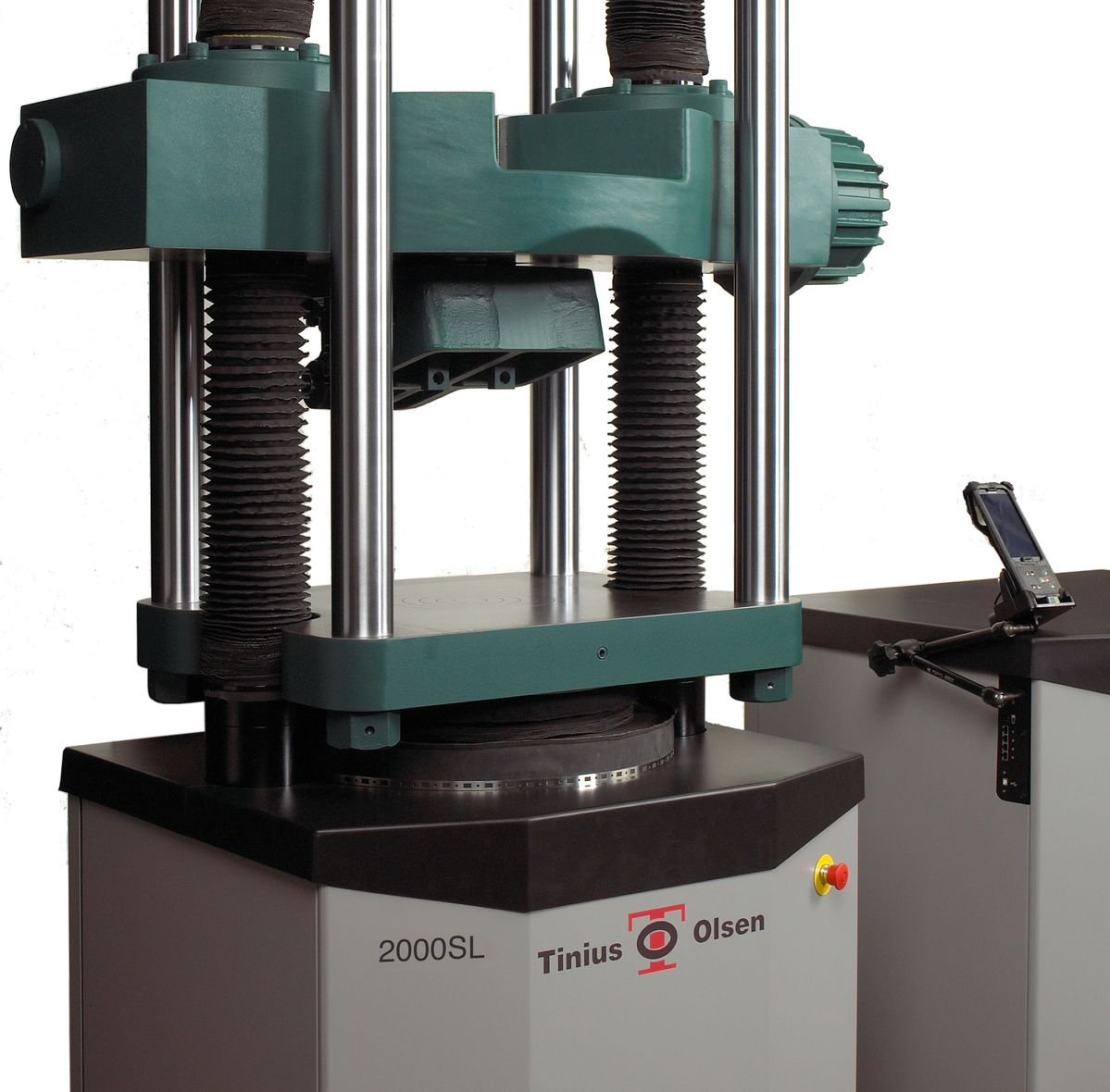
In the high-stakes world of Research and Development, data is everything. Before a new alloy enters production or a novel heat treatment is approved for aerospace components, its fundamental properties must be quantified with uncompromising accuracy. This is where the Hardness Tester for R&D Labs becomes an indispensable instrument.
Far beyond the high-speed testers found on factory floors, R&D-grade hardness testers are precision scientific instruments designed for versatility, micro-analysis, and deep material characterization. This comprehensive, SEO-optimized article will explore the critical role of hardness testers in research environments, compare the top technologies, outline selection criteria, and look at future trends.
What Is an R&D-Grade Hardness Tester?
A Hardness Tester for R&D is a high-precision instrument designed to measure a material’s resistance to localized plastic deformation under highly controlled conditions. Unlike industrial QC testers that prioritize speed, R&D testers prioritize:
- Veelzijdigheid: The ability to test a wide range of materials (metals, ceramics, polymers, thin films) and geometries.
- Precision: Micron-level accuracy in indentation measurement, crucial for small specimens or thin layers.
- Data Richness: Generating not just a hardness number, but also data on elastic modulus, creep, and load-displacement curves.
- Repeatability: Ensuring that experiments conducted today can be perfectly replicated months or years later.
Why Hardness Testing Is Critical in R&D
In a research lab, hardness testing serves as a foundational tool for:
- New Alloy Development: Correlating hardness with tensile strength and microstructure in new metallic formulations.
- Heat Treatment Optimization: Fine-tuning quenching, tempering, and aging cycles to achieve target mechanical properties.
- Surface Engineering: Evaluating the effectiveness of coatings (PVD, CVD), surface hardening (carburizing, nitriding), and thin-film deposition.
- Failure Analysis: Determining if a component failed due to improper material selection or processing.
- Academic Research: Studying material behavior at the micro and nano-scale.

Top Types of Hardness Testers for R&D Laboratories
1. Vickers Hardness Tester (Macro & Micro)
The universal workhorse of the R&D lab due to its flexibility.
- Principle: Uses a square-based diamond pyramid indenter. The operator optically measures the diagonal of the indentation.
- Load Range: 1 gf to 120 kgf.
- R&D Advantage: A single machine can test everything from soft aluminum foils to hard ceramics. The small indentation is perfect for cross-sections and small parts.
2. Knoop Hardness Tester
A specialized micro-hardness tester for brittle materials and ultra-thin layers.
- Principle: Uses an elongated diamond pyramid, creating a shallow, long indentation.
- R&D Advantage: Minimizes cracking in brittle materials like glass, silicon wafers, or ceramic tiles. Ideal for measuring the hardness of a thin coating on a hard substrate.
3. Nanoindentation Tester
The pinnacle of hardness testing for cutting-edge research.
- Principle: Uses a Berkovich (triangular pyramid) indenter with loads in the nanonewton (µN) to millinewton (mN) range. Measures displacement with sub-nanometer resolution.
- R&D Advantage: Can probe individual phases in a metal matrix, measure the hardness of a single cell, or characterize thin-film mechanical properties without substrate interference. Generates full load-displacement curves to calculate hardness (H) and elastic modulus (E).
4. Rockwell Hardness Tester (High-Precision)
Used when macro-scale data is needed quickly, even in R&D.
- Principle: Measures depth of penetration.
- R&D Advantage: Fast verification of bulk material properties on larger samples before committing to more time-consuming micro-tests.
Key Components of an R&D-Grade Hardness Tester
| Component | Function |
|---|---|
| High-Precision Loading Column | Applies force with extreme accuracy and minimal vibration, often with motorized control down to mgf levels. |
| High-Resolution Optics | A digital camera and microscope (up to 1000x magnification) to view and measure tiny indentations. |
| Motorized X-Y Stage | Allows the user to program specific coordinates for indentation, essential for hardness mapping or line profiles. |
| Advanced Software Suite | The core of the R&D system. Manages experiment parameters, captures images, performs image analysis, calculates statistics, and exports raw data for further analysis. |
| Environmental Chamber (Optional) | Allows testing at elevated temperatures (up to 1000°C+) or in vacuum/inert gas to simulate service conditions. |
| Indenter Types | Interchangeable diamond indenters (Vickers, Knoop, Berkovich, Cone) to suit different materials. |
How to Choose the Right Hardness Tester for Your R&D Lab
Selecting the wrong instrument can derail a research project. Ask yourself these critical questions:
- What is the Scale of Your Research?
- Macro-scale (mm): Bulk metals, heat-treated samples → Vickers / Rockwell.
- Micro-scale (µm): Coatings, thin films, welds, small components → Vickers (Micro) / Knoop.
- Nano-scale (nm): Semiconductor wafers, biomaterials, atomic layers → Nanoindentation.
- What Materials Are You Testing?
- Metals/Alloys: Vickers, Rockwell, Nano.
- Ceramics/Glass: Knoop, Nano (to avoid cracking).
- Polymers/Soft Materials: Vickers (with low load), specialized instruments with large tips.
- Do You Need 2D or 3D Mapping?
- If you need to analyze a case depth profile or material gradient, you need a system with a motorized XY stage and mapping software.
- What is Your Budget?
- Manual Vickers: Entry-level for small labs.
- Automatic Vickers/Knoop: Mid-range, high-throughput.
- Nanoindenters: High-end, specialized research.
- Are You Testing at Temperature?
- If simulating turbine engine conditions, you’ll need a system with a heated stage.
Best Practices for Hardness Testing in R&D
- Meticulous Sample Preparation: R&D demands flawless sample surfaces. This often requires mounting, grinding with progressively finer grits, and polishing to a mirror finish.
- Calibration is Paramount: Use certified reference blocks at the beginning and endof every testing session.
- Understand Statistics: Don’t rely on a single indentation. Perform multiple tests (e.g., 5–10) and report the mean and standard deviation.
- Document Everything: Note the load, dwell time, surface preparation method, and operator. This ensures reproducibility.
Future Trends in R&D Hardness Testing
- AI-Powered Image Analysis: Machine learning algorithms that can automatically find the best focus, detect the edges of an indentation, and reject flawed tests due to chipped indenters or debris.
- In-Situ SEM/TEM Nanoindentation: Performing hardness tests inside a Scanning Electron Microscope or Transmission Electron Microscope to observe dislocation activity and fracture in real-time.
- High-Speed Nanoindentation: Mapping mechanical properties at rates of 1000s of indents per hour.
- Multi-Signal Analysis: Combining acoustic emission, optical microscopy, and force-displacement data to get a holistic view of material deformation.
Conclusie
For researchers pushing the boundaries of material science, the Hardness Tester is not just a QC tool; it is a microscope into the mechanical soul of a material. Investing in a high-precision Vickers, Knoop, or Nanoindentation system provides the quantitative data needed to validate hypotheses, optimize processes, and publish groundbreaking findings.
By choosing the right technology and adhering to rigorous scientific practices, R&D labs can unlock deeper insights into material behavior, driving innovation from the lab bench to the real world.