




Material Testing Equipment Manufacturer for Industrial Quality Control

Understanding Material Testing Equipment
Een professional material testing equipment manufacturer develops and produces instruments used to evaluate the physical and mechanical properties of materials.
Material testing plays an important role in manufacturing and quality control. Before a product reaches the market, manufacturers need to know whether its materials meet the required specifications. Testing can help identify differences in hardness, strength, toughness, ductility, and other characteristics.
Depending on the material and application, testing equipment may include:
- Hardness testers
- Universal testing machines
- Tensile testing machines
- Compression testers
- Impact testers
- Metallographic equipment
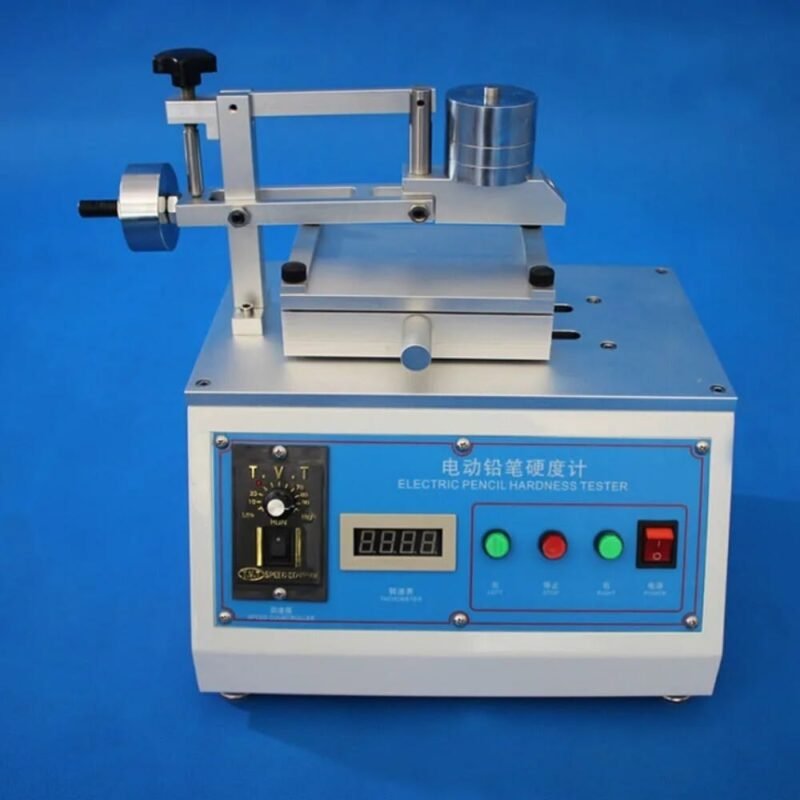
- Surface testing instruments
- Portable inspection equipment
These systems are used to test metals, alloys, plastics, composites, and other engineering materials.
A professional manufacturer should understand not only how to build the equipment but also how customers use it. Test method, specimen preparation, environmental conditions, measurement accuracy, and applicable standards all affect the quality of test results.
What Does a Material Testing Equipment Manufacturer Provide?
Hardness Testing Equipment
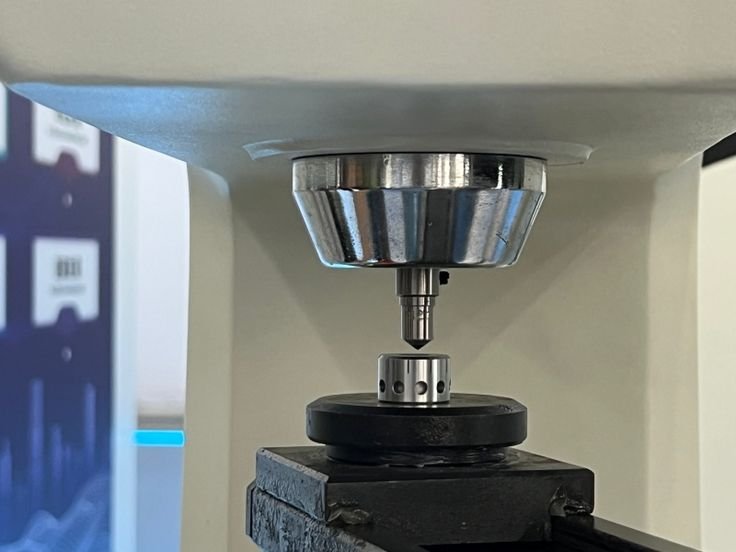
Hardness testing is one of the most common forms of material inspection.
Manufacturers may produce:
- Rockwell hardheidsmeters
- Brinell-hardheidsmeters
- Vickers-hardheidsmeters
- Knoop hardness testers
- Microhardness testers
- Portable hardness testers
- Universal hardness testers
These machines can be used for steel, cast iron, aluminum alloys, copper alloys, heat-treated parts, coatings, and other materials.
Tensile and Compression Testing Machines
Tensile testing evaluates how a material behaves when subjected to pulling force.
Typical measurements can include:
- Tensile strength
- Yield strength
- Elongation
- Breaking force
- Deformation
Compression testing measures material behavior under compressive loading.
These tests are widely used in material development and manufacturing quality control.
Impact testapparatuur
Impact testing evaluates a material’s response to sudden loading.
Veelvoorkomende systemen zijn onder meer:
- Charpy impact testers
- Izod impact testers
- Instrumented impact systems
Impact testing is important when toughness and resistance to sudden fracture are key considerations.
Metallographic Equipment
Metallographic analysis examines the structure of materials.
Equipment can include:
- Cutting machines
- Mounting presses
- Grinding machines
- Polishing machines
- Metallurgical microscopes
These systems are often used together with hardness testing equipment in laboratories.
Portable Material Testing Instruments
Portable instruments are useful when components are too large or difficult to move.
Applications may include:
- Grote smeedstukken
- Pijpleidingen
- Heavy machinery
- Welded structures
- Large castings
Portable hardness testers are a common example of field-based material inspection equipment.
Material Testing Equipment for Different Industries
Steel and Metal Manufacturing
Steel and metal producers use testing equipment to evaluate:
- Raw materials
- Semi-finished products
- Finished components
- Heat-treated products
- Castings
- Smeedstukken
Hardness, tensile strength, impact toughness, and metallographic structure may all be relevant.
Automotive and Transportation
Automotive manufacturers use material testing to inspect components such as:
- Versnellingen
- Assen
- Lagers
- Bevestigingsmiddelen
- Motoronderdelen
- Suspension components
Testing helps verify that materials and manufacturing processes meet specified requirements.
Aerospace
Aerospace applications often require strict material control.
Testing equipment can support:
- Incoming material inspection
- Process verification
- Component qualification
- Failure investigation
- Research and development
Heat Treatment
Heat treatment changes the microstructure and properties of many metals.
Material testing equipment can help verify processes such as:
- Afkoelen
- Tempereren
- Carbureringsproces
- Nitreren
- Gloeien
- Surface hardening
Hardness testing is particularly useful for routine process verification.
Research and Testing Laboratories
Laboratories often need flexible equipment capable of handling different materials and test methods.
They may use:
- Hardness testers
- Universal testing machines
- Impact testers
- Metallographic microscopes
- Sample preparation equipment
For research work, automation and data-management functions can be particularly useful.
How Material Testing Equipment Is Manufactured
Mechanical Design
A reliable testing machine starts with a stable mechanical structure.
Engineers need to consider:
- Load capacity
- Rigidity
- Alignment
- Specimen positioning
- Safety
- Machine durability
The mechanical design should suit the intended testing method.
Precision Component Manufacturing
Testing machines often contain precision components such as:
- Load frames
- Spindles
- Indenter systems
- Crossheads
- Fixtures
- Anvils
Dimensional control and assembly accuracy are important for consistent measurements.
Electronic and Measurement Systems
Modern equipment commonly integrates:
- Load cells
- Displacement sensors
- Cameras
- Encoders
- Control boards
- Digital displays
The electronics must work reliably with the mechanical system.
Software en automatisering
Modern material testing systems can include software for:
- Test control
- Data acquisition
- Automatic calculations
- Result storage
- Rapport genereren
- Statistische analyse
Automation can also reduce operator involvement in repetitive testing.
Factory Inspection
Before shipment, the manufacturer should perform appropriate checks of the finished equipment.
Depending on the product, inspection may include:
- Mechanical operation
- Electrical safety
- Load or force verification
- Meetnauwkeurigheid
- Software functions
- Repeatability
Choosing Material Testing Equipment
Material and Test Requirements
The first step is to define what you need to measure.
For example:
| Requirement | Possible Equipment |
|---|---|
| Hardheid | Hardheidsmeter |
| Tensile strength | Tensile testing machine |
| Compression behavior | Compression tester |
| Impact toughness | Impact tester |
| Microstructure | Metallographic equipment |
| Field hardness | Portable hardness tester |
One machine cannot necessarily perform every material test.
Applicable Testing Standards
Testing standards help define appropriate procedures and measurement conditions.
Depending on the application, standards may come from organizations such as ASTM or ISO.
For hardness testing, examples include:
- ASTM E10 for Brinell hardness
- ASTM E18 for Rockwell hardness
- ASTM E384 for microindentation hardness
Always confirm the specific standard required for your product or industry.
Nauwkeurigheid en herhaalbaarheid
Measurement accuracy and repeatability are essential when testing materials.
Consider:
- Load accuracy
- Displacement measurement
- Indenter geometry
- Optical resolution
- Machine stability
- Milieuomstandigheden
The machine should be suitable for the accuracy level required by the test specification.
Specimen Size and Geometry
The specimen’s shape and dimensions can affect equipment selection.
Consider:
- Length
- Width
- Thickness
- Gewicht
- Curvature
- Accessibility
Special fixtures may be necessary for unusual components.
Custom Material Testing Equipment
A capable material testing equipment manufacturer may provide customized solutions for specialized applications.
Customization can include:
- Special specimen fixtures
- Custom anvils
- Extended test ranges
- Automated positioning
- Automatic measurement
- Customized software
- Data interfaces
- Production-line integration
- OEM branding
For example, a manufacturer testing a large, irregularly shaped component may need a dedicated fixture to position the part securely.
Custom engineering can also be useful when testing needs to be integrated directly into a manufacturing process.
Calibration and Quality Assurance
Calibration is an important part of material measurement.
Depending on the equipment, manufacturers and laboratories may use:
- Reference blocks
- Certified test specimens
- Force verification systems
- Displacement standards
- Calibration instruments
A good manufacturer should provide appropriate documentation and explain recommended verification procedures.
Quality assurance doesn’t stop when the machine leaves the factory. Regular maintenance, verification, proper specimen preparation, and trained operators are also important.
How to Choose a Material Testing Equipment Manufacturer
Before selecting a manufacturer, evaluate the following:
Product Range
Does the manufacturer offer the equipment required for your current application?
Engineering Capability
Can it develop custom fixtures, automation, or software when needed?
Manufacturing Quality
Review the production process, inspection procedures, and final testing.
Testnormen
Confirm that the equipment supports the required test methods and standards.
Calibration Support
Ask about calibration, verification, reference materials, and documentation.
Technical Service
Consider:
- Installation
- Training
- Troubleshooting
- Maintenance
- Software support
Spare Parts
Confirm long-term availability of important components.
Industry Experience
A manufacturer familiar with your industry may understand practical testing challenges more quickly.
Veelgestelde vragen
1. What does a material testing equipment manufacturer produce?
A manufacturer may produce hardness testers, tensile testing machines, compression testers, impact testers, metallographic equipment, and portable material inspection instruments.
2. Which material testing equipment is used for hardness?
Common options include Rockwell, Brinell, Vickers, Knoop, microhardness, and portable hardness testers.
3. Can one testing machine perform multiple material tests?
Some universal systems can perform multiple types of mechanical testing, but specialized tests may require dedicated equipment.
4. Can material testing equipment be customized?
Yes. Depending on the manufacturer, customization may include fixtures, anvils, automated stages, software, measurement systems, and production-line integration.
5. Why are testing standards important?
Standards define testing procedures, equipment requirements, specimen conditions, and measurement methods, helping laboratories and manufacturers achieve comparable results.
6. Does material testing equipment require calibration?
Yes. Appropriate calibration and verification help maintain measurement reliability throughout the equipment’s service life.
7. What industries use material testing equipment?
Major users include metal manufacturing, automotive, aerospace, heat treatment, foundries, laboratories, construction, and research organizations.
8. How should I choose a material testing equipment manufacturer?
Consider the manufacturer’s engineering expertise, product range, measurement performance, applicable standards, customization capability, calibration support, spare parts, and after-sales service.
Conclusie
Een professional material testing equipment manufacturer provides more than individual laboratory machines. The best manufacturers combine engineering, precision manufacturing, measurement technology, software, quality control, and technical support to create complete testing solutions.
When selecting equipment, start with the material and test requirement. Identify what needs to be measured, determine the applicable standard, consider specimen geometry, and define the required accuracy and testing volume.
Whether you’re inspecting steel after heat treatment, evaluating automotive components, conducting metallographic research, or testing materials in a laboratory, the right equipment can improve measurement consistency and quality-control efficiency.
For long-term value, look beyond the initial equipment price. Manufacturing capability, calibration support, spare-parts availability, customization, training, and after-sales service are all important when choosing a reliable material testing equipment manufacturer.