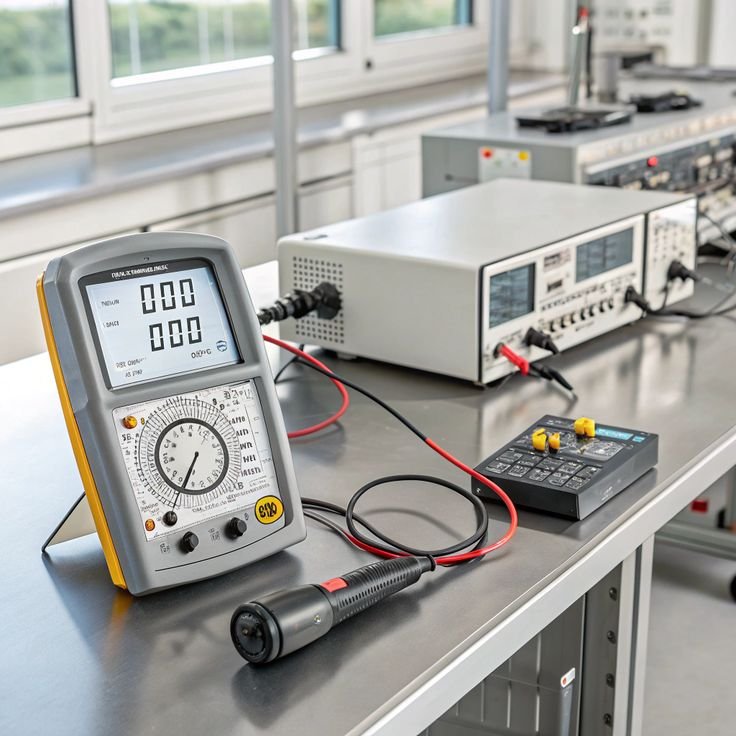
Rebound Hardness Tester: Complete Industrial Guide


Introduction to Rebound Hardness Tester
A rebound hardness tester is one of the most widely used tools in industrial material testing, especially for on-site inspections. In industries where speed and mobility are essential, this device provides a fast and reliable way to measure the hardness of metals without cutting or damaging the material.
Today, many engineers and quality inspectors rely on a rebound hardness tester to ensure structural integrity in pipelines, machinery, and heavy equipment. Compared to traditional testing methods, it offers unmatched convenience and efficiency.
What is a Rebound Hardness Tester
Definitie en overzicht
A rebound hardness tester is a portable instrument that measures hardness based on the rebound velocity of an impact body after it strikes a material surface.
Why It Is Important in Industry
This testing method is critical for industries that require quick, non-destructive testing. A rebound hardness tester allows technicians to evaluate materials without removing them from service.
📎 Outbound link (reference):
https://en.wikipedia.org/wiki/Hardness

How a Rebound Hardness Tester Works
Werkingsprincipe
A rebound hardness tester works by impacting a test surface with a probe and measuring how quickly the impact body rebounds. The rebound velocity is directly related to the hardness of the material.
Impact and Rebound Method
The device uses a spring-loaded mechanism to strike the surface. Softer materials absorb more energy, resulting in lower rebound values, while harder materials produce higher rebound values.
Hardness Value Conversion
Modern devices automatically convert readings into various hardness scales such as HL, HRC, and HB.
Types of Rebound Hardness Tester
Leeb hardheidsmeter
The most common type, widely used in heavy industries and large components.
Interne link:
https://hardnesstests.com/leeb-hardness-tester
Digital Rebound Testers
Advanced models with digital displays and data storage.
Integrated Multi-Function Models
These combine rebound and ultrasonic testing for enhanced versatility.
Interne link:
https://hardnesstests.com/portable-hardness-tester-equipment
Belangrijkste kenmerken
Nauwkeurigheid en herhaalbaarheid
A high-quality rebound hardness tester should provide consistent and repeatable results.
Portability and Design
Lightweight and ergonomic design is essential for field use.
Gegevensopslag en connectiviteit
Modern testers offer USB or Bluetooth connectivity for data transfer.
Applications of Rebound Hardness Tester
Verwerkende industrie
Used for quality control of raw materials and finished products.
Olie- en gasindustrie
Critical for pipeline inspection and maintenance.
Ruimtevaart en auto-industrie
Ensures compliance with strict safety standards.
Interne link:
https://hardnesstests.com/ultrasonic-hardness-tester
Advantages of Using Rebound Hardness Tester
- Fast and non-destructive testing
- Easy to use in the field
- No need for sample preparation
- Cost-effective solution
Beperkingen en overwegingen
While a rebound hardness tester is highly efficient, results can be influenced by surface roughness, material thickness, and operator technique.
How to Choose the Best Rebound Hardness Tester
Budget and Cost Factors
Choose a model that balances cost with performance and durability.
Material Compatibility
Ensure it supports a wide range of metals and alloys.
Merk en ondersteuning
Betrouwbare fabrikanten bieden meer waarde op lange termijn.
Tips voor onderhoud en kalibratie
- Regular calibration ensures accuracy
- Clean the impact device after use
- Store in a protective case
- Avoid extreme environments
Industry Standards and Certifications
Most devices comply with:
- ASTM-standaarden → https://www.astm.org/
- ISO-normen → https://www.iso.org/
These certifications ensure testing accuracy and reliability.
Rebound Hardness Tester vs Other Methods
Compared to Rockwell or Brinell testing, a rebound hardness tester is more portable but slightly less precise. However, for field applications, it remains the best choice.
Beste praktijken voor nauwkeurige resultaten
- Test on clean and smooth surfaces
- Meerdere metingen doen
- Maintain proper test angle
- Use correct impact device
Aanbevolen producten en interne links
Explore high-performance solutions:
- https://hardnesstests.com/leeb-hardness-tester
- https://hardnesstests.com/portable-hardness-tester-equipment
- https://hardnesstests.com/ultrasonic-hardness-tester
- https://hardnesstests.com/field-hardness-tester-device
These products are ideal for industrial-grade applications and offer reliable performance in demanding environments.
FAQs About Rebound Hardness Tester
1. What is a rebound hardness tester used for?
It is used to measure metal hardness quickly in field conditions.
2. Is it accurate compared to lab testing?
It provides high accuracy for field use but may be slightly less precise than lab methods.
3. What materials can it test?
Steel, cast iron, aluminum, and other alloys.
4. Does surface condition affect results?
Yes, rough or uneven surfaces can impact accuracy.
5. How often should calibration be done?
Regular calibration is recommended depending on usage frequency.
6. Is it suitable for all industries?
Yes, it is widely used in manufacturing, oil & gas, and automotive sectors.
Conclusie
A rebound hardness tester is an essential tool for modern industrial testing. Its portability, efficiency, and ease of use make it ideal for on-site applications. By choosing the right device and following best practices, businesses can significantly improve quality control and operational efficiency.