




Hardness Tester Ultimate Guide 31 Powerful Methods for Accurate Material Testing


Schets voor het artikel over hardheidsmeters
| Onderwerp | Gedetailleerde dekking met LSI-zoekwoorden |
|---|---|
| Inleiding tot hardheidsmeter | apparatuur voor het testen van de hardheid |
| What Is a Hardness Tester | hardheidsmeting van materialen |
| Waarom hardheidsmeting belangrijk is | kwaliteitsborging |
| Geschiedenis van hardheidsmeters | evolution of testing |
| Basisprincipe van hardheidsmeting | weerstand tegen vervorming |
| Onderdelen van een hardheidsmeter | indringlichaam, belastingssysteem |
| Types of Hardness Testers | Rockwell, Brinell, Vickers |
| Rockwell hardheidsmeter | depth-based testing |
| Brinell hardheidsmeter | ball indentation |
| Vickers hardheidsmeter | diamond pyramid |
| Knoop hardheidsmeter | microhardness |
| Shore hardheidsmeter | terugveringsmethode |
| Leeb hardheidsmeter | draagbaar testen |
| Microhardheidsmeter | thin layers |
| Macro hardheidsmeter | bulkmaterialen |
| Draagbare hardheidsmeter | inspectie ter plaatse |
| Laboratorium hardheidsmeter | controlled environment |
| Digitale hardheidsmeter | data accuracy |
| Automatisch hardheidsmeter | testen met grote volumes |
| Materialen getest door hardheidsmeters | metalen en legeringen |
| Hardheidsmeting voor staal | controle warmtebehandeling |
| Hardheidstesten voor aluminium | soft metals |
| Hardheidsmeting voor gietijzer | coarse structure |
| Hardheidsmeting voor non-ferrometalen | koperlegeringen |
| Hardness Tester in Manufacturing | procesbeheersing |
| Hardness Tester in Quality Control | acceptatietesten |
| Hardness Tester in R&D Labs | materiaalonderzoek |
| Normen voor hardheidsmeting | ASTM, ISO |
| Nauwkeurigheid en herhaalbaarheid | betrouwbare resultaten |
| Kalibratie en traceerbaarheid | meetvertrouwen |
| Selecting the Right Hardness Tester | toepassingsgerichte keuze |
| Veel voorkomende fouten bij hardheidsmetingen | preventie |
| Advantages of Using a Hardness Tester | efficiëntie |
| Beperkingen van hardheidsmetingen | interpretatie |
| Onderhoud van hardheidsmeters | longevity |
| Automation and Digital Integration | slim testen |
| Merkexpertise en -oplossingen | Johoyd hardheidsmeters |
| Toekomstige trends in hardheidsmeting | innovatie |
| FAQs | veelvoorkomende vragen |
| Conclusie | samenvatting |
A Hardheidsmeter is one of the most fundamental tools in material testing and quality assurance. Across manufacturing, engineering, research, and inspection environments, hardness testing provides a fast and reliable way to evaluate material strength, wear resistance, and processing quality. Whether assessing a raw material or verifying a finished component, hardness testers play a critical role in ensuring performance and safety.
As industries demand higher precision and consistency, modern hardness testers have evolved into highly accurate, digital, and automated systems. Understanding how a hardness tester works and where it should be applied is essential for achieving dependable testing results.

Hardheidsmeter
A Hardheidsmeter is an instrument used to measure a material’s resistance to permanent deformation. This resistance is evaluated by pressing an indenter into the material surface under controlled conditions.
Because hardness correlates with key mechanical properties, hardness testing is widely used as a non-destructive or minimally destructive method for material evaluation.
What Is a Hardness Tester
A hardness tester converts physical deformation into a numerical hardness value. The harder the material, the smaller or shallower the indentation produced by a given load.
Different hardness testers are designed for different materials, thicknesses, and testing environments, making proper selection essential.
Waarom hardheidsmeting belangrijk is
Hardness testing helps identify material consistency, verify heat treatment, and detect defects. Incorrect hardness often signals processing issues that could lead to premature failure.
By using a hardness tester, organizations improve quality control, reduce rework, and ensure compliance with specifications.
Geschiedenis van hardheidsmeters
The earliest hardness tests relied on scratch resistance and visual assessment. As industrialization progressed, standardized hardness testing methods were developed.
Today’s hardness testers combine mechanical precision with digital measurement and automation.
Basisprincipe van hardheidsmeting
Hardness testing is based on resistance to deformation. A known force is applied through a standardized indenter.
The resulting indentation size or depth determines the hardness value.
Onderdelen van een hardheidsmeter
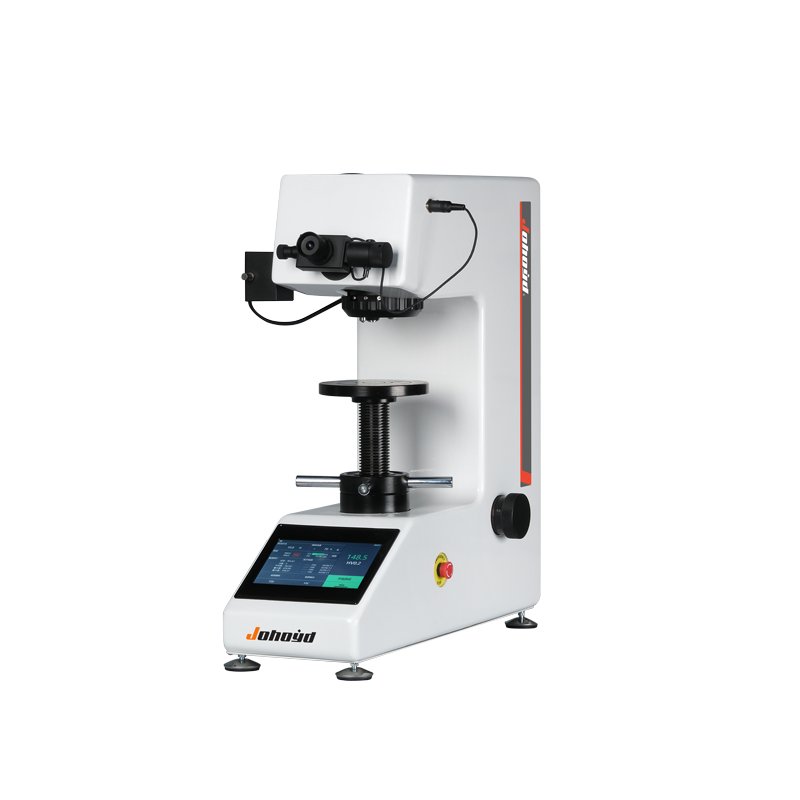
A typical hardness tester includes an indenter, load application mechanism, measurement system, and display or data interface.
Each component must function accurately to ensure reliable results.
Types of Hardness Testers
Several types of hardness testers are used depending on application needs.
Rockwell, Brinell, Vickers, and Knoop testers are the most common.
Rockwell hardheidsmeter
Rockwell testers measure indentation depth under minor and major loads.
They provide fast results and are widely used in production environments.
Brinell hardheidsmeter
Brinell testers use a hardened ball indenter and heavy load.
They are suitable for cast iron, forgings, and softer metals.
Vickers hardheidsmeter
Vickers testers gebruiken een diamanten piramidevormig indringlichaam.
Ze bieden een hoge nauwkeurigheid over een breed hardheidsbereik.
Knoop hardheidsmeter
Knoop testers are used for microhardness testing.
They are ideal for thin layers and brittle materials.
Shore hardheidsmeter
Shore hardness testers measure rebound or indentation resistance.
They are often used for portable testing and elastomers.
Leeb hardheidsmeter
Leeb testers meten de rebound snelheid na de impact.
They are widely used in portable hardness testing of large components.
Microhardheidsmeter
Microhardness testers apply very low loads.
They analyze surface layers, coatings, and microstructures.
Macro hardheidsmeter
Macro hardheidsmeters evalueren bulkmateriaaleigenschappen.
They are commonly used in structural and production testing.
Draagbare hardheidsmeter
Portable hardness testers enable on-site testing.
They are ideal for large or installed components.
Laboratorium hardheidsmeter
Laboratory hardness testers provide controlled conditions.
They support certification, research, and reference testing.
Digitale hardheidsmeter
Digital testers automate measurement and data recording.
They reduce operator error and improve traceability.
Automatisch hardheidsmeter
Automatic hardness testers control loading and measurement automatically.
They improve repeatability in high-volume testing.
Materialen getest door hardheidsmeters
Hardheidsmeters worden veel gebruikt voor metalen en legeringen.
Staal, aluminium, gietijzer en non-ferrometalen worden vaak getest.
Hardheidsmeting voor staal
Steel hardness testing verifies heat treatment effectiveness.
Rockwell- en Vickers-testers worden vaak gebruikt.
Hardheidstesten voor aluminium
Aluminium vereist een zorgvuldige selectie van de belasting.
Brinell- en Vickers-testers leveren nauwkeurige resultaten.
Hardheidsmeting voor gietijzer
Gietijzer heeft baat bij Brinell testen.
The method averages hardness over a larger area.
Hardheidsmeting voor non-ferrometalen
Non-ferrometalen vereisen flexibele testmethoden.
Vickers testen hebben vaak de voorkeur.
Hardness Tester in Manufacturing
Manufacturers use hardness testers for process control.
They help detect defects early.
Hardness Tester in Quality Control
Quality teams rely on hardness testers for acceptance testing.
Clear hardness limits simplify decisions.
Hardness Tester in R&D Labs
R&D labs use hardness testers to study material behavior.
Micro and nano testing support innovation.
Normen voor hardheidsmeting
ASTM and ISO standards define hardness testing procedures.
Compliance ensures consistency and credibility.
Nauwkeurigheid en herhaalbaarheid
Accuracy depends on calibration, indenter condition, and load control.
Herhaalbaarheid zorgt voor betrouwbare vergelijkingen.
Kalibratie en traceerbaarheid
Regular calibration maintains measurement integrity.
Traceerbare resultaten ondersteunen audits en certificering.
Selecting the Right Hardness Tester
Selection depends on material type, thickness, accuracy needs, and environment.
Deskundige begeleiding zorgt voor optimale prestaties.
Veel voorkomende fouten bij hardheidsmetingen
Fouten zijn onder andere slechte voorbereiding van het oppervlak en onjuiste testselectie.
Standard procedures reduce mistakes.
Advantages of Using a Hardness Tester
De belangrijkste voordelen zijn:
- Fast inspection
- Minimal damage
- Cost efficiency
- Wide applicability
These benefits support quality assurance.
Beperkingen van hardheidsmetingen
Hardheidsmetingen meten niet alle mechanische eigenschappen.
Resultaten moeten correct worden geïnterpreteerd.
Onderhoud van hardheidsmeters
Routine maintenance preserves accuracy.
De juiste zorg verlengt de levensduur van de apparatuur.
Automation and Digital Integration
Automation improves efficiency and consistency.
Digital integration supports data management.
Merkexpertise en -oplossingen
Reliable hardness testing requires dependable equipment and expert support. Brands like Johoyd, door https://hardnesstests.com, bieden professionele Hardheidsmeter solutions designed for industrial, laboratory, and research applications, ensuring accuracy, durability, and compliance.
Toekomstige trends in hardheidsmeting
Future trends include smart testers, AI-assisted analysis, and deeper digital integration.
These innovations will enhance material evaluation.

Veelgestelde vragen
Waar wordt een hardheidsmeter voor gebruikt?
It measures resistance to deformation.
Zijn hardheidsmetingen destructief?
Het is minimaal destructief.
Welke hardheidsmeter wordt het meest gebruikt?
Rockwell-testers worden veel gebruikt.
Kunnen hardheidsmetingen worden geautomatiseerd?
Ja, er zijn automatische systemen beschikbaar.
Moeten hardheidsmeters gekalibreerd worden?
Ja, regelmatig kalibreren is essentieel.
Zijn er normen nodig voor het testen van de hardheid?
Ja, ASTM- en ISO-standaarden zijn van toepassing.
Conclusie
A Hardheidsmeter is an essential tool for ensuring material quality, consistency, and performance. By providing fast and reliable hardness measurement, it supports manufacturing, research, and inspection across industries.
Met vertrouwde leveranciers zoals Johoyd geavanceerde oplossingen bieden door middel van hardnesstests.com, users gain confidence in their hardness testing processes. As technology advances, hardness testers will remain a cornerstone of material evaluation.
Aanbevolen interne koppelingen
- Soorten hardheidsmetingen
- Industriële materiaaltestapparatuur
Aanbevolen uitgaande links
- ASTM-standaarden voor hardheidsmeting
- ISO-richtlijnen voor hardheidsmeting