

- Appareil d'essai de dureté Micro Vickers
- Appareil d'essai de dureté Vickers
- Capteur de dureté Vickers
- Appareil d'essai de dureté Rockwell
- Appareil d'essai de dureté Brinell
- Appareil de dureté Leeb
- Appareil de mesure de la dureté Shore
- Testeur de dureté Webster
- Appareil de mesure de la dureté Barcol
- Barre d'essai de dureté



Industrial Material Testing Equipment: Ensuring Quality, Safety, and Performance in Modern Manufacturing

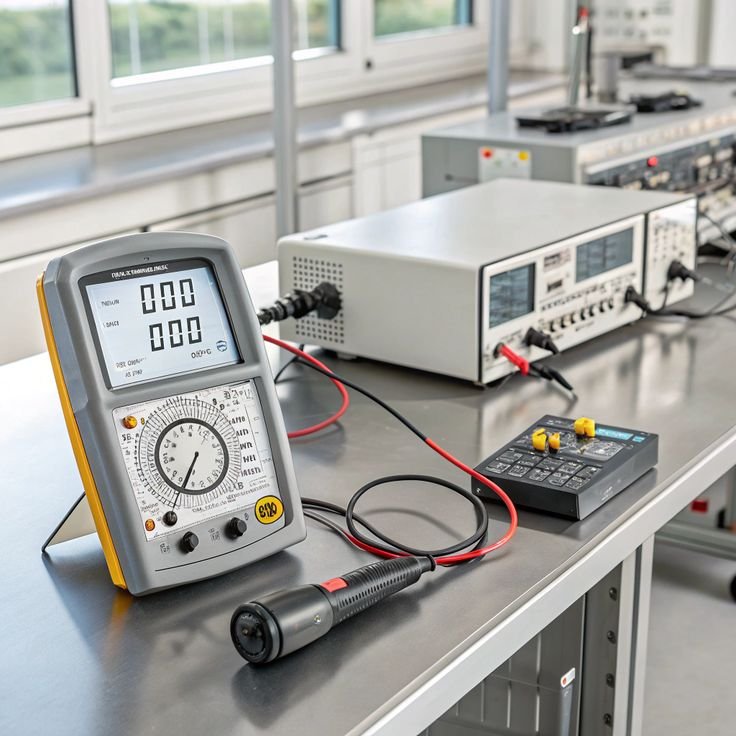
Industrial material testing equipment plays a critical role in modern manufacturing, engineering, and research environments. These machines are designed to evaluate the mechanical, physical, and chemical properties of materials to ensure they meet required standards for strength, durability, safety, and performance. From metals and plastics to composites and ceramics, material testing equipment helps industries maintain product quality and comply with global standards established by organizations such as ASTM International and International Organization for Standardization.
This article explores industrial material testing equipment in detail, including its importance, types, working principles, applications, and benefits.
1. What is Industrial Material Testing Equipment? ⚙️
Industrial material testing equipment refers to specialized machines and instruments used to determine the physical and mechanical properties of materials. These devices help engineers and manufacturers evaluate how materials behave under different forces and environmental conditions.
Common properties tested include:
- Tensile strength
- Compression resistance
- Dureté
- Impact resistance
- Fatigue strength
- Flexural strength
- Elasticity and ductility
By performing these tests, manufacturers can ensure that materials are suitable for specific applications such as construction, automotive components, aerospace structures, and industrial machinery.

2. Importance of Material Testing in Industry 📊
Material testing is essential for several reasons:
Quality Assurance
Testing ensures that materials meet product specifications and maintain consistent quality during production.
Safety Compliance
Many industries must comply with international safety standards and regulatory requirements. Testing helps verify compliance.
Product Reliability
By analyzing material behavior under stress, manufacturers can predict performance and prevent failures.
Recherche et développement
Material testing equipment is widely used in R&D laboratories to develop new materials with improved properties.
Cost Reduction
Identifying weak or defective materials early reduces waste, product recalls, and costly repairs.
3. Types of Industrial Material Testing Equipment 🧪
There are several types of testing machines designed for different testing methods and material properties.
3.1 Universal Testing Machines (UTM)
Universal testing machines are among the most widely used material testing devices. They perform multiple tests including:
- Tensile testing
- Compression testing
- Bending testing
- Shear testing
UTMs apply controlled forces to a specimen and measure its response until deformation or failure occurs.
3.2 Hardness Testing Machines
Hardness testers measure a material’s resistance to indentation or scratching.
Common hardness testing methods include:
- Rockwell hardness testing
- Brinell hardness testing
- Vickers hardness testing
- Knoop hardness testing
These machines are commonly used in metal manufacturing, automotive, and metallurgy laboratories.
3.3 Impact Testing Machines
Impact testers evaluate a material’s ability to withstand sudden shock or force.
Common impact tests include:
- Charpy impact test
- Izod impact test
These tests help determine how materials behave in real-world conditions such as collisions or sudden loads.
3.4 Fatigue Testing Machines
Fatigue testing equipment measures how materials perform under repeated cyclic loading.
This type of testing is essential for industries like:
- Aérospatiale
- Automotive
- Structural engineering
It helps determine the lifespan of materials exposed to continuous stress.
3.5 Compression Testing Machines
Compression testers measure how materials behave under crushing loads.
They are commonly used for:
- Concrete testing
- Ceramic materials
- Construction materials
- Packaging materials
3.6 Torsion Testing Machines
Torsion testing equipment evaluates a material’s resistance to twisting forces. These machines are commonly used to test shafts, wires, and springs.
4. Key Components of Material Testing Equipment 🔧
Most industrial material testing machines consist of several core components:
Load Frame
The structural frame that holds the specimen and applies force during testing.
Load Cell
A sensor that accurately measures the applied force.
Poignées et fixations
These hold the test specimen securely during testing.
Control System
Modern machines use computerized control systems to regulate test parameters.
Data Acquisition Software
Software records test data, generates graphs, and produces detailed reports.
5. Working Principle of Material Testing Machines ⚡
Material testing equipment generally works by applying a controlled force to a specimen and measuring its response.
The process typically includes:
- Specimen Preparation – The material sample is prepared according to standard dimensions.
- Mounting the Sample – The sample is placed in the testing machine using appropriate grips.
- Applying Load – The machine applies tensile, compressive, or torsional force.
- Data Collection – Sensors record force, displacement, and deformation.
- Result Analysis – Software calculates properties such as yield strength, ultimate strength, and elasticity.
6. Applications of Industrial Material Testing Equipment 🏗️
Material testing equipment is widely used across many industries.
Industrie automobile
Testing ensures vehicle components such as axles, frames, and suspension systems meet safety standards.
Industrie aérospatiale
Aircraft components require extensive testing for fatigue resistance and structural strength.
Construction Industry
Concrete, steel, and other building materials are tested to ensure structural integrity.
Manufacturing Industry
Quality control processes rely on testing equipment to verify raw materials and finished products.
Research Laboratories
Universities and research institutes use testing equipment to develop new materials and improve existing ones.
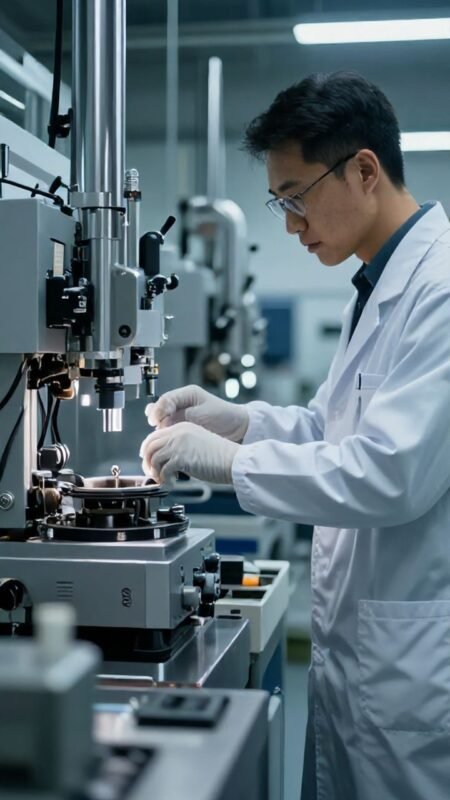
7. Advantages of Modern Material Testing Equipment 🌟
Modern industrial testing machines provide numerous benefits:
- High precision and accuracy
- Automated testing procedures
- Real-time data monitoring
- Improved safety features
- Reduced human error
- Digital data storage and reporting
Advanced systems also integrate with laboratory management software and cloud platforms for efficient data management.
8. Factors to Consider When Choosing Material Testing Equipment 🧠
When selecting industrial material testing equipment, several factors should be considered:
- Testing capacity and load range
- Material type
- Required testing standards
- Automation level
- Data analysis capabilities
- Maintenance and calibration requirements
Choosing the right machine ensures reliable test results and long-term operational efficiency.
9. Future Trends in Material Testing Technology 🚀
Material testing technology continues to evolve with innovations such as:
- AI-driven data analysis
- Smart sensors for enhanced accuracy
- Automated sample handling systems
- Non-destructive testing technologies
- Remote monitoring and cloud-based reporting
These advancements are improving testing efficiency and enabling faster material development.
✅ Conclusion
Industrial material testing equipment is a fundamental component of modern manufacturing and engineering. By accurately evaluating material properties, these machines help ensure safety, quality, and performance across a wide range of industries. As technology advances, material testing equipment will continue to play a vital role in innovation, product development, and industrial quality control.