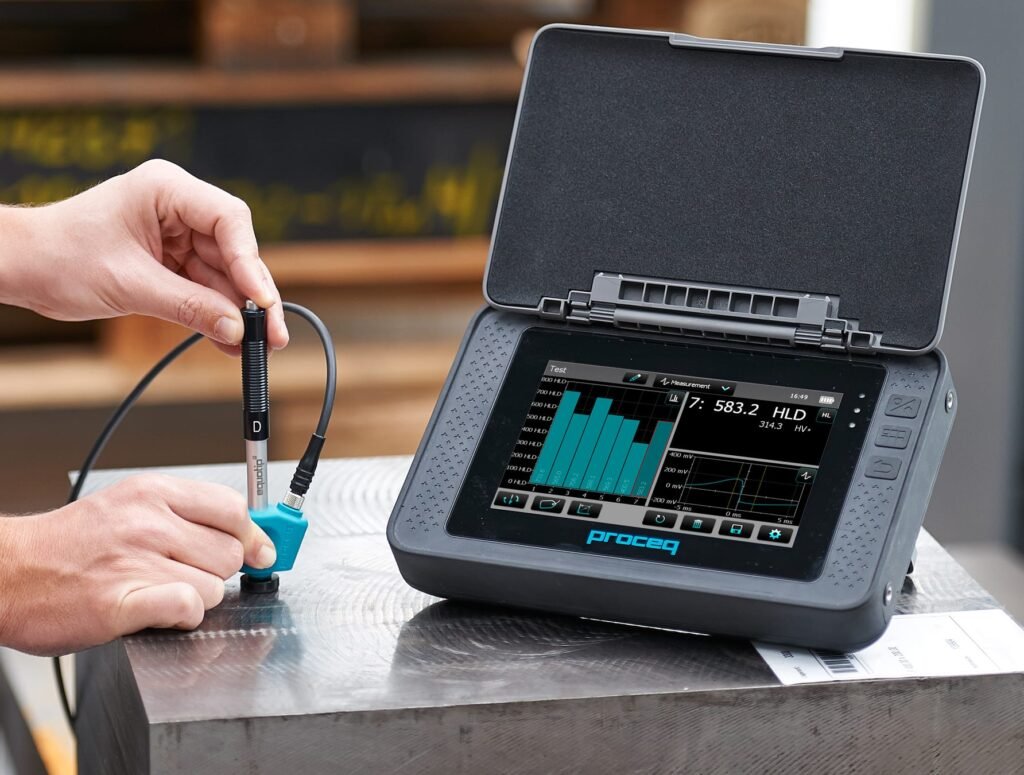
Shore Hardness Test: Principles, Scales and Industrial Applications

Introduction to the Shore Hardness Test
En shore hardness test is one of the most widely used methods for measuring the hardness of soft materials such as rubber, elastomers, plastics, silicone, and flexible polymers. Unlike metal hardness testing methods that use large loads and indenters, the Shore method evaluates a material’s resistance to penetration using a spring-loaded device called a durometer.
Because it is simple, fast, and non-destructive, the Shore hardness test has become an industry standard for quality control, product development, and material verification. Manufacturers across automotive, medical, consumer goods, and industrial sectors rely on Shore hardness measurements to ensure consistent material performance.
Understanding Shore hardness values helps engineers select the right materials for flexibility, durability, and wear resistance.

What Is the Shore Hardness Test?
Definición y finalidad
En shore hardness test is a material testing method that measures the resistance of rubber, plastics, and similar materials to indentation by a standardized indenter under spring force.
The test is commonly used to:
- Evaluate rubber compounds
- Measure plastic hardness
- Verify product quality
- Compare material formulations
- Support product development
Importance in Material Evaluation
Hardness directly affects:
- Flexibility
- Elasticidad
- Resistencia al desgaste
- User comfort
- Durabilidad del producto
As a result, Shore hardness is a critical quality parameter for many manufactured products.
History and Development of the Shore Hardness Test
The Shore hardness method was developed by Albert Ferdinand Shore in the 1920s.
His invention, the durometer, provided a simple way to measure the hardness of soft materials and quickly became a global industry standard.
Today, Shore hardness testing remains one of the most recognized material testing methods worldwide.
How the Shore Hardness Test Works
Indentation Measurement Principle
The test measures how deeply an indenter penetrates the material under a specified spring force.
- Softer materials allow deeper penetration
- Harder materials resist penetration
The depth of penetration is converted into a Shore hardness value.
Durometer Operation
A durometer consists of:
- Spring-loaded indenter
- Measurement dial or digital display
- Pressure foot
- Calibration mechanism
The instrument is placed on the specimen surface, and the hardness value is read directly.
Reading Hardness Values
Shore hardness values range from:
- 0 (very soft)
- 100 (very hard)
Higher numbers indicate harder materials.
Understanding Shore Hardness Scales
Shore A Scale
En Orilla A scale is the most common scale for soft and flexible materials.
Entre los materiales más habituales se encuentran:
- Rubber
- Silicona
- Elastómeros
- Flexible plastics
Examples:
| Material | Typical Shore A |
|---|---|
| Gel Rubber | 10–20 |
| Soft Silicone | 20–40 |
| Tire Rubber | 60–75 |
| Hard Rubber | 80–95 |
Shore D Scale
En Orilla D scale is used for harder materials.
Las aplicaciones incluyen:
- Rigid plastics
- Hard polymers
- Termoplásticos
Examples:
| Material | Typical Shore D |
|---|---|
| Polyethylene | 50–65 |
| Nylon | 70–85 |
| Polycarbonate | 75–90 |
Other Shore Scales
Additional scales include:
- Shore OO
- Shore O
- Costa B
- Costa C
- Shore M
These are used for specialized materials and testing requirements.
Shore Hardness Test Procedure
Preparación de la muestra
For accurate testing:
- Ensure a flat surface
- Clean the specimen
- Meet minimum thickness requirements
- Condition the sample appropriately
Positioning the Durometer
The durometer is held perpendicular to the test surface.
Consistent positioning improves repeatability.
Taking Measurements
The indenter is pressed firmly into the material, and the reading is recorded after the specified dwell time.
Recording and Averaging Results
Multiple measurements should be taken at different locations.
The average value is reported as the final hardness result.
Equipment Used in Shore Hardness Testing
Durómetros Shore
Los tipos más comunes son:
- Shore A durometers
- Shore D durometers
- Analog durometers
- Digital durometers
Test Stands
Test stands improve:
- Repeatability
- Precisión
- Operator consistency
Digital Shore Hardness Testers
Modern systems offer:
- Digital displays
- Data logging
- Análisis estadístico
- Conectividad USB
Bloques de calibración
Calibration blocks ensure measurement accuracy and compliance with testing standards.
Advantages of the Shore Hardness Test
The Shore method provides several advantages:
- Fast and simple operation
- Non-destructive testing
- Portable equipment
- Pruebas rentables
- Immediate results
- Suitable for many soft materials
- Widely accepted industry standard
These benefits make it one of the most practical hardness testing methods available.
Limitations of the Shore Hardness Test
Despite its popularity, there are limitations:
- Limited suitability for metals
- Sensitive to specimen thickness
- Affected by temperature
- Requires proper technique
- Results can vary with dwell time
Understanding these factors helps improve measurement reliability.
Aplicaciones industriales
Rubber Products
Las aplicaciones más comunes son:
- Neumáticos
- Sellos
- Juntas
- Juntas tóricas
Plastic Components
Manufacturers use Shore testing for:
- Plastic housings
- Packaging materials
- Consumer products
Automotive Parts
Used for evaluating:
- Interior components
- Rubber bushings
- Weather seals
Productos sanitarios
Las aplicaciones incluyen:
- Tubos médicos
- Silicone implants
- Soft-touch components
Productos de consumo
Many consumer goods rely on Shore hardness specifications for comfort and durability.
Shore Hardness Test vs Rockwell Hardness Test
| Característica | Orilla | Rockwell |
|---|---|---|
| Tipo de material | Rubber & Plastics | Metales |
| Método de medición | Penetration Depth | Indentation Depth |
| Portabilidad | Excelente | Moderado |
| Velocidad | Rápido | Rápido |
| Aplicaciones típicas | Elastómeros | Metales |
Shore Hardness Test vs IRHD Testing
| Característica | Orilla | IRHD |
|---|---|---|
| Equipment Cost | Lower | Higher |
| Velocidad de prueba | Faster | Moderado |
| Industry Use | Very Common | Specialized |
| Portabilidad | Excelente | Limited |
Both methods are widely used for rubber hardness evaluation.
Normas y cumplimiento de la industria
The Shore hardness test follows internationally recognized standards, including:
- ASTM D2240
- ISO 868
Referencias oficiales:
Compliance ensures consistent and reliable hardness measurements across industries.
Preguntas frecuentes
1. What is the shore hardness test used for?
It is used to measure the hardness of rubber, plastics, elastomers, and other soft materials.
2. What is the difference between Shore A and Shore D?
Shore A measures softer materials, while Shore D is designed for harder plastics and polymers.
3. What is a durometer?
A durometer is the instrument used to perform Shore hardness measurements.
4. Is the shore hardness test destructive?
No. It is generally considered non-destructive because it leaves little or no visible damage.
5. Why is Shore hardness important?
It helps determine flexibility, durability, and material performance.
6. Which industries use Shore hardness testing?
Automotive, medical, plastics, rubber manufacturing, consumer goods, and industrial production.
Conclusión
En shore hardness test is one of the most important and widely used methods for evaluating the hardness of rubber, plastics, elastomers, and flexible materials. Its simplicity, speed, portability, and cost-effectiveness make it an essential tool for manufacturers, engineers, and quality control professionals.
By understanding Shore hardness scales, testing procedures, and applications, organizations can ensure consistent material performance and make better material selection decisions for their products.