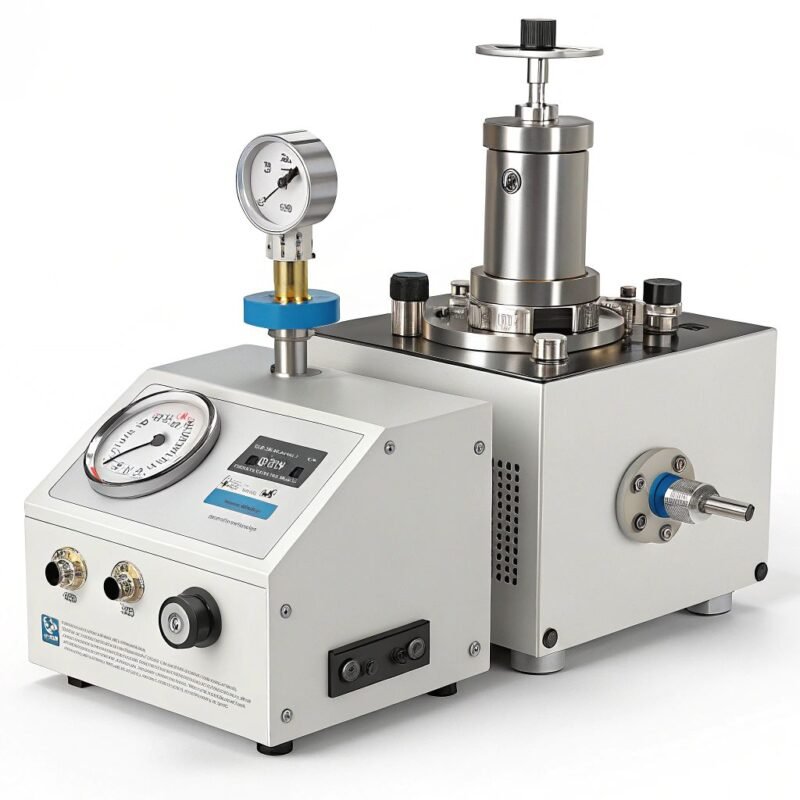
Portable Leeb Hardness Tester: Complete Guide for On-Site Hardness Testing


Introduction to Portable Leeb Hardness Tester
A Portable Leeb Hardness Tester is a compact and efficient device designed for rapid hardness measurement directly on industrial components and metal surfaces. Unlike traditional stationary hardness testing machines, portable Leeb testers allow inspectors to perform accurate field testing without moving large or heavy workpieces.
Industries such as oil and gas, aerospace, automotive, metallurgy, and heavy machinery manufacturing rely on a Portable Leeb Hardness Tester for fast and reliable on-site material inspection.
Why Portable Leeb Testing Is Important
Advantages of Mobile Hardness Inspection
Portable testing eliminates the need to transport large industrial components to a laboratory.
Improving Industrial Maintenance Efficiency
Field inspection reduces downtime and supports preventive maintenance programs.
📎 Referencia de salida:
https://en.wikipedia.org/wiki/Leeb_rebound_hardness_test
📎 Referencia adicional:
https://www.iso.org/
How a Portable Leeb Hardness Tester Works
Leeb Rebound Testing Principle
The tester measures hardness based on the rebound velocity of an impact body striking the material surface.
Impact Device and Sensor Technology
Advanced sensors calculate impact and rebound energy with high precision.
Digital Hardness Conversion and Analysis
The device automatically converts Leeb values into HRC, HBW, HV, and other hardness scales.
👉 Enlace interno:
https://hardnesstests.com/leeb-hardness-tester
Key Components of Portable Leeb Hardness Tester
Impact Probe System
Different impact devices support various testing applications and material types.
Digital Display and Control Unit
Modern systems include touchscreen displays and user-friendly interfaces.
Rechargeable Battery and Connectivity
Portable operation supports long-term field inspection.
Accesorios de calibración y verificación
Calibration blocks ensure reliable and repeatable measurement accuracy.
👉 Enlace interno:
https://hardnesstests.com/hardness-tester-accessories
Materiales probados habitualmente
Acero al carbono y acero aleado
Widely used in industrial manufacturing and maintenance.
Acero inoxidable
Portable testing supports corrosion-resistant material inspection.
Componentes de hierro fundido
Suitable for heavy industrial machinery inspection.
Aluminio y metales no férreos
Used for lightweight structural applications.
👉 Enlace interno:
https://hardnesstests.com/hardness-testing-for-steel
Applications of Portable Leeb Hardness Tester
Pipeline Inspection
Used for oil, gas, and industrial pipeline maintenance.
Automotive and Machinery Maintenance
Supports hardness inspection for gears, shafts, and engine parts.
Aerospace Component Testing
Ensures reliable hardness verification for aircraft materials.
Power Plant and Oil Industry Inspection
Used for turbines, pressure vessels, and heavy equipment inspection.
👉 Enlace interno:
https://hardnesstests.com/hardness-testing-for-pipelines
Key Features of Modern Portable Leeb Hardness Testers
Conversión multiescala de dureza
Automatically converts measurement values into multiple hardness scales.
Lightweight and Compact Design
Designed for easy transportation and field operation.
Data Storage and USB Export
Supports digital reporting and quality documentation.
Wireless and Bluetooth Connectivity
Modern systems enable wireless communication and mobile integration.
👉 Enlace interno:
https://hardnesstests.com/digital-hardness-tester
Advantages of Using Portable Leeb Hardness Tester
- Fast on-site hardness measurement
- Suitable for large industrial components
- Lightweight and portable operation
- Multi-scale hardness conversion capability
- Reduced inspection downtime
Limitations and Testing Challenges
- Surface roughness may affect accuracy
- Thin materials require special testing methods
- Regular calibration is necessary for reliable results
Normas y cumplimiento de la industria
Leeb hardness testing commonly follows:
- Normas ASTM → https://www.astm.org/
- Normas ISO → https://www.iso.org/
Best Practices for Accurate Leeb Hardness Testing
- Prepare clean and smooth testing surfaces
- Utilizar equipos de ensayo calibrados
- Select suitable impact devices carefully
- Seguir los procedimientos de ensayo industriales aprobados
Productos recomendados y enlaces internos
Explora soluciones relacionadas:
- https://hardnesstests.com/portable-hardness-tester
- https://hardnesstests.com/industrial-hardness-tester
- https://hardnesstests.com/hardness-test-blocks
- https://hardnesstests.com/hardness-testing-machine
FAQs About Portable Leeb Hardness Tester
1. What is a Portable Leeb Hardness Tester used for?
It measures metal hardness directly at industrial sites and field locations.
2. Which industries use portable Leeb hardness testing?
Oil and gas, aerospace, automotive, metallurgy, and manufacturing industries.
3. ¿Qué materiales pueden someterse a prueba?
Steel, stainless steel, cast iron, aluminum, and alloy materials.
4. Why is Leeb hardness testing popular?
It provides fast, portable, and non-destructive hardness measurement.
5. Are digital Leeb testers accurate?
Yes, modern digital systems provide reliable industrial testing results.
6. ¿Por qué es necesaria la calibración?
Calibration ensures accurate and repeatable measurement performance.
Conclusión
A Portable Leeb Hardness Tester is an essential tool for industrial field inspection and rapid hardness analysis. With portable design, digital technology, and fast measurement capability, these testers improve efficiency and support reliable material quality control across multiple industries.