




Brinell Hardness Test: Complete Guide to Principle, Equipment, Procedure, and Applications


Die brinell hardness test is one of the oldest and most widely used methods for measuring the hardness of materials, especially metals. It determines hardness by measuring the size of an indentation created when a hardened steel or carbide ball is pressed into the surface of a material under a specified load.
Engineers, metallurgists, and quality control professionals rely on the brinell hardness test to evaluate material strength, durability, and resistance to deformation. This method is particularly effective for testing castings, forgings, and materials with coarse grain structures.
Because it produces a relatively large indentation, the brinell hardness test provides an average hardness value across a broader area of the material, making it highly reliable for industrial testing.
What Is the Brinell Hardness Test?
Die brinell hardness test is a material testing technique that measures hardness by pressing a hard spherical indenter into a material surface and measuring the diameter of the resulting indentation.
The hardness value is expressed as the Brinell Hardness Number (BHN or HB).
The process involves:
- Applying a known load using a steel or tungsten carbide ball
- Allowing the load to act for a specific period
- Measuring the diameter of the indentation
- Calculating the hardness value using a standard formula
This method is particularly useful for soft metals, cast iron, and large metal components.
Geschichte des Brinell-Härtetests
Die brinell hardness test was developed in 1900 by Swedish engineer Johan August Brinell.
He created this method to measure the hardness of metals used in industrial machinery and engineering structures.
Importance of the Brinell Method
Before the development of the Brinell test, measuring metal hardness accurately was difficult. Brinell’s method provided a simple and reliable approach that could be standardized and widely adopted.
Today, the test is standardized by international organizations such as:
- ASTM International (ASTM E10)
- ISO 6506 standards
These standards ensure consistent testing procedures across industries worldwide.
Principle of the Brinell Hardness Test
The fundamental principle of the brinell hardness test is based on the relationship between the applied load and the surface area of the indentation created by the indenter.
A hard ball is pressed into the material under a controlled load, and the diameter of the indentation is measured using a microscope or optical system.
Basic Testing Steps
- A spherical indenter is placed on the material surface.
- A known load is applied for a specific dwell time.
- The load is removed after the indentation is formed.
- The indentation diameter is measured.
- The hardness value is calculated using the Brinell formula.
This process determines how resistant the material is to permanent deformation.
Brinell Hardness Test Formula
The Brinell hardness number is calculated using the following formula:
HB = 2P / πD(D − √(D² − d²))
Wo:
- HB = Brinell Hardness Number
- P = Applied load (kgf)
- D = Diameter of the indenter (mm)
- d = Diameter of the indentation (mm)
The calculated value represents the hardness of the material.
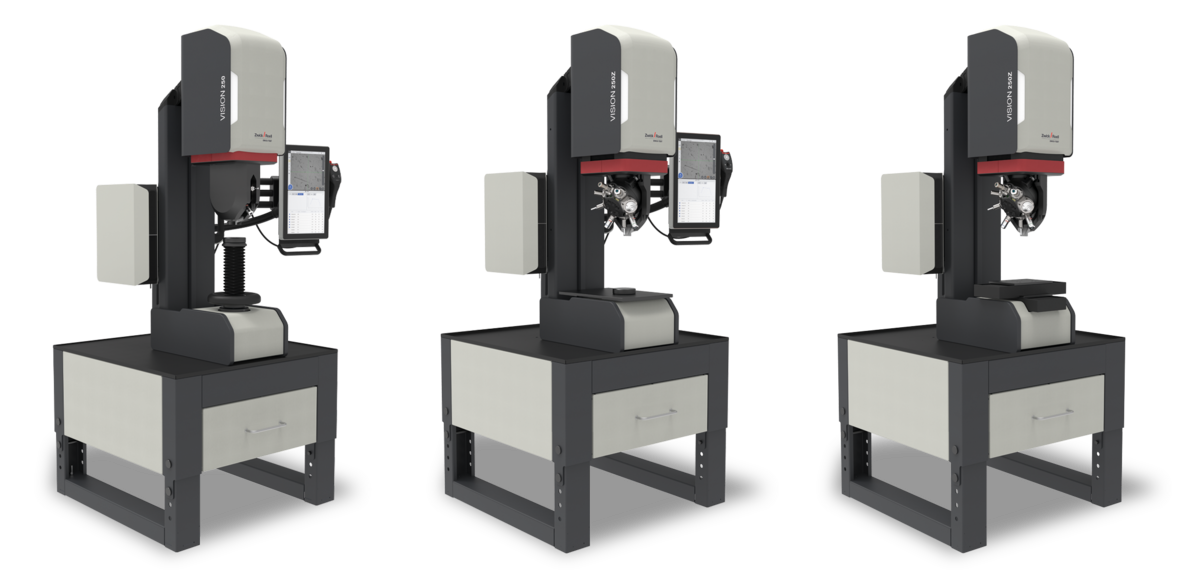
Equipment Used in the Brinell Hardness Test
Several components are required to perform the brinell hardness test.
1. Brinell Hardness Tester
The testing machine applies the load and supports the specimen during the test.
Modern machines often include digital displays and automated measurement systems.
2. Indenter Ball
The indenter used in the brinell hardness test is a hardened steel ball or tungsten carbide ball.
Common diameters include:
- 1 mm
- 2,5 mm
- 5 mm
- 10 mm
3. Load Application System
Loads are applied using mechanical, hydraulic, or electronic systems.
Typical loads range from 500 kgf to 3000 kgf depending on the material.
4. Optical Measurement System
After the indentation is created, its diameter is measured using:
- Optical microscopes
- Digital measuring systems
- Computer-assisted imaging
5. Specimen Support (Anvil)
The anvil holds the material securely during the test to ensure accurate results.
Testverfahren für die Brinell-Härte
The testing procedure follows standardized steps to ensure reliable results.
Step-by-Step Procedure
- Prepare the test specimen surface.
- Place the specimen on the testing machine anvil.
- Select the appropriate indenter size and load.
- Apply the load for a specified dwell time (usually 10–30 seconds).
- Remove the load after the indentation forms.
- Measure the diameter of the indentation.
- Calculate the hardness value using the Brinell formula.
Modern digital machines perform many of these steps automatically.
Advantages of the Brinell Hardness Test
Die brinell hardness test offers several benefits compared with other hardness testing methods.
1. Suitable for Rough Surfaces
Because the indentation is large, the test can be performed on materials with rough surfaces.
2. Ideal for Heterogeneous Materials
It provides an average hardness value across a larger surface area.
3. Accurate for Soft and Medium Metals
Materials such as aluminum, copper, and cast iron are commonly tested.
4. Simple and Reliable Method
The test is straightforward and widely standardized.
5. Suitable for Large Components
Large metal parts that cannot be easily tested by other methods can be tested using the Brinell method.
Limitations of the Brinell Hardness Test
Despite its advantages, the brinell hardness test also has some limitations.
Large Indentation Size
The indentation can damage the surface of finished components.
Not Suitable for Very Hard Materials
Extremely hard materials may damage the indenter.
Requires Optical Measurement
Measuring the indentation diameter requires additional equipment.
Not Ideal for Thin Materials
Thin materials may deform during the test.
Applications of the Brinell Hardness Test
Die brinell hardness test is widely used in various industries.
Metallverarbeitung
Testing steel, aluminum, and metal alloys during production.
Casting Industry
Evaluating hardness of cast iron and cast metal components.
Heavy Machinery
Inspecting gears, shafts, and industrial equipment parts.
Autoindustrie
Testing engine blocks, crankshafts, and structural components.
Construction Materials
Testing structural steel used in buildings and infrastructure.
Comparison with Other Hardness Testing Methods
Several hardness testing methods are available, each suited for specific applications.
| Test Method | Measurement Method | Typical Applications |
|---|---|---|
| Brinell | Indentation diameter | Gegossene Metalle |
| Rockwell | Indentation depth | Hardened metals |
| Vickers | Diagonal indentation | Prüfung der Mikrohärte |
| Knoop | Micro indentation | Thin coatings |
Die brinell hardness test is particularly effective for large or coarse-grained materials.
Future Developments in Brinell Hardness Testing
Advances in testing technology are improving hardness measurement accuracy and efficiency.
Emerging Innovations
- Automated hardness testing machines
- Digital optical measurement systems
- Integrated quality control software
- AI-assisted material testing
These developments are making hardness testing faster and more precise.

Frequently Asked Questions (FAQs)
1. What is the brinell hardness test used for?
The brinell hardness test measures the hardness of metals by evaluating the size of an indentation created by a spherical indenter.
2. What materials are suitable for the Brinell test?
It is commonly used for cast iron, aluminum, copper alloys, and other soft to medium-hard metals.
3. What does HB mean in hardness testing?
HB stands for Brinell Hardness Number, which represents the hardness value obtained from the test.
4. Why is tungsten carbide used as an indenter?
Tungsten carbide is extremely hard and resistant to wear, making it suitable for testing harder materials.
5. What is the typical load used in the Brinell test?
Loads usually range between 500 kgf and 3000 kgf, depending on the material being tested.
6. How is Brinell hardness measured?
The diameter of the indentation is measured using an optical microscope and then used to calculate the hardness value.
Fazit
Die brinell hardness test remains one of the most reliable and widely used methods for measuring material hardness, especially in heavy industries and metal manufacturing.
Its ability to provide accurate hardness values for large and coarse-grained materials makes it particularly valuable in quality control and engineering applications.
Although newer testing methods have been developed, the brinell hardness test continues to play a crucial role in evaluating the mechanical properties of metals and ensuring product reliability across many industries.