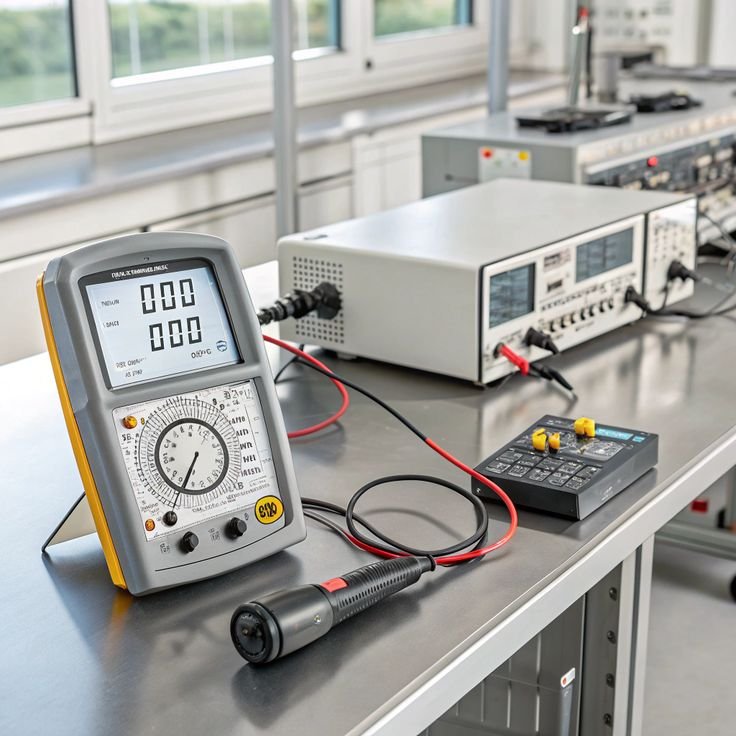
Microhardness Testing: Complete Guide to Methods, Equipment and Applications

Einführung in die Mikrohärteprüfung
Prüfung der Mikrohärte is a specialized materials testing method used to evaluate the hardness of very small regions, thin coatings, microstructures, and precision components. Unlike conventional hardness tests such as Rockwell or Brinell, microhardness testing uses low test loads and microscopic indentation measurements to determine material hardness with exceptional accuracy.
The technique is widely used in quality control, research and development, metallurgy, electronics, aerospace, automotive manufacturing, and surface engineering. It enables engineers to measure localized hardness values that would otherwise be impossible to evaluate using standard hardness testing methods.
As materials become more sophisticated and applications demand tighter quality standards, microhardness testing continues to play a critical role in modern materials characterization.
What Is Microhardness Testing?
Definition und Zweck
Prüfung der Mikrohärte is a low-force indentation method that measures a material’s resistance to localized plastic deformation using a diamond indenter.
The test is commonly performed to:
- Measure thin coatings
- Evaluate microstructures
- Analyze welds
- Überprüfen Sie Wärmebehandlungsprozesse
- Study hardness gradients
- Support failure analysis
Importance in Materials Characterization
Many engineered materials contain microscopic features with different hardness levels. Microhardness testing allows these variations to be measured individually, providing valuable information about material performance and manufacturing quality.
Principles of Microhardness Testing
Indentation-Based Hardness Measurement
Microhardness testing works by applying a controlled load to a diamond indenter pressed into the specimen surface.
The resulting indentation is measured under magnification and used to calculate hardness values.
Low-Load Testing Fundamentals
Typical test loads range from:
- 10 gf
- 25 gf
- 50 gf
- 100 gf
- 300 gf
- 500 gf
- 1000 gf
These low loads allow testing of extremely small areas without significant specimen damage.
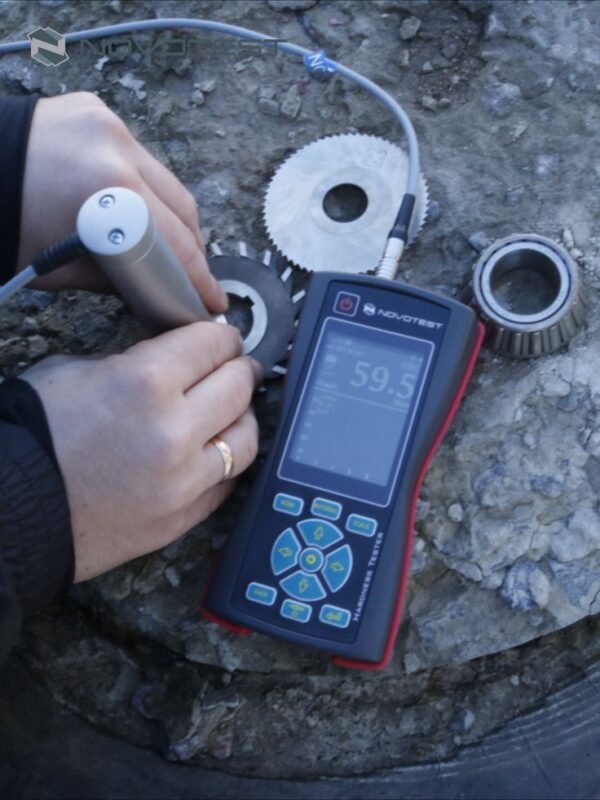
Hardness Value Calculations
Hardness values are calculated based on:
- Applied force
- Indentation dimensions
- Standardized mathematical formulas
Modern systems automatically calculate and display results.
Types of Microhardness Testing Methods
Vickers Mikrohärteprüfung
The Vickers method uses a square-based diamond pyramid indenter.
Key characteristics:
- Hohe Präzision
- Suitable for most materials
- Ausgezeichnete Wiederholbarkeit
- Widely accepted worldwide
Results are expressed as HV values.
Mikrohärteprüfung nach Knoop
The Knoop method uses an elongated diamond indenter that creates a shallower indentation.
Zu den Vorteilen gehören:
- Excellent for thin coatings
- Suitable for brittle materials
- Reduced penetration depth
- Minimal specimen damage
Results are expressed as HK values.
Comparison of Vickers and Knoop Methods
| Merkmal | Vickers | Knoop |
|---|---|---|
| Eindringkörper Form | Square Pyramid | Elongated Pyramid |
| Coating Evaluation | Very Good | Excellent |
| Brittle Materials | Good | Excellent |
| Penetration Depth | Tiefer | Flacher |
| Hardness Unit | HV | HK |
Microhardness Testing Equipment
Mikrohärteprüfgeräte
Common tester types include:
- Manual systems
- Semi-automatic systems
- Fully automated hardness testers
Diamond Indenters
Microhardness testing relies on precision diamond indenters to ensure consistent measurements.
Optische Mikroskope
Microscopes are used to:
- Observe indentations
- Measure dimensions
- Verify test quality
Digital Imaging Systems
Modern systems incorporate:
- High-resolution cameras
- Software für automatisierte Messungen
- Statistical analysis tools
Automated Hardness Testing Systems
Advanced systems provide:
- Auto-focus capability
- Motorized stages
- Hardness mapping
- Automated report generation
Microhardness Testing Procedure
Vorbereitung der Probe
Proper specimen preparation is critical.
The test surface should be:
- Flat
- Sauber
- Glatt
- Polished
Surface defects can significantly affect measurement accuracy.
Test Load Selection
The load must be selected according to:
- Material Typ
- Specimen thickness
- Application requirements
Indentation Measurement
After the test, indentation dimensions are measured using optical or digital systems.
Datenanalyse und Berichterstattung
Results are calculated and documented according to relevant industry standards.
Factors Affecting Microhardness Testing Accuracy
Surface Finish
Poor surface quality can distort indentation geometry and reduce accuracy.
Indentation Spacing
Indentations must be spaced sufficiently apart to prevent interaction between deformation zones.
Calibration and Verification
Routine calibration ensures:
- Measurement reliability
- Traceability
- Einhaltung von Standards
Environmental Conditions
Temperature, vibration, and lighting conditions can influence measurement quality.
Advantages of Microhardness Testing
Microhardness testing provides numerous advantages:
- Extremely precise measurements
- Ideal for small test areas
- Suitable for thin coatings
- Excellent for metallographic studies
- Minimal specimen damage
- Hohe Wiederholbarkeit
- Broad material compatibility
These benefits make it indispensable in advanced materials testing.
Limitations of Microhardness Testing
Despite its strengths, some limitations include:
- Requires careful sample preparation
- More time-consuming than Rockwell testing
- Sensitive to operator technique
- Requires optical measurement equipment
- Higher equipment investment
Proper procedures help minimize these challenges.

Anwendungen der Mikrohärteprüfung
Thin Coatings and Surface Treatments
Used for evaluating:
- PVD coatings
- CVD coatings
- Nitrided surfaces
- Hardened layers
Welds and Heat-Affected Zones
Engineers use microhardness testing to analyze hardness changes across welded joints.
Metallurgical Research
Die Anwendungen umfassen:
- Grain boundary analysis
- Phase transformation studies
- Alloy development
Electronics and Semiconductor Materials
Common uses include:
- Semiconductor wafers
- Electronic packaging
- Microelectronic components
Aerospace and Automotive Industries
Manufacturers rely on microhardness testing to verify critical material properties.
Industriestandards und Compliance
Microhardness testing is governed by internationally recognized standards:
- ASTM E384
- ISO 6507 (Vickers)
- ISO 4545 (Knoop)
Offizielle Quellen:
Compliance ensures consistency and comparability of results worldwide.
Häufig gestellte Fragen
1. What is microhardness testing used for?
It is used to measure hardness in small regions, coatings, microstructures, and precision-engineered components.
2. What are the main microhardness testing methods?
The two most common methods are Vickers microhardness testing and Knoop microhardness testing.
3. Why is microhardness testing important?
It allows localized hardness measurements that cannot be obtained using conventional hardness testing methods.
4. Can microhardness testing measure coatings?
Yes. It is one of the most effective techniques for evaluating thin coatings and surface treatments.
5. What industries use microhardness testing?
Aerospace, automotive, electronics, metallurgy, medical device manufacturing, and research laboratories.
6. Is microhardness testing destructive?
The indentations are extremely small, making the test minimally destructive in most applications.
Fazit
Prüfung der Mikrohärte is an essential tool for evaluating material hardness at the microscopic level. Its ability to measure small features, thin coatings, weld zones, and microstructures with exceptional precision makes it invaluable for quality control, research, and advanced manufacturing.
By understanding the principles, methods, equipment, and applications of microhardness testing, engineers and researchers can make informed decisions that improve material performance, product reliability, and manufacturing efficiency.