Rockwell Hardness Tester: Complete Guide for Industrial Hardness Measurement


Einführung in das Rockwell-Härteprüfgerät
A Rockwell-Härteprüfgerät is one of the most commonly used hardness testing machines in industrial manufacturing and laboratory inspection. Rockwell testing provides fast and accurate hardness measurement for metals, alloys, and heat-treated materials without requiring complex sample preparation.
Manufacturers, quality control laboratories, and metal processing facilities use a Rockwell-Härteprüfgerät to verify material consistency, inspect heat treatment quality, and improve production reliability.
Why Rockwell Hardness Testing Is Widely Used
Fast and Efficient Hardness Measurement
Rockwell testing provides immediate hardness readings, making it highly efficient for industrial production environments.
Reliable Industrial Quality Control
Hardness testing helps ensure material strength, wear resistance, and compliance with industrial specifications.
📎 Ausgehende Referenz:
https://en.wikipedia.org/wiki/Rockwell_scale
📎 Zusätzliche Referenz:
https://www.iso.org/
How a Rockwell Hardness Tester Works
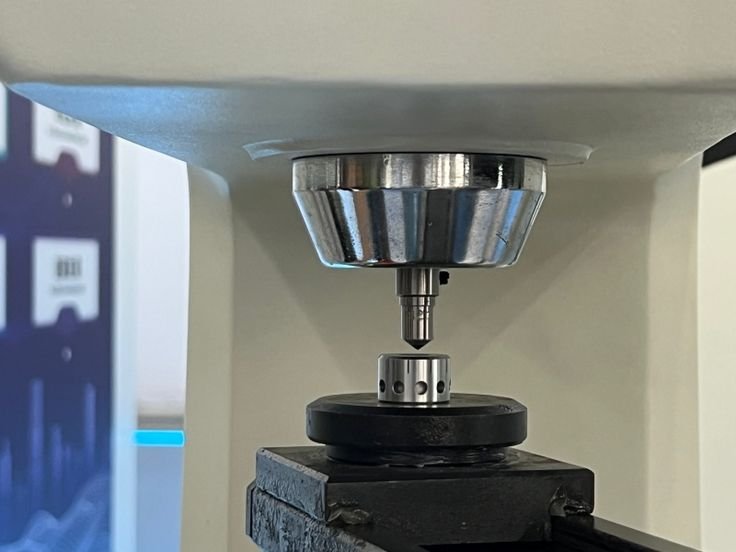
Rockwell Indentation Testing Principle
The machine measures hardness based on indentation depth created under a controlled force.
Minor Load and Major Load Process
Rockwell testing uses a minor preload followed by a major load to evaluate material hardness.
Reading and Understanding Hardness Values
Results are displayed directly in scales such as HRC, HRB, or superficial Rockwell values.
👉 Interner Link:
https://hardnesstests.com/rockwell-test-blocks
Common Types of Rockwell Hardness Testers
Manual Rockwell Hardness Testers
Traditional systems commonly used in laboratories and workshops.
Digital Rockwell Hardness Testers
Digital models improve efficiency with automatic calculation and data storage.
Automatic Rockwell Testing Machines
Automated systems are ideal for high-volume industrial inspection.
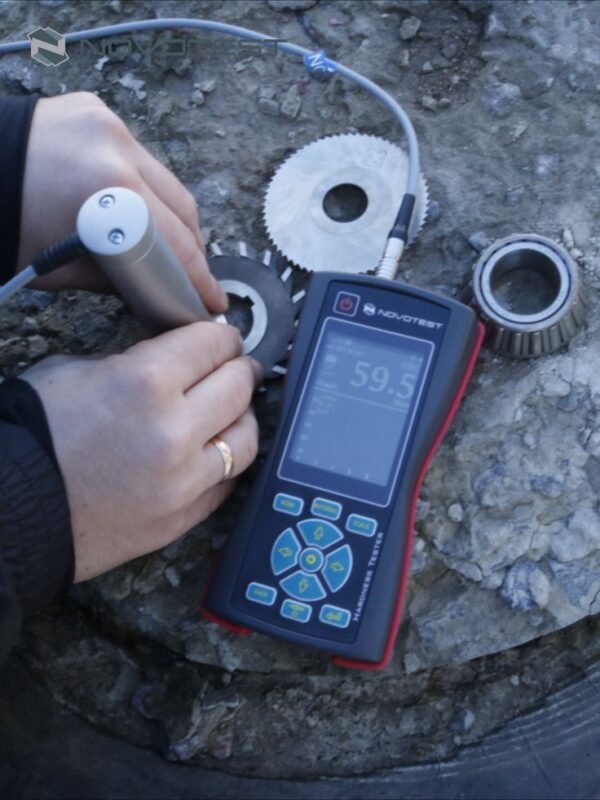
Portable Rockwell Hardness Testers
Portable devices support field inspection and maintenance operations.
👉 Interner Link:
https://hardnesstests.com/digital-rockwell-hardness-tester-price
Rockwell Hardness Scales and Applications
HRC Scale for Hardened Steel
Widely used for hardened steel and heat-treated components.
HRB Scale for Softer Metals
Suitable for softer metals such as copper and aluminum alloys.
Superficial Rockwell Scales
Designed for thin materials and surface coatings.
Material Compatibility and Selection
Different scales are selected according to material type and thickness.
👉 Interner Link:
https://hardnesstests.com/hardness-testing-for-steel
Üblich getestete Materialien
Carbon Steel
Used in structural, automotive, and industrial applications.
Stainless Steel
Requires accurate hardness verification for corrosion-resistant performance.
Aluminum Alloys
Testing supports lightweight component quality control.
Heat-Treated Components
Hardness testing confirms heat treatment effectiveness.
👉 Interner Link:
https://hardnesstests.com/hardness-testing-for-heat-treatment
Key Features of Modern Rockwell Hardness Testers
Digital Display and Automatic Calculation
Modern systems improve testing accuracy and efficiency.
High Precision Load Control
Precise load application ensures repeatable results.
Data Storage and Reporting Functions
Digital systems support inspection records and reporting.
Touchscreen and Smart Operation
Advanced interfaces simplify operation and reduce operator error.
👉 Interner Link:
https://hardnesstests.com/precision-hardness-testing-system
Industrial Applications of Rockwell Hardness Tester
Automobilherstellung
Testing supports inspection of gears, bearings, and engine components.
Aerospace Components
Precision hardness control improves material reliability.
Metal Fabrication
Rockwell testing ensures production consistency and quality.
Heat Treatment Inspection
Hardness verification confirms successful thermal processing.
Advantages of Using Rockwell Hardness Testers
- Fast hardness measurement
- High testing efficiency
- Minimal sample preparation
- Reliable and repeatable results
- Suitable for industrial quality control
Herausforderungen und Beschränkungen
- Thin materials may require superficial scales
- Rough surfaces can affect accuracy
- Calibration is necessary for precise measurement
Industriestandards und Compliance
Rockwell hardness testing commonly follows:
- ASTM-Normen →. https://www.astm.org/
- ISO-Normen →. https://www.iso.org/

Best Practices for Accurate Rockwell Testing
- Use calibrated hardness testing equipment
- Prepare smooth testing surfaces
- Select appropriate Rockwell scales carefully
- Follow standard testing procedures
Empfohlene Produkte und interne Links
Erkunden Sie verwandte Lösungen:
- https://hardnesstests.com/portable-hardness-tester
- https://hardnesstests.com/hardness-calibration-blocks
- https://hardnesstests.com/brinell-hardness-tester
- https://hardnesstests.com/vickers-hardness-tester
FAQs About Rockwell Hardness Tester
1. What is a Rockwell hardness tester used for?
It measures the hardness of metals and industrial materials.
2. What is the most common Rockwell hardness scale?
HRC is widely used for hardened steel materials.
3. Are digital Rockwell hardness testers accurate?
Ja, moderne digitale Systeme liefern äußerst zuverlässige und wiederholbare Ergebnisse.
4. Which industries use Rockwell hardness testing?
Automotive, aerospace, manufacturing, and metal processing industries.
5. Can Rockwell testing inspect heat-treated materials?
Yes, it is commonly used for heat treatment verification.
6. Why is calibration important?
Calibration ensures accurate and consistent hardness measurements.
Fazit
A Rockwell-Härteprüfgerät is an essential tool for industrial hardness measurement, material verification, and quality control. By using advanced testing systems and standardized procedures, manufacturers can achieve fast, accurate, and reliable hardness testing results across a wide range of industrial applications.