




Portable Hardness Tester: Types, Working Principles, and Field Applications

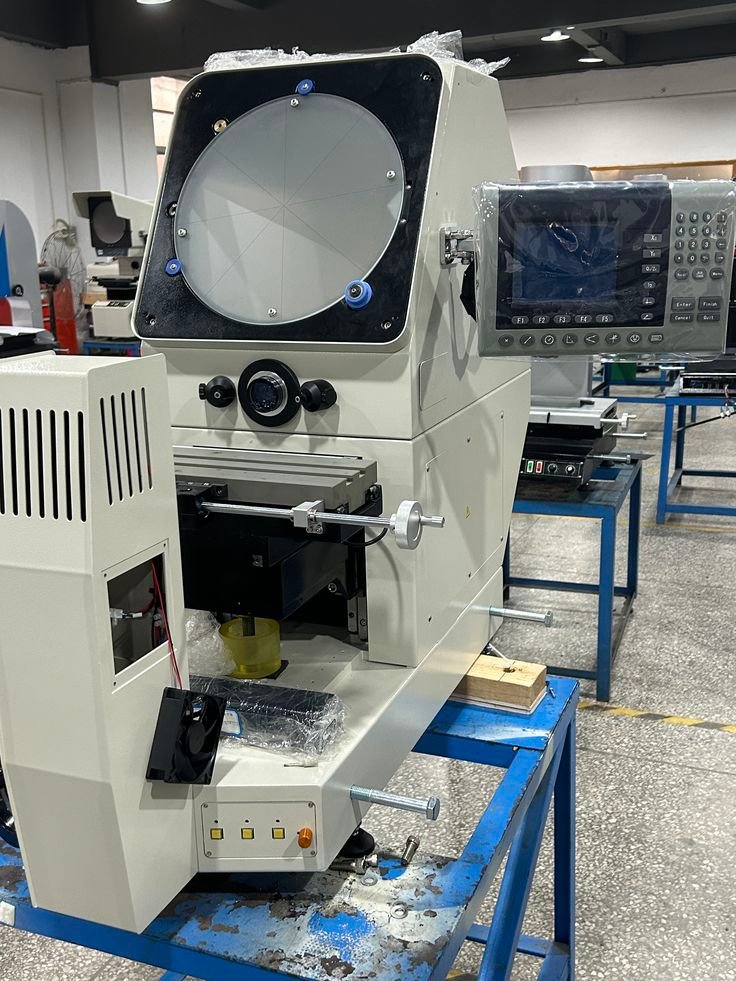
Tragbares Härteprüfgerät
1. Introduction
A Tragbares Härteprüfgerät is a compact and lightweight material testing instrument designed to measure the hardness of materials directly at the test site. Unlike traditional stationary hardness testers, portable hardness testers enable on-site, in-field, and in-process hardness measurement, making them ideal for large, heavy, or installed components that cannot be easily moved to a laboratory.
Portable hardness testers are widely used in industries such as manufacturing, oil and gas, power generation, shipbuilding, construction, and maintenance services.
2. Importance of Portable Hardness Testing
Portable hardness testing is essential because it:
- Allows on-site inspection of large or fixed components
- Reduces downtime and transportation costs
- Enables in-service material verification
- Supports preventive maintenance and failure analysis
- Provides fast and reliable quality control in field conditions
These testers help engineers make quick decisions without disrupting operations.
3. Working Principles of Portable Hardness Testers
Portable hardness testers typically operate using one of the following principles:
3.1 Leeb Rebound Principle
The most common method, where an impact body strikes the material surface and rebounds. The ratio of rebound velocity to impact velocity determines the hardness value.
3.2 Ultrasonic Contact Impedance (UCI) Principle
Uses ultrasonic vibration and measures the change in frequency when a diamond indenter contacts the surface. Suitable for small or thin components.
3.3 Portable Rockwell Principle
Uses controlled indentation depth measurement with a compact mechanical system.
4. Types of Portable Hardness Testers
4.1 Leeb Portable Hardness Tester
- High portability
- Schnelles Testen
- Suitable for large and heavy components
Anwendungen: Shafts, forgings, pipelines, pressure vessels
4.2 UCI Portable Hardness Tester
- Hohe Genauigkeit
- Low test force
- Minimale Oberflächenbeschädigung
Anwendungen: Thin materials, heat-treated layers, weld zones
4.3 Portable Rockwell Hardness Tester
- Direct hardness readings
- Suitable for workshop and field use
Anwendungen: Steel parts, fasteners, structural components
5. Key Components of a Portable Hardness Tester
A typical portable hardness tester includes:
- Impact device or probe
- Eindringkörper (diamond or carbide)
- Load or impact mechanism
- Digital display unit
- Microprocessor-based control system
- Battery or rechargeable power source
Modern devices often include data storage, Bluetooth connectivity, and hardness scale conversion.
6. Testing Procedure
- Clean and prepare the test surface
- Select the appropriate testing method and scale
- Position the tester perpendicular to the surface
- Perform the test by applying impact or load
- Read and record the hardness value
- Repeat tests for accuracy
Testing should follow relevant ASTM and ISO standards.
7. Factors Affecting Test Accuracy
- Surface roughness and cleanliness
- Component mass and support condition
- Test orientation (especially for rebound methods)
- Calibration of the device
- Operator technique
Proper training and regular calibration are essential for reliable results.
8. Advantages of Portable Hardness Testers
- Lightweight and easy to carry
- On-site and in-field testing capability
- Fast measurement and immediate results
- Suitable for large and installed components
- Non-destructive or minimally destructive
9. Limitations of Portable Hardness Testers
- Lower accuracy compared to laboratory systems (in some methods)
- Requires stable contact and proper support
- Surface conditions significantly affect results
- Not ideal for very thin or lightweight materials (Leeb method)
10. Applications of Portable Hardness Testers
Portable hardness testers are widely used in:
- Oil and gas pipelines
- Power plants and turbines
- Heavy machinery maintenance
- Welding inspection and HAZ analysis
- Shipbuilding and offshore platforms
- Construction and structural steel inspection
11. Maintenance and Safety Considerations
- Regular calibration using certified test blocks
- Inspection of impact devices and indenters
- Proper storage and handling
- Battery maintenance
Following manufacturer guidelines ensures long-term accuracy and reliability.
12. Conclusion
A Tragbares Härteprüfgerät is an essential tool for modern industrial inspection and maintenance. Its ability to provide quick, accurate, and on-site hardness measurements makes it invaluable for large-scale, heavy, and installed components. Selecting the right portable hardness tester depends on the material type, testing environment, required accuracy, and applicable standards.