




Hardness Testers for Quality Control: The Definitive Guide to Ensuring Material Integrity

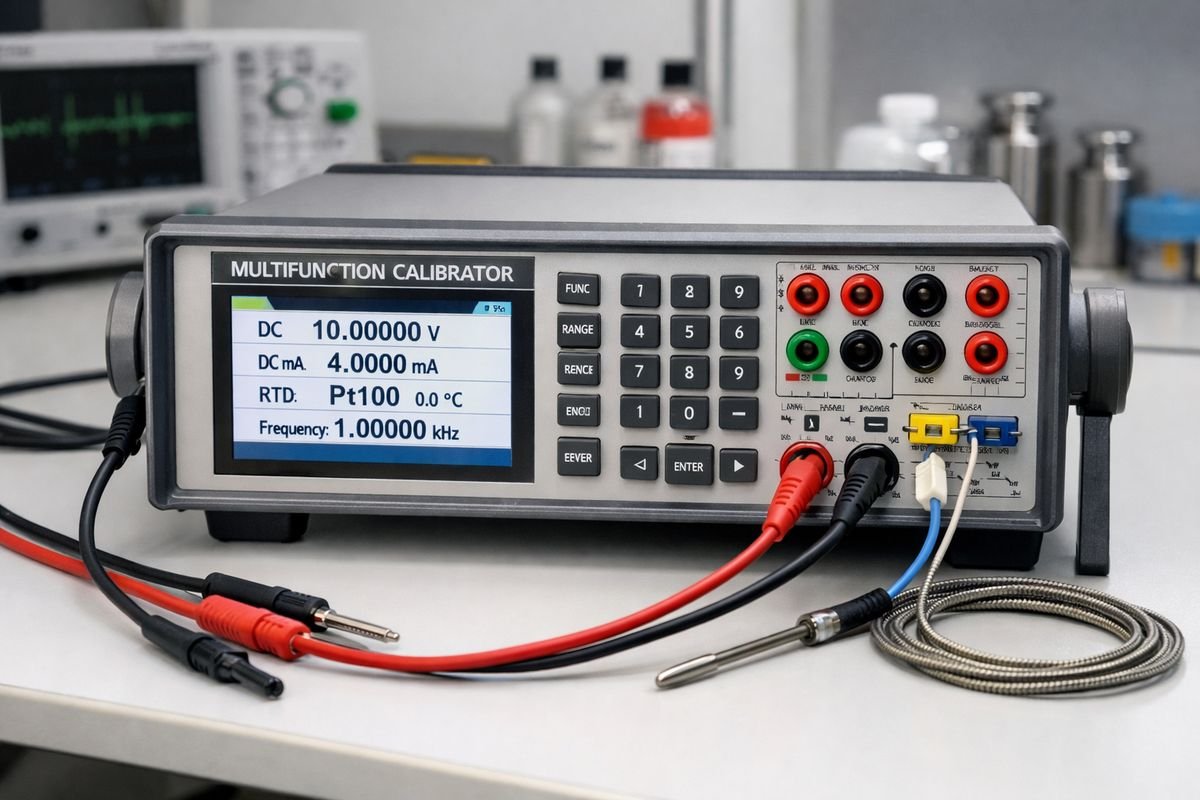
In the high-stakes world of modern manufacturing, a single faulty component can lead to catastrophic failure, financial loss, and severe safety hazards. This is why Hardness Testers for Quality Control (QC) are indispensable assets on the production floor and in the metrology lab. These precision instruments provide a rapid, non-destructive (or minimally destructive) method for verifying that materials meet exact specifications for strength, wear resistance, and durability.
This comprehensive, SEO-optimized article will explore the critical role of hardness testers in QC, the different types available, their applications across industries, key selection criteria, and future trends in automated quality assurance.
What Is a Hardness Tester and Why Is It Vital for QC?
A Härteprüfgerät is a device that measures a material’s resistance to localized plastic deformation, typically by indenting the surface with a specific indenter under a controlled load. In a Quality Control context, this measurement serves as a “fingerprint” for the material’s heat treatment, strength, and overall integrity.
The Core Importance in QC:
- Process Verification: Confirms that heat treatment processes (like quenching, tempering, carburizing, and nitriding) were executed correctly. An incorrect hardness reading is an immediate red flag for a process deviation.
- Identifizierung des Materials: Helps distinguish between different alloys or grades of steel, preventing the use of incorrect material batches.
- Weld Inspection: Verifies the integrity of the Heat-Affected Zone (HAZ) in welded joints, ensuring no loss of strength has occurred.
- Predictive Maintenance: Correlates hardness with wear resistance, helping predict the service life of components like gears, bearings, and dies.
- Non-Destructive Testing (NDT): Most hardness tests leave only a tiny indentation, allowing the tested part to remain in service.
Common Types of Hardness Testers Used in Quality Control
Different materials, geometries, and production speeds demand different testing methodologies. Here are the primary types of hardness testers found in QC labs.
1. Rockwell Hardness Tester
The workhorse of the QC world, known for its speed and direct readout.
- Grundsatz: Measures the depth of penetration of an indenter (diamond cone or steel ball) under a major load after a minor preload.
- Scales: HRA, HRB, HRC (most common for steel), HRF, etc.
- QC Advantage: Extremely fast (results in ~5 seconds), requires minimal surface preparation, and is highly repeatable. Ideal for high-volume production lines.
2. Brinell Hardness Tester
Used for testing large, coarse-grained, or rough materials.
- Grundsatz: Uses a 10 mm tungsten carbide ball indenter under a high load (500–3000 kgf). The diameter of the resulting impression is measured optically.
- QC Advantage: The large indentation averages out material inconsistencies, making it perfect for castings, forgings, and heavy structural components.
3. Vickers Hardness Tester (Micro & Macro)
The gold standard for precision and versatility.
- Grundsatz: Uses a square-based diamond pyramid indenter. Measurements are taken optically from the diagonals of the indentation.
- QC Advantage: Can be used on virtually any material, from soft aluminum to hard ceramics. The small indentation is ideal for thin parts, small components, and case-depth profiling.
4. Portable / Leeb Hardness Tester
A handheld solution for large or immovable objects.
- Grundsatz: An impact body is propelled towards the test surface; the tester measures the rebound velocity (Leeb Principle).
- QC Advantage: Allows QC inspectors to test finished assemblies, large castings, or in-situ components (like pipelines or ship hulls) without bringing them to a lab.
5. Knoop Hardness Tester
A micro-hardness tester for brittle materials and thin coatings.
- Grundsatz: Uses an elongated diamond indenter to create a shallow, elongated impression.
- QC Advantage: Measures the hardness of thin coatings (e.g., chrome plating) or brittle materials like glass and ceramics without cracking them.
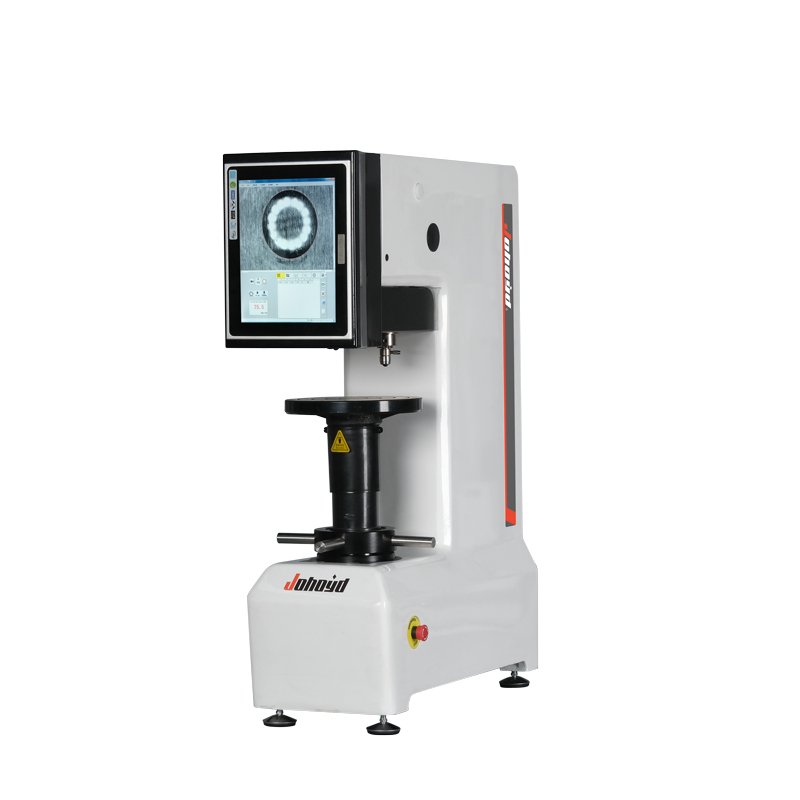
Key Components of a Modern Hardness Testing System
| Component | Function |
|---|---|
| Loading System | Applies a precise, calibrated force (load) to the indenter. Can be manual, hydraulic, or electronic. |
| Eindringkörper | The penetrating body (diamond, tungsten carbide ball) that creates the indentation. Must be perfectly shaped. |
| Optical System | A high-resolution camera and lens system used in Brinell/Vickers testing to measure the indentation with high accuracy. |
| Stage / Anvil | The platform that holds the specimen. Must be rigid to prevent movement during testing. |
| Software Suite | The brain of the operation. Manages test parameters, captures images, performs calculations, and generates reports (often compliant with SPC standards). |
| X-Y Stage (Optional) | A motorized stage that allows the user to program automatic traverses for hardness mapping or line profiles. |
Applications of Hardness Testers in QC Across Industries
| Industry | Application Example | Recommended Tester |
|---|---|---|
| Automotive | Verifying case depth on a transmission gear. | Vickers (Micro) |
| Luft- und Raumfahrt | Checking the temper of a turbine blade. | Vickers / Rockwell C |
| Steel Manufacturing | Grading raw steel bar stock. | Brinell / Portable Leeb |
| Foundry (Casting) | Ensuring a pump housing isn’t too soft. | Brinell |
| Fasteners | Checking the hardness of a bolt head. | Rockwell C |
| Schwermaschinenbau | Inspecting a bulldozer track link. | Portable Leeb / Brinell |
| Electronics | Testing the hardness of a connector pin. | Vickers (Micro) |
How to Choose the Right Hardness Tester for Your QC Lab
Selecting the wrong tester can lead to inaccurate data and rejected parts. Follow this checklist:
- Define the Material:
- Soft Metals (Al, Cu): Rockwell B, Brinell.
- Hardened Steels: Rockwell C, Vickers.
- Very Thin Parts / Coatings: Vickers (Micro), Knoop.
- Cast Iron / Forgings: Brinell.
- Determine the Part Size & Shape:
- Small, flat samples fit easily into benchtop testers.
- Large, heavy, or already-installed parts require portable testers.
- Required Throughput:
- High Volume (1000s/day): Automated Rockwell testers with hopper feeds.
- Low/Medium Volume: Manual or semi-automatic Vickers/Brinell testers.
- Required Accuracy vs. Speed:
- Speed is King: Rockwell.
- Accuracy is Paramount: Vickers (requires careful optical measurement).
- Standards Compliance:
- Ensure the machine complies with ASTM E10 (Brinell), E18 (Rockwell), E92 (Vickers), or ISO standards required by your customers.
Best Practices for Accurate QC Hardness Testing
To ensure your hardness testing data is valid, follow these rules:
- Proper Specimen Preparation: The test surface must be clean, smooth, and flat. Rough surfaces scatter light (optical tests) or cause inconsistent contact (Rockwell).
- Minimum Thickness: The specimen must be at least 10 times thicker than the indentation depth to prevent “anvil effect” (supporting the material from underneath).
- Edge Distance: Keep indentations at least 2.5 times the indentation diameter away from an edge to prevent deformation.
- Calibration: Regularly calibrate the machine using certified hardness test blocks that span the expected hardness range of your parts.
- Operator Training: Ensure operators are trained to spot faulty indentations (e.g., chipped indenters, tilted samples) that invalidate a reading.
The Future of Hardness Testing in Quality Control
The field of material testing is rapidly evolving from standalone machines to integrated data systems.
- Automated Optical Measurement: AI-powered cameras can now automatically find, measure, and validate indentations without human intervention, eliminating subjectivity.
- Closed-Loop Feedback: Hardness testers are being linked directly to heat treatment furnaces. If a test fails, the furnace parameters are automatically adjusted.
- Industry 4.0 Integration: All test data (value, time, operator, image) is automatically uploaded to a central database (SQL, SAP) for full traceability.
- Robotic Integration: Six-axis robots load and unload parts from hardness testers, creating a fully lights-out QC cell.
- 3D Hardness Mapping: Advanced systems can perform grid patterns over a surface to create a 3D contour map of hardness variations.
Schlussfolgerung
Hardness testers are the sentinels of quality control, providing a fast, reliable, and cost-effective method for verifying the structural integrity of manufactured goods. From the brute-force verification of a Brinell test on a cast iron engine block to the microscopic precision of a Vickers test on a satellite component, these instruments are non-negotiable for any serious QC operation.
Investing in the right hardness testing technology—and adhering to proper procedures—ensures that only the highest quality, safest products reach the hands of consumers.