




Rockwell-Testblöcke: Vollständiger Leitfaden für die Härtekalibrierung


Introduction to Rockwell Test Blocks
Rockwell test blocks are essential reference standards used to calibrate Rockwell hardness testing machines. They ensure that hardness measurements remain accurate, consistent, and compliant with international testing standards.
In both laboratory and industrial environments, test blocks play a key role in maintaining measurement reliability and quality assurance.
What Are Rockwell Test Blocks
Begriffsbestimmung und Zweck
Rockwell test blocks are certified reference materials with known hardness values used to verify the accuracy of Rockwell hardness testers.
Role in Hardness Testing Calibration
They serve as benchmarks that allow operators to confirm whether a hardness testing machine is functioning correctly.
📎 Ausgehende Referenz:
https://en.wikipedia.org/wiki/Hardness
📎 Zusätzlicher Hinweis:
https://www.iso.org/

How Rockwell Test Blocks Work
Calibration Process Explained
A hardness tester applies force to a test block, and the result is compared with the certified hardness value.
Reference Hardness Values
Each block has a precise hardness rating defined by international standards.
Machine Verification Steps
Operators perform multiple test readings to confirm consistency and accuracy.
Types of Rockwell Test Blocks
HRA Test Blocks
Used for very hard materials and coatings.
HRB Test Blocks
Suitable for softer metals like copper and brass.
HRC Test Blocks
Commonly used for hardened steel and alloys.
Special Scale Test Blocks
Designed for specific industrial applications.
👉 Interner Link:
https://hardnesstests.com/laboratory-hardness-tester
Key Features of Rockwell Test Blocks
Certified Hardness Accuracy
Each block is manufactured and certified for precise hardness values.
Material Stability and Uniformity
Ensures consistent performance over time.
Surface Quality Standards
Smooth and defect-free surfaces improve testing reliability.
Applications of Rockwell Test Blocks
Laboratory Calibration
Used to verify hardness testing equipment in labs.
Industrial Quality Control
Ensures production consistency in manufacturing.
Equipment Verification and Maintenance
Helps maintain long-term machine accuracy.
👉 Interner Link:
https://hardnesstests.com/portable-hardness-tester-equipment
Advantages of Rockwell Test Blocks
- High accuracy and reliability
- Standardized calibration reference
- Easy to use in different environments
- Supports quality assurance systems
Limitations and Considerations
- Can wear out over repeated use
- Must match correct Rockwell scale
- Requires proper storage conditions
How to Choose Rockwell Test Blocks
Matching Rockwell Scale
Select the correct scale (HRA, HRB, HRC) for your machine.
Required Hardness Range
Ensure the block covers your testing range.
Certification Standards
Choose blocks certified under ASTM or ISO standards.
Maintenance and Handling
- Store in protective cases
- Avoid repeated testing in the same spot
- Keep surfaces clean and dry
- Handle with care to prevent damage
Industrienormen und Konformität
Most Rockwell test blocks comply with:
- ASTM → https://www.astm.org/
- ISO → https://www.iso.org/
Best Practices for Accurate Calibration
- Use correct load settings
- Perform regular calibration checks
- Avoid contaminated surfaces
- Record calibration results
Empfohlene Produkte und interne Links
Explore related calibration and testing tools:
- https://hardnesstests.com/hardness-test-blocks
- https://hardnesstests.com/laboratory-hardness-tester
- https://hardnesstests.com/ultrasonic-hardness-tester
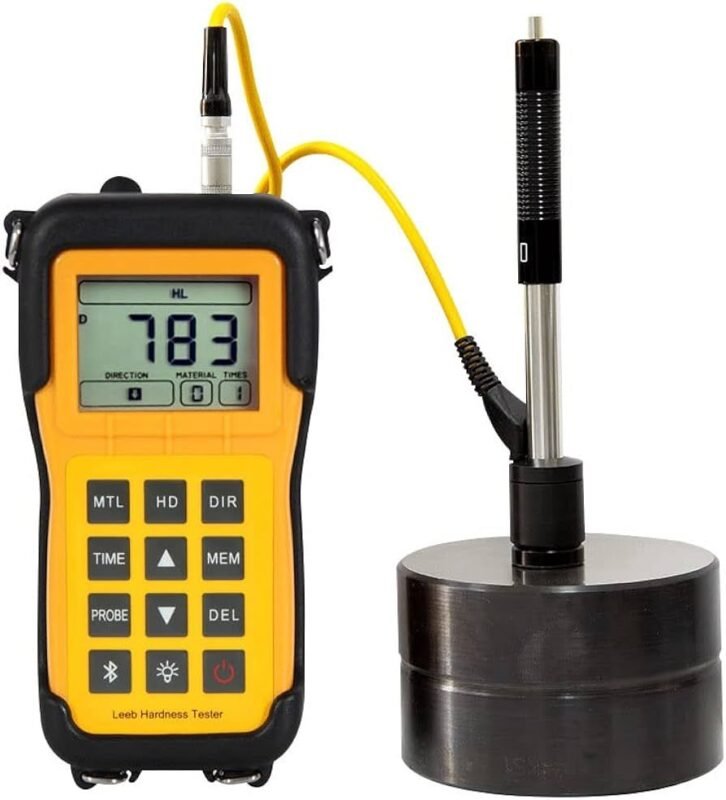
- https://hardnesstests.com/leeb-hardness-tester
FAQs
1. What are Rockwell test blocks used for?
They are used to calibrate Rockwell hardness testing machines.
2. Do they wear out?
Yes, repeated use can gradually affect their surface.
3. How often should calibration be done?
Regular calibration is recommended based on usage frequency.
4. Are they standardized?
Ja, sie entsprechen den ASTM- und ISO-Normen.
5. Can one block fit all scales?
No, different scales require specific blocks.
6. How should they be stored?
In clean, dry, and protective environments.
Schlussfolgerung
Rockwell test blocks are essential for maintaining accurate and reliable hardness testing results. Proper use and maintenance ensure consistent calibration and long-term measurement accuracy in both laboratory and industrial environments.

