




Micro Hardness Tester Complete Guide 38 Precision Insights for Accurate Microhardness Measurement

Outline for the Article on Micro Hardness Tester
| Themenbereich | Detaillierte Abdeckung mit LSI-Schlüsselwörtern |
|---|---|
| Introduction to Micro Hardness Tester | Mikrohärteprüfung |
| Definition of Micro Hardness Tester | low load hardness tester |
| Role of Micro Hardness Testing | microstructure evaluation |
| Importance of Micro Hardness Testers | Präzisionsmessung |
| History of Micro Hardness Testing | Vickers and Knoop |
| Basic Principle of Micro Hardness Testing | small indentation |
| Difference Between Micro and Macro Hardness | load comparison |
| Types of Micro Hardness Testers | Vickers, Knoop |
| Vickers Micro Hardness Tester | diamond pyramid |
| Knoop Micro Hardness Tester | elongated indentation |
| Manual Micro Hardness Tester | operator controlled |
| Digital Micro Hardness Tester | automatische Messung |
| Automatic Micro Hardness Tester | high repeatability |
| Components of a Micro Hardness Tester | indenter, optics |
| Indenter Types and Loads | gram-force loads |
| Optisches Messsystem | microscope accuracy |
| Test Procedure for Micro Hardness | step-by-step |
| Anforderungen an die Probenvorbereitung | polished surface |
| Micro Hardness Testing Standards | ASTM, ISO |
| Materials Suitable for Micro Hardness Testing | metals and coatings |
| Micro Hardness Testing for Thin Coatings | surface layers |
| Micro Hardness Testing for Heat Treatment | Gehäusetiefe |
| Micro Hardness Testing for Welds | HAZ evaluation |
| Genauigkeit und Reproduzierbarkeit | precision control |
| Calibration of Micro Hardness Tester | reference blocks |
| Advantages of Micro Hardness Tester | detailed analysis |
| Limitations of Micro Hardness Testing | surface sensitivity |
| Anwendungen in der Metallographie | microstructure study |
| Anwendungen in der Qualitätskontrolle | small parts |
| Anwendungen in F&E-Labors | Materialentwicklung |
| Applications in Electronics Industry | micro components |
| Data Recording and Analysis | digital results |
| Integration with Laboratory Systems | data management |
| Häufige Fehler bei Tests | indentation issues |
| Selecting the Right Micro Hardness Tester | Einkaufsführer |
| Wartung und Pflege | langfristige Präzision |
| Markenkompetenz und Lösungen | Johoyd micro hardness tester |
| Future Trends in Micro Hardness Testing | Automatisierung |
| FAQs | allgemeine Fragen |
| Schlussfolgerung | Zusammenfassung |
Einführung
A Mikrohärtetestgerät is a specialized instrument designed to measure the hardness of materials using very low test loads. Unlike conventional hardness testing, micro hardness testing focuses on small areas, thin layers, and fine microstructures that require exceptional precision.
In metallurgical laboratories, quality control departments, and research environments, micro hardness testers play a critical role in understanding material behavior at a microscopic level.
Mikro-Härteprüfer
A Mikrohärtetestgerät applies a small, controlled force through a diamond indenter and measures the resulting indentation using optical systems. The hardness value reflects resistance to localized deformation.
This approach enables detailed material evaluation.
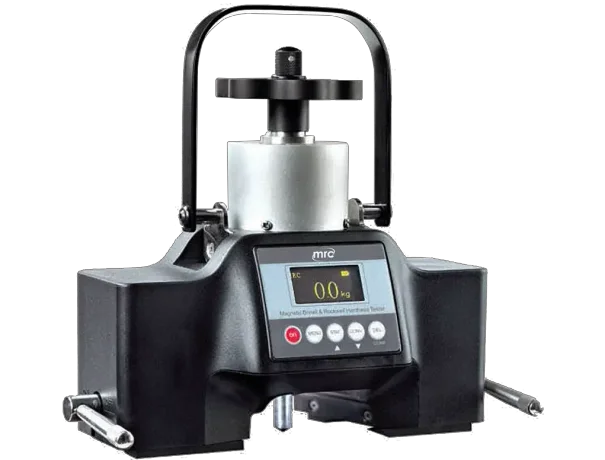
Definition of Micro Hardness Tester
A micro hardness tester is a hardness testing device that operates with test loads typically ranging from a few grams to several kilograms. It is used to evaluate micro-scale hardness variations.
This tester is essential for precision analysis.
Role of Micro Hardness Testing
Micro hardness testing reveals variations in hardness within small regions of a material. It supports microstructural analysis and process validation.
This insight is not achievable with macro testing.
Importance of Micro Hardness Testers
Micro hardness testers are important because they allow evaluation of thin coatings, surface treatments, and small components. They provide localized hardness data.
Precision drives reliability.
History of Micro Hardness Testing
Micro hardness testing evolved with the development of the Vickers and Knoop methods. These techniques enabled accurate measurement under low loads.
They remain industry standards.
Basic Principle of Micro Hardness Testing
The principle involves pressing a diamond indenter into the surface with a small force. The indentation size determines hardness.
Accurate measurement is critical.
Difference Between Micro and Macro Hardness
Micro hardness testing uses much lower loads than macro testing. It focuses on small features, while macro testing evaluates bulk properties.
Method selection depends on application.
Types of Micro Hardness Testers
Micro hardness testers are classified by indenter type and automation level. Common types include Vickers and Knoop testers.
Each serves specific needs.
Vickers Micro Hardness Tester
The Vickers micro hardness tester uses a square-based diamond pyramid. It provides versatile and precise results.
It is widely used in laboratories.
Knoop Micro Hardness Tester
The Knoop micro hardness tester uses an elongated diamond indenter. It is ideal for thin coatings and brittle materials.
It minimizes surface damage.
Manual Micro Hardness Tester
Manual micro hardness testers require operator control. They offer flexibility and cost efficiency.
Operator skill is important.
Digital Micro Hardness Tester
Digital micro hardness testers use electronic measurement and displays. They improve repeatability and data handling.
Digitale Systeme steigern die Produktivität.
Automatic Micro Hardness Tester
Automatic micro hardness testers control load application and measurement automatically. They reduce operator influence.
Automatisierung sorgt für Konsistenz.
Components of a Micro Hardness Tester
Key components include the indenter, loading mechanism, optical microscope, and control system. Each component affects accuracy.
Precision engineering is essential.
Indenter Types and Loads
Diamond indenters are used for micro hardness testing. Loads are carefully selected to match material and application.
Correct selection prevents errors.
Optisches Messsystem
High-magnification microscopes measure indentation size. Optical clarity and calibration are critical.
Measurement accuracy defines results.
Test Procedure for Micro Hardness
The test procedure includes positioning, load application, indentation measurement, and calculation. Controlled conditions ensure reliable results.
Consistency is key.
Anforderungen an die Probenvorbereitung
Samples must be polished to a mirror finish. Surface defects distort indentation measurement.
Proper preparation is mandatory.
Micro Hardness Testing Standards
Micro hardness testing follows standards such as ASTM E384 and ISO 6507. Standards define loads and procedures.
Compliance ensures comparability.
Materials Suitable for Micro Hardness Testing
Micro hardness testers are used for metals, alloys, ceramics, and coatings. They are ideal for small or delicate samples.
Versatility is a strength.

Micro Hardness Testing for Thin Coatings
Thin coatings require low loads and precise measurement. Micro hardness testing evaluates coating quality.
Dies unterstützt die Oberflächentechnik.
Micro Hardness Testing for Heat Treatment
Micro hardness profiles verify case depth and heat treatment uniformity. This is critical for performance.
Accurate profiling improves confidence.
Micro Hardness Testing for Welds
Micro hardness testing evaluates hardness variation across weld zones. It identifies potential weak areas.
This supports welding quality.
Genauigkeit und Reproduzierbarkeit
Accuracy depends on calibration, optics, and operator technique. Repeatability improves with automation.
Verlässliche Daten schaffen Vertrauen.
Calibration of Micro Hardness Tester
Regular calibration using reference blocks ensures traceability. Calibration maintains confidence in results.
It is essential for compliance.
Advantages of Micro Hardness Tester
Die wichtigsten Vorteile sind:
- Hohe Präzision
- Low test loads
- Localized measurement
- Detailed analysis
These benefits make micro hardness testing indispensable.
Limitations of Micro Hardness Testing
Micro hardness testing is sensitive to surface condition and preparation. It requires skilled operation.
Understanding limits prevents misinterpretation.
Anwendungen in der Metallographie
Metallographic analysis relies on micro hardness testing to correlate hardness with microstructure.
It supports material understanding.
Anwendungen in der Qualitätskontrolle
Quality control uses micro hardness testers for small components and coatings. Results ensure specification compliance.
Precision supports acceptance decisions.
Anwendungen in F&E-Labors
R&D laboratories use micro hardness testing to study new materials and processes. Detailed data supports innovation.
Genauigkeit ist unerlässlich.
Applications in Electronics Industry
Electronics components are small and delicate. Micro hardness testers evaluate material integrity without damage.
They support reliability.
Data Recording and Analysis
Modern micro hardness testers generate digital data and images. Software supports analysis and reporting.
Digitale Aufzeichnungen verbessern die Rückverfolgbarkeit.
Integration with Laboratory Systems
Micro hardness testers integrate with laboratory information systems. Data sharing improves workflow.
Integration supports Industry standards.
Häufige Fehler bei Tests
Zu den Fehlern gehören eine schlechte Oberflächenvorbereitung und eine falsche Auswahl der Ladung. Schulung reduziert Fehler.
Standardverfahren verbessern die Konsistenz.
Selecting the Right Micro Hardness Tester
Selection depends on material type, load range, and automation needs. Expert guidance ensures optimal choice.
The right tester improves results.
Wartung und Pflege
Routine maintenance preserves optical clarity and mechanical accuracy. Proper care extends equipment life.
Maintenance ensures long-term reliability.
Markenkompetenz und Lösungen
Zuverlässig Mikrohärtetestgerät Lösungen erfordern Präzisionstechnik und fachkundige Unterstützung. Johoyd, durch https://hardnesstests.com, provides advanced micro hardness testers and complete hardness testing solutions for laboratories, manufacturing, and quality control, delivering accuracy, durability, and international compliance.
Future Trends in Micro Hardness Testing
Future trends include enhanced automation, image analysis, and smart software integration. These developments will further improve efficiency and insight.
Häufig gestellte Fragen
What is a micro hardness tester used for?
It measures hardness of small areas and thin layers.
Which methods are used in micro hardness testing?
Vickers and Knoop methods.
Is micro hardness testing destructive?
Sie ist minimal zerstörerisch.
Do micro hardness testers require calibration?
Ja, eine regelmäßige Kalibrierung ist erforderlich.
What materials can be tested?
Metals, alloys, coatings, and ceramics.
Are automatic micro hardness testers better?
They offer improved repeatability and efficiency.
Schlussfolgerung
A Mikrohärtetestgerät is an essential instrument for precise hardness measurement at the microscopic level. Its ability to evaluate thin coatings, small components, and microstructural variations makes it indispensable in modern material analysis.
Mit professionellen Lösungen von Johoyd verfügbar unter hardnesstests.com, laboratories and manufacturers can rely on micro hardness testers that deliver accuracy, consistency, and compliance. As technology advances, micro hardness testing will continue to support innovation and quality excellence.
Vorgeschlagene interne Links
- Härteprüfmaschine
- Metallographische Probenvorbereitung
Vorgeschlagene ausgehende Links
- ASTM E384 Mikrohärte Standard
- ISO 6507 Vickers-Härteprüfung