




Brinell-Härteprüfer Vollständiger Leitfaden Leistungsstarke Einblicke für die Prüfung von Hochleistungsmetallen


Outline for the Article on Brinell Hardness Tester
| Themenbereich | Detaillierte Abdeckung mit LSI-Schlüsselwörtern |
|---|---|
| Introduction to Brinell Hardness Tester | Brinell-Härteprüfung |
| Definition of Brinell Hardness Tester | Brinell testing machine |
| Importance of Brinell Hardness Testing | bulk material hardness |
| History and Development of Brinell Test | indentation testing history |
| Basic Principle of Brinell Hardness Testing | indentation diameter method |
| Brinell Hardness Number | BHN calculation |
| Brinell Indenters and Loads | steel ball, carbide ball |
| Brinell Test Procedure | Schritt-für-Schritt-Methode |
| Types of Brinell Hardness Testers | manuell, digital, automatisch |
| Manual Brinell Hardness Tester | traditioneller Betrieb |
| Digitales Brinell-Härteprüfgerät | optische Messung |
| Automatisches Brinell-Härteprüfgerät | Großserienprüfung |
| Portable Brinell Hardness Tester | on-site inspection |
| Materials Suitable for Brinell Testing | Metalle und Legierungen |
| Brinell Hardness Testing for Steel | structural steels |
| Brinell Hardness Testing for Cast Iron | coarse-grained materials |
| Brinell Hardness Testing for Aluminum | soft alloys |
| Brinell Hardness Testing for Non-Ferrous Metals | Kupferlegierungen |
| Anforderungen an die Probenvorbereitung | surface flatness |
| Genauigkeit und Reproduzierbarkeit | Messsicherheit |
| Calibration of Brinell Hardness Tester | Rückverfolgbarkeit |
| Standards for Brinell Hardness Testing | ASTM E10, ISO 6506 |
| Advantages of Brinell Hardness Tester | average hardness value |
| Limitations of Brinell Hardness Testing | surface damage |
| Anwendungen in der Fertigung | production inspection |
| Anwendungen in der Qualitätskontrolle | Abnahmeprüfung |
| Applications in Foundries | casting evaluation |
| Applications in Heavy Industry | large components |
| Anwendungen in der Wärmebehandlung | Verfahrensprüfung |
| Datenaufzeichnung und Berichterstattung | digital analysis |
| Häufige Fehler bei Tests | prevention methods |
| Selecting the Right Brinell Hardness Tester | Einkaufsführer |
| Maintenance of Brinell Hardness Tester | langfristige Präzision |
| Integration with Digital Quality Systems | intelligente Fertigung |
| Markenkompetenz und Lösungen | Johoyd Brinell testers |
| Future Trends in Brinell Hardness Testing | Automatisierung |
| FAQs | allgemeine Fragen |
| Schlussfolgerung | Zusammenfassung |
Einführung
A Brinell-Härteprüfgerät is one of the oldest and most reliable tools used to evaluate the hardness of metals with coarse or non-uniform structures. Unlike methods that focus on small or shallow indentations, the Brinell test produces a large indentation that represents the average hardness of the material.
Because of this characteristic, the Brinell hardness tester remains a preferred solution in foundries, heavy manufacturing, and structural material testing where bulk properties matter more than surface conditions.
Brinell-Härteprüfer
A Brinell-Härteprüfgerät measures hardness by pressing a hardened steel or carbide ball into the surface of a material under a specified load. The diameter of the resulting indentation is measured to determine hardness.
This method is well suited for materials with heterogeneous microstructures.
Definition of Brinell Hardness Tester
A Brinell hardness tester is a mechanical or digital instrument designed to evaluate material hardness based on the size of a permanent indentation left by a spherical indenter. The test produces a Brinell Hardness Number, commonly known as BHN.
The simplicity of the concept contributes to its widespread industrial use.
Importance of Brinell Hardness Testing
Brinell hardness testing is important because it reflects the overall hardness of a material rather than localized surface effects. This makes it ideal for castings, forgings, and large components.
Industries rely on Brinell hardness testers to ensure structural reliability.
History and Development of Brinell Test
The Brinell hardness test was introduced in the early twentieth century as a practical method for testing metals. Its large indentation approach addressed limitations of earlier scratch tests.
Over time, the Brinell hardness tester evolved with improved materials and digital measurement systems.
Basic Principle of Brinell Hardness Testing
The Brinell test applies a known force to a spherical indenter. After the load is removed, the diameter of the indentation is measured.
Harder materials produce smaller indentations, while softer materials create larger ones.
Brinell Hardness Number
The Brinell Hardness Number represents the applied load divided by the surface area of the indentation. This calculation provides a quantitative measure of hardness.
Modern testers often calculate the value automatically.
Brinell Indenters and Loads
Brinell hardness testers use hardened steel or tungsten carbide balls. Load selection depends on material type and thickness.
Standardized combinations ensure consistent results.
Brinell Test Procedure
The Brinell test procedure involves placing the sample, applying the load for a specified time, and measuring the indentation diameter.
Careful measurement is essential for accuracy.
Types of Brinell Hardness Testers
Brinell hardness testers are available in manual, digital, and automatic configurations. Each type suits different production and laboratory needs.
Choosing the right type improves efficiency.
Manual Brinell Hardness Tester
Manual Brinell hardness testers rely on operator control. They are robust and cost-effective for low-volume testing.
Skilled operation ensures reliability.
Digitales Brinell-Härteprüfgerät
Digital Brinell hardness testers use optical systems to measure indentation diameter. They improve accuracy and reduce operator influence.
Digital output supports documentation.
Automatisches Brinell-Härteprüfgerät
Automatic Brinell hardness testers control load application and measurement automatically. They are ideal for high-volume industrial environments.
Automatisierung verbessert die Konsistenz.
Portable Brinell Hardness Tester
Portable Brinell hardness testers enable on-site testing of large components. They provide flexibility without sacrificing measurement quality.
They are widely used in maintenance and inspection.
Materials Suitable for Brinell Testing
Brinell hardness testing is ideal for steels, cast iron, aluminum alloys, and non-ferrous metals. It performs well on coarse-grained materials.
Material selection determines test parameters.
Brinell Hardness Testing for Steel
Steel components are commonly tested using the Brinell method. It provides representative hardness values for structural and heat-treated steels.
This supports quality assurance.
Brinell Hardness Testing for Cast Iron
Cast iron benefits from Brinell testing due to its heterogeneous structure. Large indentations average out microstructural variations.
This ensures reliable evaluation.
Brinell Hardness Testing for Aluminum
Aluminum alloys are softer and require lower loads. Brinell testing helps verify alloy consistency.
It supports manufacturing quality.
Brinell Hardness Testing for Non-Ferrous Metals
Copper and its alloys are suitable for Brinell testing. The method supports evaluation of electrical and mechanical performance.
Consistency is essential.
Anforderungen an die Probenvorbereitung
Samples must have flat and clean surfaces. Excessive roughness or curvature affects measurement accuracy.
Proper preparation improves results.
Genauigkeit und Reproduzierbarkeit
Accuracy depends on correct load selection and precise measurement. Repeatability improves with digital and automatic testers.
Beständigkeit schafft Vertrauen.
Calibration of Brinell Hardness Tester
Regular calibration ensures reliable results. Certified reference blocks support traceability.
Die Kalibrierung ist für die Einhaltung der Vorschriften unerlässlich.
Standards for Brinell Hardness Testing
Brinell hardness testing follows ASTM E10 and ISO 6506 standards. These standards define procedures, loads, and tolerances.
Compliance ensures global comparability.
Advantages of Brinell Hardness Tester
Die wichtigsten Vorteile sind:
- Representative average hardness
- Suitable for coarse materials
- Simple testing principle
- Strong correlation with strength
These benefits make the Brinell hardness tester indispensable.
Limitations of Brinell Hardness Testing
Brinell testing produces large indentations, which may not be acceptable for finished parts. It is less suitable for thin materials.
Understanding limitations ensures proper use.
Anwendungen in der Fertigung
Manufacturers use Brinell hardness testers for incoming inspection and process control. Testing supports consistency.
It reduces production risks.
Anwendungen in der Qualitätskontrolle
Quality control teams rely on Brinell testing to verify material compliance. Results support acceptance decisions.
Reliability is critical.
Applications in Foundries
Foundries use Brinell hardness testers to evaluate castings. Hardness reflects cooling rate and microstructure.
Testing supports process optimization.
Applications in Heavy Industry
Heavy machinery and structural components benefit from Brinell testing. The method suits large and thick parts.
It ensures safety and durability.
Anwendungen in der Wärmebehandlung
Heat treatment shops use Brinell hardness testing to confirm process effectiveness. Hardness values validate treatment results.
Testing supports consistency.
Datenaufzeichnung und Berichterstattung
Modern Brinell hardness testers support digital reporting. Optical systems store images and data.
Die Dokumentation unterstützt Audits.
Häufige Fehler bei Tests
Errors include incorrect load selection and inaccurate measurement. Training and procedures reduce risk.
Standardization improves consistency.
Selecting the Right Brinell Hardness Tester
Selection depends on material type, testing volume, and automation needs. Expert advice ensures optimal investment.
The right tester improves productivity.
Maintenance of Brinell Hardness Tester
Routine maintenance preserves accuracy. Proper care extends equipment lifespan.
Die Wartung unterstützt die langfristige Zuverlässigkeit.
Integration with Digital Quality Systems
Brinell hardness testers increasingly integrate with digital quality systems. Data supports smart manufacturing.
Connectivity improves control.
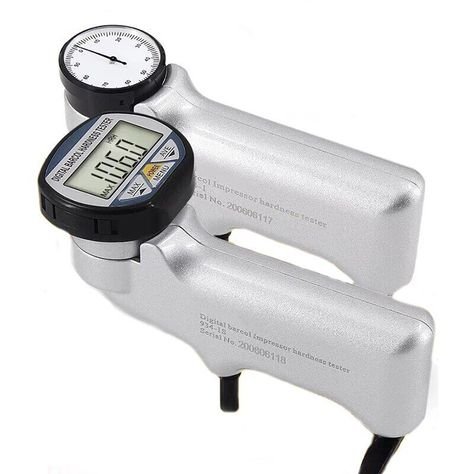
Markenkompetenz und Lösungen
Zuverlässig Brinell-Härteprüfgerät solutions require precision engineering and professional support. Johoyd, durch https://hardnesstests.com, provides advanced Brinell hardness testers designed for foundries, manufacturing, and quality control, delivering accuracy, durability, and compliance for global industries.
Future Trends in Brinell Hardness Testing
Future trends include enhanced automation, image analysis, and improved data integration. These developments will further improve efficiency.
Häufig gestellte Fragen
What does a Brinell hardness tester measure?
It measures hardness based on indentation diameter.
Is Brinell testing destructive?
It is moderately destructive due to large indentations.
Which materials suit Brinell testing?
Coarse-grained metals and alloys.
Do Brinell testers require calibration?
Ja, eine regelmäßige Kalibrierung ist erforderlich.
Which standards apply to Brinell testing?
ASTM E10 and ISO 6506.
Is Brinell testing suitable for thin materials?
No, thin materials may deform excessively.
Schlussfolgerung
A Brinell-Härteprüfgerät remains a vital tool for evaluating bulk metal hardness, especially for coarse and heterogeneous materials. Its ability to provide representative average hardness values makes it essential in heavy industry, foundries, and structural applications.
Mit vertrauenswürdigen Anbietern wie Johoyd Bereitstellung professioneller Lösungen durch hardnesstests.com, industries can rely on Brinell hardness testers that ensure accuracy, durability, and compliance. As technology advances, Brinell hardness testing will continue to play a critical role in industrial material evaluation.